
Transform ordinary stories into extraordinary ones with our proven 7-step method. Join thousands of storytellers on their journey to mastery.

On 29 October 2021, the Finance Minister, Datuk Seri Tengku Zafrul Tengku Abdul Aziz tabled Budget 2022 in the Malaysian parliament. RM50 million has been allocated for the arts and culture industry. This comes after a year and a half after the entire industry came to an absolute standstill.
With all the complaints, quibbles and arguments that are being put forward, there is one that hasn’t been analysed until now: things may not be as hopeless as it is made out. It starts with the basic premise that we already have frameworks in place to help artistes thrive, but none of the them are being properly implemented.
Writing for You? Or for Me?
‘You must always write with your reader in mind.’ This was one of the first pieces of advice that I received when I began my writing career. Honestly, I found this extremely hard to do because more often than not, I couldn’t picture my ideal reader. Slowly, this advice changed to ‘Write for yourself.’ While that seemed easier, it didn’t necessarily fulfil the reality of the situation, meaning, writing for myself didn’t translate into sales of whatever I wrote. As time went on, though, there were a few things I understood which made writing far more pleasant and lucrative, namely, writing was a transfer of emotions, the ability to keep a subtle journal and collecting gibberish.
Is it possible to read several books at once? Aneeta Sundararaj finds out.
{gallery rows=1}wp-content/uploads/2021/05/chaos{/gallery}
When I was a child, my cousin used to boast that he could read four storybooks at a time. As an adult, when he invested in an e-Reader, he continued to boast that he could keep several books ‘open’ at a time. More than that, he could quote from said books and command his ‘audience’ (mainly us cousins when we were children) with recitations of texts. I, on the other hand, was (still am) a painfully slow reader. As a child, I struggled to finish one storybook a week and I often wondered if slow to read also meant slow in the head.
My latest novel, The Age of Smiling Secrets was shortlisted for two categories in the Book Award 2020 organised by the National Library of Malaysia. When I reflected on the journey that this book has taken, I acknowledged the enormous influence of one of my all-time favourite books, Joseph Anton: A Memoir (ISBN 9780224093972 - hardcover) by Salman Rushdie. Written in the third person, the memoir is an account of Rushdie’s life during the fatwa that was issued as a reaction to criticism and a widespread controversy over his novel The Satanic Verses (1988). Rushdie used "Joseph Anton" as a pseudonym while in hiding.
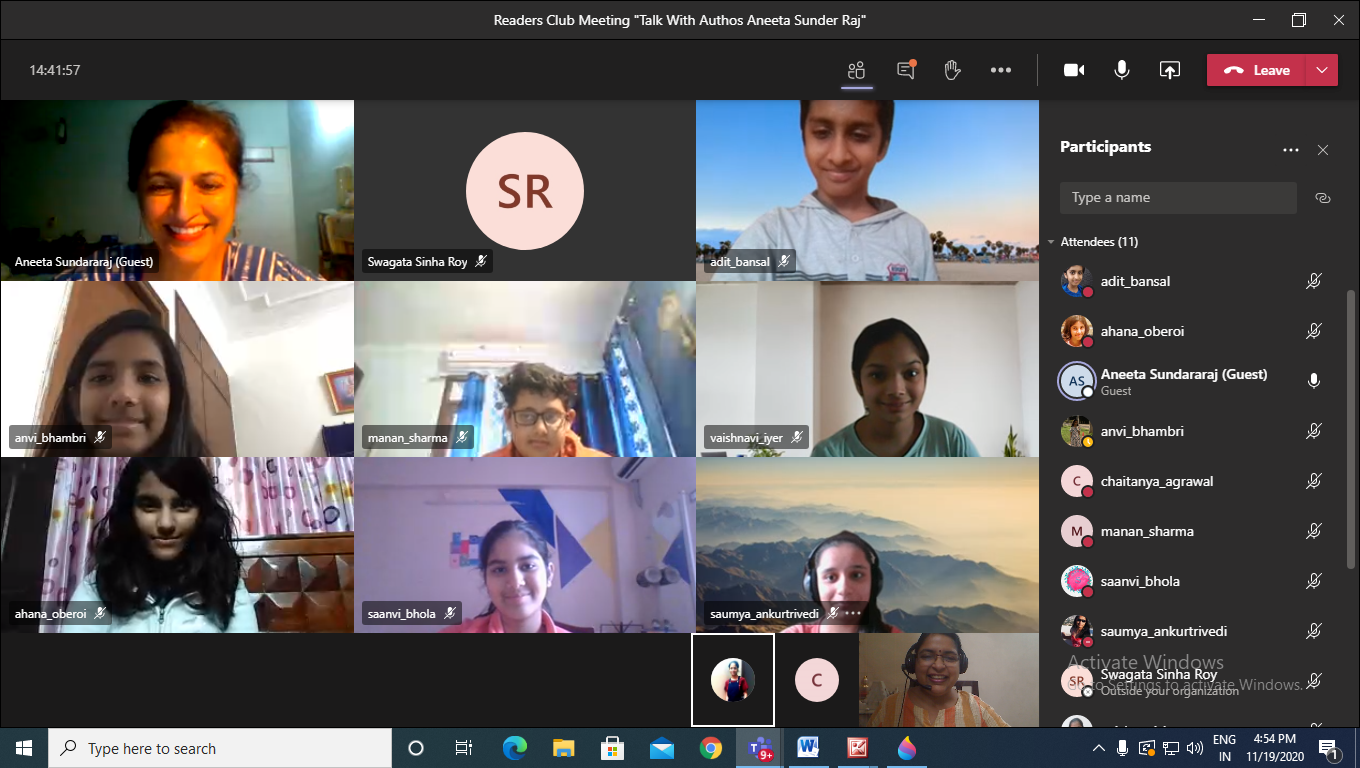 Members of Readers Club of Manav Rachna International School Sector-46, Gurugram
Recently, I accepted an invitation to speak to members of a Readers Club at a school. The topic I was given was to explain the importance of reading and a book that had an impact on me. It seemed easy enough until I found it difficult. In the end, I decided to put myself in these students’ shoes, which meant going back in time and trying to figure out the novel I’d read in school that had had a huge impact on my life. The novel I eventually chose was Brave New World by Aldous Huxley.
Although the concurrent legal jurisdictions of Syariah Law and the Civil Law is unique to Malaysia, they continue to cause problems and there is a growing air of pessimism all round.
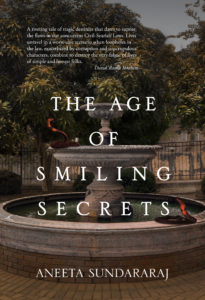 In July 2018, soon after the manuscript for my novel, The Age of Smiling Secrets, went to print, I wrote a story about the prevailing position of the law in Malaysia where both parents must consent to the conversion of a child to Islam. It stemmed from newspaper articles about a high-profile case involving the unilateral conversion of a child to Islam and the jurisdiction of the courts in Malaysia. It is now commonly called the ‘Indira Gandhi decision’.
Why was this case such a big deal in the first place? Quite simply, under Malaysian law, once you embrace Islam, your identity changes forever. You retain the right to seek redress in the Civil Courts, but you’re subject to the laws and jurisdiction of the Syariah Courts. This was confusing for the simplest of minds. To understand how it all worked, I set about studying this real-life case from the Indira Gandhi decision. The following is some of what I wrote.
Aneeta Sundararaj is fascinated by the removal of celebrities' wedding photos because of venue. Is this likely to happen in Malaysia?
One of the things that caught my attention early last month was a story about the wedding photos of the Hollywood couple Blake Lively and Ryan Reynolds being removed from websites. Why had those photos caused such offence? The answer was because the wedding had taken place at a US plantation which was ‘a site that holds deep traumatic historical meaning for the African American community’. (1)
A story about a Malaysian author, a locally-published book and a miracle in a faraway place a few days before Christmas.
There is no winter to speak of in tropical Malaysia, but on 18 December 2019, all that came to mind was that it was a bleak midwinter. In the last few weeks, I'd managed health issues of dear ones, the shocking death of a friend too young to die, assignments to submit, deadlines to meet, the flu, severe allergies to the point of developing painful welts all over and the stress of travel. Certainly, it was a lesson in time management and focusing the mind on the tasks before me. There were many low moments, none more so than when I arrived home and switched on my phone to read one sickening message. Even now, I hurt reading the caustic criticisms and cruel judgements that showed an utter lack of empathy for all I was going through.
[Note: This story was first published in CLARITY (15 August 2019). It is published here with permission.]
The scene is familiar: It’s Sunday evening and a family of four come into a restaurant for dinner. The waitress shows them to a table and before they even sit down, all four of them – father, mother, son and daughter – place their phones on the table. Orders are placed and while waiting for the food to arrive, they are glued to their phones.
Maybe, there’ll be some respite when the food arrives. Maybe, they’ll put away their phones for a while. Maybe, they’ll even look at each other for a moment.
Page 1 of 2