
Transform ordinary stories into extraordinary ones with our proven 7-step method. Join thousands of storytellers on their journey to mastery.

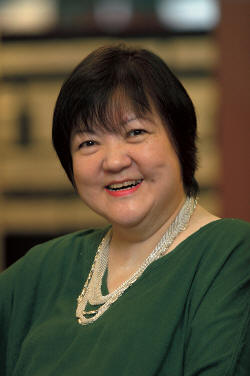 Introduction: In the last edition of my newsletter, I asked if any storytellers would like to be interviewed. I received a few requests and one of them is Teh Saw Im. I was interested in her story and without further ado, I have great pleasure in introducing to you, Teh Saw Im ...
Aneeta: Saw Im, thank you for contacting me regarding your request to be interviewed.
Saw Im: Thank you for having taken the trouble to provide me with this interview, Aneeta.
Aneeta: Tell me, please, something about you. Where were you born, what do you do for a living, where do you live now and anything else you’d like to share with my readers.
Saw Im: I was born in Penang, and went to school there, until just after Form 5. I then joined boarding school in the UK in winter, skipping the autumn term and imagining I could ‘save a year by merely missing a term’. It wasn’t as simple as that. The winter was cold and unfriendly, and descending on it suddenly took a bit of while to get used to. I found Chaucer unmanageable, having overlooked a term of him. The other subjects were not too troublesome, even having to take on ‘O’ level Latin. I needed at least two credits in GCE O’s for two European languages, for the courses I was interested in applying for. I didn’t remember any of the declensions after that! Post the exam, that is.
Prior to all this, in the middle of Form 4 in Penang, this friend and I decided to give up Additional Maths or Higher Science, so that we could take up French, which wasn’t even taught at our school. We thought it’d be fun. For this, we had to go and hunt for this French nun in some convent far away.
Apparently, our decision to do this caused quite some flurry and furore at school, with some teachers who reminded us that we wouldn’t ‘score’ very well in a subject which was so foreign and unfamiliar, especially when we had taken it up at such short notice. Anyway, it felt much more romantic than some dry science subject. Why, when we would be able to fare well in a subject we were already good in? Why, indeed. I don’t believe we emerged from all this with a scandalously great grade in French, but miraculously, we did pass.
In the dark recesses of the mind, I am convinced I wasn’t even aware then, that I’d need two European languages for my university application, since I didn’t exactly know what course I’d be aiming to do. (I wonder why Malay wasn’t subsequently considered. Perhaps it was because it wasn’t connected to the course I eventually applied for.) I was grateful that somehow, those choices made to do drop a Science subject for French, had turned out to have been a wise move, and the Latin challenge had been seen to, after it was realised that it was necessary..
When I returned from schooling abroad (I read History at the School of Oriental and African Studies, University of London, and went on to the Institute of Education for my Post-graduate Certificate in Education), I stayed for a while in Penang. After that, I came to Singapore, and have remained here since, though I continue to visit Penang as often as I can. I am now Singaporean.
Aneeta, I was a teacher for many years, and enjoyed those years teaching. I always found immense meaning in that. The students perpetually have much to offer, and one learns a lot about life through them. It isn’t so much like the teacher providing the information, as a process of sharing. Mind you, when it comes to language ‘instruction’ per se, there has to be a fair amount of skills-provision and correction, as well as improvement. With suggestions included.
I enjoyed teaching the General Paper. I consider it a subject of tremendous challenge, as it is a subject which is a combination of many social studies. On a far-reaching scale, one can probe many subjects for delving into, and for students who enjoy precisely this, they will find meaning.
Therefore, those students who are strong in English normally love it, as it can be approached in a range of ways. Some might see it as an easy subject; others would go so far as to say it’s ‘no sweat’. Those who can’t grasp English satisfactorily, flounder and are unable to see the subject as an opportunity to investigate, discuss and do research, so they will obviously hold views which are at odds regarding GP.
Owing to ill health, I stopped teaching some years back. Since I had always wanted to write, I decided, why not? I now had the opportunity to spend full-time on something I had always wanted to so. Write. So I did precisely that. (I refused to do one of those ‘short-cuts-to-success’ books for exam improvement. These would only be putting on paper what had transpired in the classroom. Some people encouraged me by pointing out that I’d be helping students who were weak in English, and direct them towards a pass.)
I thought I’d rather write a book of a different sort. It might not be commercial, but I had always wanted to start off with this book. I had been carrying around these stories from my cousin in Penang for a truly long time, so it was an instinctive move to ‘unload’ these memoirs.
Aneeta: How did you first become interested in writing and storytelling?
Saw Im: I had always been interested in writing, so it wasn’t a case of ‘becoming’. I suppose, all the way through school, both as a student and teacher, I had been connected with English. It was that link which urged me on. When I took up teaching as a career, it was a question of choice, and the association with English was always there.
Whenever I had gone to Penang, my aged cousin would relate her experiences of her growing up in China, until she was 13, and then coming to Malaya (as it was then known). Like all new immigrants, it was imagined that gold was easy to locate; instead, she ended up as a cabaret girl. I found her stories most intriguing. They were like repeating record-players, but always drawing you to listen to them. They were most fascinating. Eventually, I decided, why not write them out, instead of just making mental notes of them?
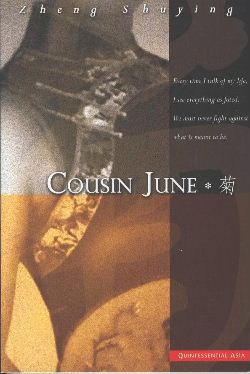
Aneeta: I understand that you have two books: Cousin June and Taxi Talk. Can you please describe them?
Saw Im: Cousin June is a family memoir, really. I thought it might be interesting to write it out and readers might find some things to relate to, that they might wish to do research on their own grandfathers or grandmothers, or people in their families. I suppose I simply conveyed what my aged cousin transmitted with her power to reveal, her ability at oral history. My cousin June is very good indeed, in her skills at explaining rituals, rules and codes of a past era. Through her, I gathered the material for my first book, and appropriately named it after her. I merely put into words as best I could, what I had accumulated.
A friend once said to me, who would want to read YOUR family memoir? You are no famed (she then named a string of people), so really, who would want to read about your family? I suppose I had seen through the stories of my cousin what diverse and unique bygone practices were like, or unlike, and there were just so many experiences worth writing about, for general interest.
At this point, I should mention and thank the National Arts Council for their support. It was a morale booster of sorts.
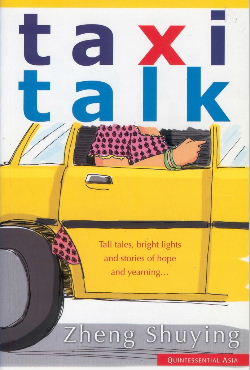
As for ‘Taxi Talk’, it was my second book. Nothing mind boggling. Just a piece of light reading. It came soon after ‘Cousin June’, and didn’t really take that long to type, though the publishing stretched a bit. The book came about after 18 years of taxi-riding, and this feeling, ‘why not put into words, some experiences’. Now, how do I explain that? I hope it doesn’t sound egoistic.
I write better when it’s in the style of beginning from some place or person I feel a link towards. Then I move from there to imagining something else, or taking what is normally given to a writer. A certain amount of space.
‘Taxi Talk’ resulted from many years of taxi-riding. Travelling in these vehicles and listening as well as participating in discussions with taxi-drivers gave rise to a wealth of observations. To give you an idea of this, the blurb for the book speaks of it being an ‘interlocking set of stories about an inimitable cast of drivers and passengers, describing life’s many journeys (comic and otherwise) and how we try to connect (or don’t) with one another’. That just about sums it up.
For further information about these books, please visit http://www.snpcorp.com/.
Aneeta: You also use a pseudonym – Zheng Shuying. Why?
Saw Im: I thought the ‘hanyu pinyin’ version of ‘Teh Saw Im’ sounded more romantic, so decided to go ahead with using it for publishing. I think it was a mistake. Almost everyone I knew wasn’t aware of this move. In a way, it was almost hilarious to be anonymous. Still is, actually. That certainly hadn’t been my intention at all. One of my friends said wryly, it didn’t matter. Whatever name one used, so long as one’s book was worth reading, people would buy it. A rose by any other name, huh? Obviously, I didn’t have enough draw. There wasn’t sufficient sensationalism or the right doses of what attracts readers. Now that’s a bit of deflation for you!
Aneeta: In your email to me, you mentioned that your friends had bought one copy of the book and circulated it amongst themselves. I smile as I write this. It sounds familiar! I want to know, why do you think people do this? Why not just buy a copy of the book for themselves rather than share it?
Saw Im: That happened in Penang. The joke about Penangnites is that they’re known to be stingy. That’s not necessarily true. It’s a bit unfair. Anyway, when I saw ‘Cousin June’ at MPH, it was relatively expensive there. But then, everything is ‘relative’. The belief was why spend on an un-required item when a common one can be shared?
As for getting one’s own copy, it’s a question of not wishing to fork out the money unnecessarily when it can be saved. I assume it’s along the same lines of that philosophy.
Aneeta: As you know, this website caters for storytellers. What advice do you have for those who would like to become storytellers?
Saw Im: I don’t have that much writing experience, though I’ve spent many years teaching. At any rate, one shouldn’t give ‘advice’ because ‘to each his own’, don’t you think? Somewhat pretentious. I have a small group of friends who are supportive. I find that helps. For some people with flagging spirits, this will certainly prop them up a bit.
Each person has his or her personal style of writing. I wouldn’t venture to suggest any ‘methods’. It is more one’s overall view to any situation. The entirety of it. When it comes to writing ‘success’, again, this is a relative term. For me, it is the effort, and the journey. I am convinced the ongoing activity never ends, and it is precisely the meaning of this which features in the wishing, the necessity and the push. This continual experience is personal, and brings its individual rewards, recognised and felt only by the aspiring writer.
The ultimate may not be reached, but it doesn’t matter. We may all have our own reasons for yearning to write. I wouldn’t dare ‘advise’ your readers. I’d just like to share my reasons for wanting to write. It keeps me healthy mentally, though physically, my health hasn’t been that wonderful. At least, I believe I can do something with my time. It is something I find I need to do for myself.
Aneeta: Saw Im, this is all I have to ask. Is there anything else you’d like to add?
Saw Im: I’d like to suggest to your readers, if possible, to always have with one, a little notebook within reach so that when one has a sudden flash of ideas or an experience crops up, this can be quickly recorded. This might prove to be meaningful for subsequent reference or expansion. Because I have memory problems, I find this helps. Sometimes, one might lose some idea or piece of inspiration or imagination, which might then disappear, and one is unable to reproduce it. Having a notebook at hand might perhaps alleviate this tremendously.
Aneeta: Thank you.
Saw Im: Aneeta, it was a pleasure to have had the chance to have chatted with you.
This piece may NOT be freely reprinted. Please contact editor @ howtotellagreatstory.com for reprint rights.
Click here to return to the index of interviews on 'Blow Your Own Trumpet!'
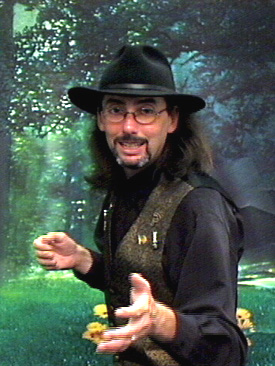 Introduction: In the last edition of my newsletter, I again asked if any storytellers would like to be interviewed. I received a few requests and one of them is James Nelson-Lucas. I was interested in his story and I have great pleasure in introducing to you, James Nelson-Lucas ...
Aneeta: James, thank you for contacting me.
James: It’s always a pleasure to be in support of the storytelling community.
Aneeta: On your website, http://www.jamesstorymagic.com, it is stated that you are, amongst other things, a storyteller, an actor, musician … and so much more. All this seems to point to a person who must have had a diverse background. Therefore, please share with us a little about your background – where were you born, where did you grow up, where do you live now and anything you’d like to share with my readers.
James: I was born in the shadow of Disneyland. I used to watch the fireworks from my bedroom window. When I was 10, we moved to North San Diego County. I have been here ever since.
Aneeta: When did your interest in storytelling start?
James: Well, I could say when I was five. My mother hired a magician for my birthday. I was taken. I mean, a grown up getting paid to be on stage. What a good deal. So I asked to learn at his knee. By the time I was six I was getting paid as a magician. What does that have to do with storytelling? Patter! Patter is what the magician says while he performs. In reality, patter is just a series of short stories designed to distract the audience from the slight of hand. Form there I spent years acting, writing, etc. I started calling myself a storyteller about ten years ago when I met my storytelling partner. When she met me she told me I would be a great storyteller. I did not even know it was a job. But I started to go to her gigs. Then I started helping to tell. One thing led to another and I have never looked back.
Aneeta: There is something on your site called The Patchwork Players. What is this and what is your role in it?
James: I told you about my partner, Patti Christensen is her name. We have been telling stories together my entire storytelling career. We are a troupe of two. We perform in a style called Story Theatre. It is very active and interactive. Kind of a cross between acting and telling. Something like the theatre that may have been seen in the streets during Shakespeare’s time. Not that we tell Shakespeare, but we do tell in that style. In addition, we both tell solo in a more traditional style. Both are very rewarding ways to tell.
Aneeta: What kind of audience do you cater for and what kind of stories do you tell?
James: I love all audiences: kids, adults, seniors. I think my favourite is a family audience. That way, I can layer my performance with something for everyone. I love to tell a tale that is accessible to kids, but speaks to adults as well. I am influenced by the old Warner Brothers cartoons. Wackyness and fun for the kids, but with jokes and references aimed at the older folks. My favourite type of story is the folktale. Not only are they fun, but the have morals and lessons. They are also great cultural transmitters. It allows people to learn more about their own culture and to learn about the cultures of others.
Aneeta: As you know, this website caters for storytellers. My question, therefore, is what advice would you give to those who would like to start telling stories?
James: We are all natural storytellers. Every day we share our experiences in story form. So you already have it in you. Don’t sweat the details. Few tellers tell by rote. Most of us tell by the bones. If someone asked you to tell the Three Little Pigs, would you run for the book? NO. You know the story, so you tell it. It is the same way with longer and more complicated tales. Learn the bones. What happens to who, where and when; beginning, middle and end. From there you can “tell” the story. Then tell, tell and tell some more. In time, you will find your voice, the stories will come to you with greater ease. And remember to call yourself a storyteller. Give yourself the props and the skills will follow.
Aneeta: James, this is all I have to ask. Is there anything else you’d like to add?
James: Support the the storytelling world. Go to festivals. Buy tellers’ CD’s and books. Join your local guild. Convince your PTA, Library or Community Theatre to present tellers. Share the world of telling with friends, loved ones and strangers who will listen. In short, be active in the community.
Aneeta: James, thank you.
James: Thank you for working to spread the word.
This piece may NOT be freely reprinted. Please contact editor @ howtotellagreatstory.com for reprint rights.
Click here to return to the index of interviews on 'Blow Your Own Trumpet!'
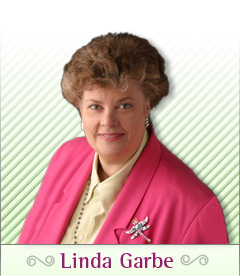 Introduction: In the last edition of my newsletter, I again asked if any storytellers would like to be interviewed. I received a few requests and one of them is Linda Garbe. As I did the research for the interview, I was indeed fascinated by her references to all sorts of things. For instance, she talks about something called 'Wasabi Tsunami'. I shall not tell you what she's said but will invite you to read the interview proper. Without further ado, I have great pleasure in introducing to you, Linda Garbe ...
Aneeta: Linda, thank you for writing in and asking to be interviewed.
Linda: The interviews you have done illustrate the wide world of storytelling and the many approaches to using story. I thought my work in corporate America might be of interest to your audience.
Aneeta: Tell me a little about yourself. Where were you born, where did you grow up, what do you do for a living and anything else you’d like to share with my readers?
Linda: I was born in Paris, Illinois, and lived on a farm surrounded by generations my family. My education began at Plum Grove, the same one-room county school my Grandmother attended. When I was six years old, we moved from the farm to the big city—Skokie, Illinois, a suburb of Chicago. By the time I began high school, we had moved to Bloomington-Normal, Illinois, and there I have been through high school, college, and a 38-year career with State Farm Insurance.
My entire career focused on communication. I began as a graphic designer, became a writer, and eventually led creative groups. When I retired as Assistant Vice President of Creative Services, I was responsible for designers, writers, producers, directors, photographers and technical experts who developed communications solutions for nearly 70,000 employees, 16,000 agents, and millions of customers.
All of these experiences led me to my current adventure – The Garbe Creative Group. I work with companies and individuals to help them understand and use the tremendous power of storytelling.
Aneeta: How did you first become interested in storytelling?
Linda: It seems I have always been interested in storytelling. Facts never interested me as much as the context or the story used to explain the facts. I always preferred to be around people who gave me the background story not just the facts. It may have been being surrounded by generations of my family growing up listening to them talk about their lives that sparked my interest in storytelling. Eventually, I came to understand that feelings hijack facts. Somehow we are led to believe having the facts will get results. During my years in a Fortune 500 Company I learned facts are important and you have to know your stuff, however, facts alone are not enough. You have to be able to connect with people and facts generally don’t help you do that. Your ability to mix content (facts) and context (story) will determine the results you get and how successful you are.
I think my understanding of communication and the power of storytelling is a result of my experience as a graphic designer, writer, and leader of creative groups. No matter what the delivery format: speeches, videos, multimedia, print, events, or one-on-one conversations, you have to find the perfect combination of fact and story to produce the results you need.
Aneeta: On your website, http://www.lindagarbe.comm, under the Tab ‘Your Story’, you have listed ‘In Pursuit of Perfection’, ‘Secret Weapon’ and ‘Unique Unqualified’. I really enjoyed reading these. For the benefit of my readers, can you please explain these?
Linda: These are all ways to tell visitors to the site why they should invest time in learning how to tell stories.
In Pursuit of Perfection encourages perfect communicators viewing my site to move on to a game site. However, those who have problems to solve and communicating to do are encouraged to hang around and learn how the ability to solve problems hinges on the ability to mix content (facts) and context (story) to create a compelling and memorable message.
Secret Weapon informs viewers storytelling is as powerful as Dick Tracy or Superman.
These heroes needed their secret weapons. You need your stories. Without your stories you are invisible.
Unique Unqualified explains the great value of your unique view of the world. Why use someone else’s story when you have stories no one else could tell?
Aneeta: Again, under the ‘Story Power’ Tab, you’ve got these fabulous sub-headings. I’ll not ask you to explain them all. But, I am exceedingly fascinated with Wasabi Tsunami. Can you please describe this?
Linda: Wasabi Tsunami is about the power of each word we use. I have seen the difference one word can make. Use the wrong word and you lose your audience. Wrong words are ones that cause your audience to stop listening to you. You can have the audience in the palm of your hand and suddenly use a word that causes them to stop hearing you and begin thinking about something else. The word has another meaning for them.
A 1997 article in a business publication stated: “There is a tsunami of disdain for the insurance industry.” Working in that industry, I was not pleased to read this. However, as a communicator I appreciated how clearly the phrase conveyed the author’s point. I began using the phrase to describe things I did not like.
In 2004, when an earthquake in the Indian Ocean created a devastating tsunami, I stopped using the phrase. Suddenly, people all around the world knew the real meaning of “tsunami.” Had I continued to use the phrase “tsunami of disdain” people would have stopped listening to me because the word “tsunami” would have reminded them of the recent disaster.
Time and place have a huge impact on people’s reactions to words. By 1980, avacado-colored appliances, which had been cutting edge in 1960, had come to signify tacky and out of date. In 1980, people did not purchase products described as “avocado green.” They did, however, believe themselves to be cutting edge when purchasing a product described as “wasabi green.”
In order to predict color trends, researchers show people color swatches and ask them to describe the color. In 1980, when researchers showed people an avocado colored swatch from the1960s, people used the word “wasabi” to describe the color. The green reminded them of the wasabi being used by restaurants particularly on sushi. Eating sushi was trendy; owning an avocado refrigerator was not.
You have to know your audience to have a chance of knowing what the wrong word might be. A word may work for one audience and not another. A word may work in one part of the country and not another. A word may work this year and not the next. Each word is important.
Aneeta: I understand that you provide a whole host of services. Can you please describe what it is you offer and how my readers may contact you?
My services include: speaking, training, coaching, and custom workshops and retreats.
You can find more information at www.lindagarbe.com Select “Linda’s Story” tab on the home page and then select “Services For Sale.”
Listening to your story is where I start. I’d love to hear from you.
Linda Garbe
President – The Garbe Creative Group
15 Bent Tree Lane
Towanda, Illinois 61776
309 728-2236 Home
309 728-2037 Office
309 824-9236 Cell
www.lindagarbe.com
Aneeta: Linda, as you know, this website caters for storytellers. What advice would you give those who would like to venture into storytelling??
Linda: Whether you want to be a performance teller or to understand the power of storytelling in the workplace, it is important to realize you already are a storyteller. Everything you do or say tells others about you.
I do an exercise in my seminars where a person speaks for five minutes about someone who has been very important in their life. I then ask the listeners to write down what they can conclude about the speaker. I am not asking about the person the speaker talked about; I am asking about the person who was speaking. It is amazing how much people can conclude from listening for only five minutes to someone they have never met. People are able to make statements about what the speaker values and what they would be like to work with. When I share the assessments with the speaker’s co-workers or family, they attest to how on target the assessments are.
People rarely understand they tell people who they are every time they talk. In performance telling and to succeed at work, you must know what you want to communicate. As Doug Lipman says, “What is the ‘MIT’ – most important thing?” Next you must know your audience so you can determine the best way to deliver the story.
These sound very obvious, but years of observations tells me many people tell stories without knowing the MIT or understanding the audience. It takes time and substantial work to figure this out. Spend the time.
Aneeta: Linda, this is all I have to ask. Is there anything you’d like to add?
Linda: I’d like to share my favourite quotes about the power of storytelling.
The Power of Story
Influence does not flow between cubicles filled with strangers who don’t trust each other, don’t respect their boss, and are living out stories of apathy, resentment, or both. Influence comes from paying attention to those you wish to influence, their stories, the stories you are telling yourself about them, the stories they tell themselves about you and the story not yet told that speaks to both of future collaboration and mutual respect.
Annette Simmons
The Story Factor
Leaders lead through stories. Who am I as a leader? Who are we as a group, unit, department, or organization? Where are we going? Wrap your teachable point of view in a narrative that excites people not a power point presentation.
Noel Tichy
Professor
University of Michigan Business School
“Thou shalt not” is soon forgotten, but “Once upon a time” lasts forever.
Philip Pullman
1996 Carnegie Medal acceptance speech
The ability to tell the right story at the right time is emerging as an essential leadership skill to cope with, and get business results in, the turbulent world of the 21st century. It’s also a critical capacity for personal interaction and happiness with family and friends.
Stephen Denning
The Springboard Story
One can’t make a new heaven and earth with “facts.”
Henry Miller
Author
Aneeta: Linda, thank you very much for sharing all your experiences and stories.
Linda: Thank you for the chance to share my passion for storytelling.
This piece may NOT be freely reprinted. Please contact editor @ howtotellagreatstory.com for reprint rights.
Click here to return to the index of interviews on 'Blow Your Own Trumpet!'
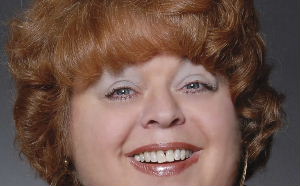 Introduction: Susi Wolf is one of the people who responded to my request for people to interview. As I did the research for the interview, I was fascinated by her reference to therapeutic storytelling. I shall say no more about this and let you read for yourself what she means. Without further ado, I have great pleasure in introducing to you, Susi Wolf ...
Aneeta: Susi, thank you very much for contacting me.
Susi: Thank you, Aneeta, for asking me to take part in this interview. I am honoured to be able to share some of my storytelling experiences with your readers.
Aneeta: Let’s start with a little about you. Please tell us, where were you born, where did you grow up, what do you do for a living, where do you live now and anything else you’d like to share with my readers.
Susi: I am a native Southwesterner, hailing originally from Phoenix,Arizona. I moved to Texas many years ago and was inDallas until I relocated toAlbuquerque,New Mexico in June of 2000. I came toAlbuquerque to tell stories at a wolf rescue ranch and within a day I felt this inexplicable pull to be here. I went back toDallas, quit my graphic design job, gave away almost everything I owned, put my car on a trailer and drove a U-Haul across westTexas. I did not know a soul, have a job or anything when I arrived inAlbuquerque; but I knew I was doing the right thing and that I was being led to theLand ofEnchantment. I discovered that, because of the economic situation inNew Mexico, it’s difficult to make your living as a full-time storyteller so I work at a non-profit agency where I train public housing residents in life skills, job skills, financial literacy and technology. I always use storytelling and metaphor in my training classes as it enhances their learning.
Aneeta: On your website, http://www.wolfsongcreative.com, you give a very good answer to the question, “When did you become a storyteller?” For the benefit of my readers, I would like you to give me your answer to this question as well, please.
Susi: I’m smiling, Aneeta. When I am asked, “When did you become a storyteller?” I reply, “When I was born.” It is a gift. It is a need. And it is innate to the very makeup of being a human. And it is in all of us. I firmly believe everyone—men, women, children, and selected wolves—are storytellers.
Aneeta: What, in your eyes, is the true importance of storytelling?
Susi: The key word, I believe, is connection. Story connects us – to self, to each other, to our Higher Power. It gives us freedom in expression. When I don’t have the words to share how I am feeling, I can let Story express it in metaphor. I have witnessed firsthand how Story allows people to look at their own perceptions and behaviours but with a psychic safety net so they don’t fall.
Aneeta: I am very interested in one aspect of your work and that is therapeutic storytelling. Can you please explain this in detail? What does it mean? What do you do? And who is involved in this therapeutic storytelling?
Susi: Therapeutic storytelling to me is a specialized method for telling for healing. Rather than using traditional talk therapy, listening to stories allows people to explore their feelings and beliefs on the coat tails of metaphor. Many cultures have traditional wisdom or sacred stories that would be used by healing people. But I think we can use almost any story in the therapeutic arena. If we as tellers are open in presenting the tales we feel will be helpful and appropriate, then we are doing therapeutic storytelling. It can be in shelters, in crisis situations or even one-on-one.
I personally have used therapeutic storytelling in domestic violence shelters, addiction recovery facilities, incarceration, crisis centers, shelters, and more. It’s important to remember we are storytellers and not therapists. Let Story do the work for you. The answers and the healing people seek will be brought to them through storytelling, not your expounding with sage advice on how they should change their lives.
Once we understand the needs of our listeners, we can intuitively know what story they need to hear. And they can find the courage to change by listening to stories. Here is one real-life example:
“Story saved my life.” These are the exact words from a courageous young woman fighting to win a battle with abuse and addiction. She confided after one of our weekly storytelling gatherings that often she wanted to leave her recovery program and return to a life of drugs. But knowing that Story offered truth and metaphors for healing, she stayed. She listened. And she changed. And that’s the gist of it. Storytelling changes folks. Always has. Always will.
Aneeta: How can my readers contact you if they wish to engage you as their storyteller professionally?
Susi: They can call me at 505-881-1220, visit my website (www.wolfsongcreative.com) on the “Contact Us” page or email me directly at
Aneeta: As you know, this website caters for storytellers. What advice would you give those who would like to get started?
Susi: Use your library or the Internet to find stories. Read, read, read. Listen to as many other tellers as you can. It’s all about finding your own voice and which types of stories appeal to you. Tell only those which you love. For instance, I rarely tell tall tales. It’s a wonderful, fun venue but it is not my voice and, therefore, my performance may not sound authentic.
Aneeta: Susi, this is all I have to ask. Is there anything you’d like to add?
Susi: Life is about change, which frightens many. But it’s inevitable. Humans are just creatures undergoing constant renovation. And Story reflects that. Consider how often the theme is transformation. The frog that is kissed…Cinderella meets a prince…the ugly duckling becomes a swan. Consider how many changes you have undergone within your own life. Like the cricket that buries itself inside the lion’s ear and won’t leave, Story beacons us to listen. Just be still and LISTEN!
Aneeta: Susi, thank you.
Susi: Thank you again, Aneeta, for allowing me to share my thoughts. And special appreciation for all you do to promote storytelling. It’s a wonderful newsletter.
This piece may NOT be freely reprinted. Please contact editor @ howtotellagreatstory.com for reprint rights.
Click here to return to the index of interviews on 'Blow Your Own Trumpet!'
 Introduction: In March 2008, out of the blue, I received a very lovely email from Victoria. She had come across the website and wrote to tell me she was impressed with the site. I followed through with this by asking her if she'd like to be interviewed. Her story and the 44 Reasons for Teaching Storytelling captured my interest most of all and without further ado, I have great pleasure in introducing to you, Victoria Gregor ...
Aneeta: Victoria, thank you for sending me that first email and for agreeing to this interview.
Victoria: I am happy to answer your questions.
Aneeta: Please tell me a little about you. Where were you born? What did you grow up? What do you live now and what do you do for a living?
Victoria: I was born in the Fort George G. Meade, Maryland army base hospital and grew up in Odenton,Maryland. When I was 8 years old, we moved to Baltimore, Maryland.
After getting married, I lived in Baltimore, Louisiana, and Washington D.C. When I became an Air Force wife, I lived in Washington State, Kentucky, Las Vegas, Nevada, and Simbach, Germany, and last of all, Tampa Florida.
I taught sixth grade Language Arts and Geography for 23 years in the Hillsborough County, Florida Public Schools. I retired two years ago and I love having time for my family, traveling, and being a board member for the Florida Storytelling Association and a member of the Tampa/Hillsborough Storytelling Festival committee.
Aneeta: How did you first become interested in storytelling?
Victoria: When I was growing up, I visited my grandmother Victoria often. At bedtime she would always dress my siblings and me in my grandfather’s tee shirts, and would fix a plate of Ritz crackers with peanut butter or cream cheese for us to nibble on while she told us stories about her growing up or would turn all the lights out and tell us ghost stories. She actually believed in ghosts, so she really had our attention. My grandfather would sneak outside and would make spooky sounds and make scratching or tapping sounds on the walls. Even though we always knew it was he, it still gave us goose bumps and made our spines tingle.
I have carried those memories throughout my life. I will be 72 in June. I loved my grandmother so much and am extremely proud to have her name. She was such a positive force in my life and I think of her every day. Now I am a grandmother and I love my grandchildren and try to influence them as my grandmother did me. I also have a granddaughter named Victoria. I’m so proud that she is carrying the legacy of my grandmother.
Aneeta: You are clearly a person who is interested in using storytelling as a tool. Now, please explain this a little more. Why do you feel storytelling is so important?
Victoria: I am a person that always follows the curriculum guidelines and make sure that I incorporate them into my teaching. When I first was teaching, I followed the textbooks and lots of workbooks. As I got experience and realized that student’s needs weren’t being met and, on top of that, they were bored, I started using my creative side to develop my own activities and materials to teach and reinforce required skills and those skills that are needed for success throughout their lives and careers. The students still used textbooks to reinforce whatever we were studying.
Aneeta: I understand you have created a list called 44 Reasons for Teaching Storytelling. What are these 44 reasons?
Victoria: I got very bored with mandatory teacher workshops that were often painful to sit through because they merely reiterated what already been learned. (Thank goodness, today most are really worthwhile.) One time, I was looking over the schedule for the day and saw a workshop on teaching storytelling. I went to it and it was wonderful. The presenter was Charles Phillips, a sixth grade teacher. He had his students perform their stories for us to demonstrate how valuable storytelling is for developing academic and life skills. I couldn’t wait to get back to school to begin teaching storytelling techniques to my students.
The Forty Four Reasons were researched so that I could show administrators and other teachers how valuable teaching storytelling across the curriculum. For years, I’ve heard the comment, “We don’t have time to play.”
My response is, “I make the time because of the fantastic growth my students developed because of the use this approach.”
I started to research and still am doing it 20 years later. I expanded the information from the workshop that first got me started. I have volumes of information, data and observations to show how learning storytelling was a life changing experience for my students. My strong belief of how important this tool is came from years experience, research, personal observations, and students, teachers, and parents’ comments on how much it benefited the students.
Aneeta: Am I right in saying that you’ve now used these 44 reasons as a basis for a book you’re writing? If so, would you care to share some information about this book – it’s intended audience, the themes and so on.
Victoria: Yes, my goal is not to get praise for myself. I am a teacher because I want to help students become the best that they can be. It is, in my opinion, that teaching is not just a job. It is a dedication to work diligently to give students confidence, a positive outlook on life, and the tools to help them find success.
Aneeta: You’ve told me about the Tampa-Hillsborough Storytelling Festival Coaching Manual you co-wrote with others. Can you please provide my readers with some information about this manual and also the website http://www.tampastory.org?
Victoria: The manual was written by Virginia Rivers, who started the festival more than 25 years ago, Amy Crane and myself. It is a guide for parents, teachers, and others who work with children. The festival is the largest in the country that highlights youthful storytellers. Each year we have about 400 children who learn stories and perform at the festival. We also hire professional tellers to perform and to interact with the children. It’s all day and has many activities. Best of all it is fun for the whole family and is FREE. The manual can be downloaded from the website or can be purchased.
Here is a copy of the 44 reasons. Please note that I don’t mind people passing it on. As I said, my goal in life is to have more and more people push for using storytelling as a valuable tool that changes lives. I do ask that any copies that are given out have my personal information and the statement that permission is needed when it is transmitted electronically.
1. Aids in strengthening ability to recognize sequencing details
2. Benefits the listener as well as the teller
3. Creates a link between reading skills and writing skills
4. Creates an opportunity for students to have fun while learning
5. Develops higher level of comprehension
6. Develops and strengthens visualization skills
7. Develops an awareness of varied writing styles
8. Develops awareness of how words affect an audience
9. Effectively integrates social studies and science into the language arts curriculum
10. Enhances vocabulary and language development
11. Enhances development of higher thinking and analytical skills
12. Enhances ability for identification of main idea
13. Enhances understanding when tackling unfamiliar text
14. Fosters the development of creativity
15. Fosters positive peer interaction and cooperation
16. Fosters development of self-confidence, pride, poise, and self-esteem
17. Furnishes a vehicle for the passing on of factual information
18. Gives teachers insight into their students’ feelings
19. Gives students insight into human behavior and motives
20. Helps promote multi cultural sensitivity and understanding
21. Introduces effective patterns of language
22. Is an effective vehicle for teaching and reinforcing curriculum standards?
23. Is a tool for evaluating and capitalizing on a student’s strengths?
24. Keeps alive the beliefs and culture of a people
25. Promotes development of listening skills
26. Promotes an appreciation for the talents of others
27. Promotes internalization of effective writing techniques
28. Promotes an enthusiasm for learning
29. Provides an opportunity for students from all reading levels to succeed
30. Provides for subconscious acquisition and familiarity with narrative patterns
31. Provides opportunities for self-expression
32. Provides teachers an opportunity to learn a great deal about student needs
33. Provides positive sharing experiences for students
34. Reinforces learning of writing skills
35. Reinforces and enhances reading skills
36. Shows the relationship between the written word and spoken word
37. Skills learned are transferred to other reading and writing activities
38. Stimulates interest in reading for pleasure
39. Strengthens the ability for recognition and memory of details
40. Strengthens sequencing skills
41. Strengthens analytical skills
42. Supports and reinforces concepts taught across the curricula
43. Teaches and reinforces oral skills in all areas of the curriculum
44. AND MOST GRATIFYING OF ALL: Reluctant students who do not feel as competent as their peers and who are considered “losers” by themselves and others, often become the star storytellers. This positive experience turns students around and changes their outlook on what they can accomplish.
MAY NOT BE REPRODUCED OR ELECTRONICALLY TRANSMITTED WITHOUT PERMISSION FROM THE AUTHOR.
Aneeta: Thank you very much, Victoria, for sharing this with my readers. As you know, this website caters for storytellers. What advice would you give those who are interested in taking up storytelling as a vocation?
Helpful hint for getting storytelling jobs:
1. It’s getting tougher to get gigs in the schools and libraries, as budgets are tighter than ever. Many professional tellers tell me that they always take my 44 reasons with them when they’re trying to do a performance in schools. On the festival website, you’ll also find a poster of skills taught by storytelling and a list of Florida’s curriculum standards that are reinforced.
I almost fainted one day when a reporter from the Kansas City newspaper called me and asked to interview me. A professional storyteller had told her about me. She said that I had given a copy of the 44 reasons to him a long time ago and that when principals or administrators are dubious about storytelling, he gives them a copy of my reasons. He said that their expression changes and he usually he gets the job. That makes me so happy that the word is getting out. The reporter wrote a great article.
There are also other storytellers who have told me the same thing, so feel free to use the information.
2. Explore businesses (business meetings), nursing homes, hospitals, assisted living residences, parties (for children or adults), Boy Scouts and Girl Scouts, churches, and social clubs. STORIES AREN’T ONLY FOR KIDS. Look at Bill Cosby. I went to one of his shows and he had a chair and no other props, and told many wonderful and hilarious stories. I’ll never forget it.
3. Talk to other storytellers to find out what the going rates are.
4. There are hundreds of storytelling sites on the web and you can find stories of all types from to get you started learning to tell and “how to” tips from seasoned tellers. Information on therapeutic stories, healing stories, attention grabber stories, and many, many other types are also available.
Aneeta:Victoria, this is all I have to ask. Is there anything you’d like to add?
Victoria: As I think of them, I’ll send them to you.
Aneeta: Victoria, thank you.
This piece may NOT be freely reprinted. Please contact editor @ howtotellagreatstory.com for reprint rights.
Click here to return to the index of interviews on 'Blow Your Own Trumpet!'
 Introduction: I thought I'd interview someone I've 'known' for years as he's a columnist for my newsletter. Yet, from his answers below, I realised there's more to Charles than I thought. So, without further ado, I have great pleasure in introducing to you, Charles Bonasera...
Aneeta: Charles, thanks for agreeing to this interview.
Charles: Aneeta, thanks for having me.
Aneeta: Let’s start with something about you: where were you born, where did you grow up, what do you do for a living and where do you live now?
Charles: Well I was born of Italian immigrant parents in Buffalo, NY in a primarily Italian community. We then moved to the suburbs when I was about 4 years of age during the height of World War II when Italians weren’t regarded with much respect. But my mother was a strong woman and was able to win people over to put that prejudice aside. I credit both of my parents for having shown me what the important priorities in life really are as well as what it means to help others who may have problems or who are less fortunate. We moved to California when I was 10.
I guess those values led me into the helping professions with my decision to become a psychotherapist for which I received professional education and training. I remained at this position for over 40 years while creating thirty-six different audio programs having to do with mental health issues, I wrote a stress management self-help book entitled “Guide to a Life Management Process” and began to deliver numerous programs on Stress and other mental health issues to schools, banks, corporations, agencies and governmental institutions. In 2003, my wife and I decided to move to Florida where we now live in North Port. Our three children and seven grandchildren live in Virginia, Vermont and New Hampshire.
I’m a personal and business consultant, author, ghostwriter and motivational speaker.
Aneeta: I understand from your website that you’re a trained psychotherapist. Please tell me why you chose psychotherapy and what has been your experience in this field, thus far.
Charles: I’ve always enjoyed working with people and, as with my mother, enjoy helping them resolve some of their problem-issues. My primary involvement has been in relationship therapy including marriage and family matters and now consulting but I am also doing some business consulting as well. I got my start in the early 60s and am still enthralled with the challenges and rewards that come from my role. Much of my role has to do with storytelling in order to help motivate people to change the patterns in their lives that may have become problematic.
As a psychotherapist back in the Buffalo area, I began to focus not just on the problems that people brought to me for help in resolving them but also on the life patterns that they developed as a result of those patterns. In fact, I just today finished writing my newest book, “How in the Hell Did This Happen to Me?” which describes many of the patterns that people move into to compensate for their difficulties. Most of the patterns were developed during childhood and learned from parental figures and may have worked well. Some of the patterns are healthy and useful to this day but others have become unhealthy and no longer useful. My job, both in the book and as a Consultant is to help people identify and change those patterns.
I have always enjoyed writing as a young person leading me to write for my high school newspaper and the Features Editor of my College paper. I’m told that I have an easy style that people enjoy reading and they’ve described it as being “homespun”. My speaking takes on much the same style. I love people and helping them to realize their strengths during the times of adversity in their lives. I’m told that I can get large audiences to have a good belly laugh or a good cry during my presentations. My main theme is simply this: “Life Management is Well Within Your Hands”.
I became interested in stress and wrote a self-help book entitle “Guide to a Life Management Process” back in the 80s which has been revised with the new title of “STRESS: Playing the Game of Russian Roulette.” I started the Sports Stress Clinic working with athletes in various venues to help them focus and deal with the stressors of competition. I created 36 audio programs dealing with stress issues including 9 different relaxation exercises. I also became involved in hypnosis and used it to help people resolve their issues.
Aneeta: From our association over the past few years, I’m aware that you’re a consultant, author and motivational speaker. Of these three roles, which one do you enjoy the most and why?
Charles: That’s a difficult choice since I enjoy each of them immensely. I guess, though, that my speaking role is one I enjoy most because I can reach many people with whatever the message is that I’m speaking about. In all of the roles that I play, the consistent theme is “selling mental health” which still has a stigma associated with it. I try to offer practical and sometimes humorous solutions for people to try and improve their lives and the various roles that they play.
Aneeta: You have several published books. Can you please pick three of them and describe them?
Charles: “Stress: Playing the Game of Russian Roulette” is a very comprehensive self-help book that helps readers to identify the primary stress areas in their lives with practical suggestions as to how to better manage/cope with the stressors.
“The Mental Side of Golf” is a practical book on helping golfers deal with a very frustrating game by bringing real life examples to their attention that can help them become more proficient both at their game and in their lives as well. it contains many areas called “crossovers” from life to the game that will help improve their thought and playing practices.
 |
 |
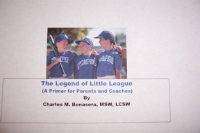
“The Legend of Little League” is a primer for parents and coaches dealing with some of the pitfalls of involving children in little league sports of all kinds.
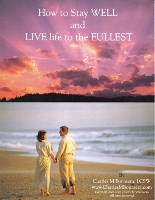
“How to Stay Well and Live Life to the Fullest” which deals with over 150 sayings and mini-stories aimed at motivating people to make necessary changes in their lives around problematic issues.
The book that is about to be published is entitled “How in the Hell Did This Happen to Me?” this book deals with patterns that we’ve brought from our childhoods that do not serve us well as adults or have become real problems in this phase of life. It contains actual case histories demonstrating the various types of problems that are addressed as well as an synopsis and analysis of the histories along with recommendations for changing those patterns.
Aneeta: On your website, http://www.charlesmbonasera.com, I like this saying very much: If we could become inquisitive like a child and ask lots of questions, answers will come. Although this process requires patience, the time spent doing so is well worth the effort. Can you elaborate on this a little more – tell me how you came to make this statement?
Charles: I came up with it because most children are taught to give up what they’ve learned as children in order to enter into adulthood. Children have an uncanny sense of awareness which they tend to put aside … to distrust … as they grow into adulthood. An adult might extend their hand and say “it’s a pleasure to meet you” while a child might say “I don’t like you”. I facetiously remark that children are taught to forget what they’ve learned and then they spend their time and money going to a therapist to re-learn it. Strong irony to say the least!
Aneeta: Charles, you have written that ‘our prized possessions are our thoughts and feelings …’ I like this statement very much. Can you please give me examples of when a person’s thoughts and feelings have affected him profoundly?
Charles: Most of us, while growing up, were taught a good deal about thinking both in our homes and in school. However, very little emphasis was placed on feelings which are the primary goal of resolving by going to therapy. I analogize that both thoughts and feelings have colanders attached allowing each to be put through the other. In other words, thoughts can be sifted through our feelings and vice-versa in order to gain the benefit of both. A good example of this might be someone’s choosing to “sleep on” a decision before making it so that when they awaken, the decision is very clear and the person feels very confident.
Aneeta: I’m sure you use storytelling techniques in your work. If so, which element of storytelling do you use the most?
Charles: Mostly from my own life experiences as well as a myriad of stories about my mother and her astounding wisdom in dealing with people. I use storytelling to help people identify with the character and issues contained in the story which ultimately are resolved in order to help individuals to come to view their own strengths which they may not trust or realize they have.
Aneeta: As you know, this website caters to storytellers. What advice would you give to those who would like to venture into storytelling?
Charles: Speak and write from the heart would be my first piece of advice. A good story must have an enticing beginning in order to gain the audience’s attention, a well-formed middle that creates as sense of mystery and enlightenment, and an ending that brings everything together in order for the reader/listener to come away with a sense of motivation that they might use in their own life.
Read stories with morals or messages such as children’s books to get a feel for what true storytelling is about and develop one’s own unique style of storytelling.
Aneeta: Charles, this is all I have to ask. Is there anything you’d like to add?
Charles: Just one last thing, Aneeta. When I finished my professional education, my only goal was to make mental health palatable for people so that they would not be threatened by it. I define mental health as the search for alternative ways to happiness and I would invite readers of your column to go to my website and learn more about me, my work and my purpose. Also, going there, they will be able to read my many articles by signing up for my monthly newsletter Climbing the Mountain. I trust that they will enjoy the journey that my having developed my website was to take them on.
Aneeta: Charles, thank you.
This piece may NOT be freely reprinted. Please contact editor @ howtotellagreatstory.com for reprint rights.
Click here to return to the index of interviews on 'Blow Your Own Trumpet!'
Introduction: When I made a request for a new columnist, I received many, many emails. One of them was from Richard. I've looked at his website and I feel that he will be able to help some of my readers. I, therefore, took the liberty of asking if he'd like to be interviewed. He agreed; therefore, without further ado, I have great pleasure in introducing to you, Richard Johnson ...
Aneeta: Richard, thank you for agreeing to this interview.
Richard: You are most welcome, Aneeta. This is something I haven’t done before, so please bear with me.
Aneeta: Richard, let’s start with something about you. Where were you born, what do you do for a living and where do you live now?
Richard: Well I was born in Victoria, Australia and still live here. I have had a few different occupations, but I suppose my profession is an Electronics technician. I have worked in the military in the Air Force as a Radio Technician (Ground radar and navigational aid specialist). After some years I went into teaching technicians about radio electronics and maintenance. After nine years in the Air Force, I left to work in other electronics-based jobs. I started out working in the industrial electronics field, then I worked for a company that automated theatres and stage shows like Beauty and the Beast, Phantom of the Opera and Sunset Boulevard. I was in charge of the test department that tested the lighting system that is on the Arts Centre Spire, here inMelbourne, so that the spire twinkles and glows like Tinkerbell’s wand.
I always had this idea of wanting to work in medicine, but didn’t know how to get into it. So I thought I’d go through the “back door”. I studied part time learning about Human Biology via correspondence. I loved it and ended up doing quite well on the assignments. That year I saw a job advertised to work on MRI machines. Wow I thought. That’s what I want to do! Medicine and electronics! I spent the next 6 years in that industry working with a great team of people, doctors and radiologists. Unfortunately, that all went bad. The company was taken over and many of us got sacked, or were bullied into leaving. It was quite nasty. About the same time I became interested in Buddhism and the philosophy associated with it. I classify myself as a Buddhist and I’m very comfortable with it.
Buddhists believe that everything begins and ends-all is impermanent. Some might say that this is to allow new ideas/things to arise. When I lost my job, it made me look towards a new beginning-encouraged by my wife and family. I was compelled to ask myself, “What is it that I really want from life? What is it that I want for the rest of my life? What do I need to do for my family as the main breadwinner? Eventually an opportunity arose that caught my eye. I wanted to teach! So now I teach technicians about radar, radio, navigational aids and in particular, the Instrument landing System that pilots use in bad weather to land aircraft. I’m really happy and satisfied with this as I see an importance in it and I’m constantly writing/rewriting and perfecting the student notes to improve the courses that I create and deliver.
Aneeta: In your email to me, you said something which caught my eye – you are a frequent contributor to Wikipedia. For the benefit of my readers, please explain this – what do you contribute and how does it all work?
Richard: Well Wikipedia is a free online encyclopedia that anyone can edit and contribute to. The main philosophy is that information should be freely available to all people. When I was young my parents spent a lot of money on buying the Encyclopedia Britannica, an encyclopedia consisting of 24 expensive printed volumes. As a child, I learned a lot from them, but they were written in fairly high-level language and were sometimes a little too difficult to understand. The internet has changed the way study and learning occurs. Many of us with the advent of the Internet, have expanded our knowledge of the world with up to date fresh information. Wikipedia achieves this and it is all for free! I believe that information presented as short encyclopedic articles and delivered truthfully and without bias is a great educational method.
All aspiring writers should have a go at editing an article for Wikipedia. It’s actually quite easy and fun. An generally a new contributor picks an article that they know something about, or even feels that the wording could use some improvement, either way you just click on the place that says “edit” on a page and then you adjust and edit accordingly. Finally the save button is pressed and the edits are now instated. This does leave the Wikipedia open to vandalism, however, vandalism lasts a very short time as most people “watch” their most loved pages for changes.
As we know, with so many problems in the world, Education and information is one powerful solution to remedy many of these problems. Wikipedia is a great way of learning about things, as well as honing writing and editing skills and improving on grammar. I started editing Wikipedia while I was learning Professional Editing and Proofreading, it helped immensely. A few examples of the work I have done for Wikipedia can be seen here.
Aneeta: The title of your website is Read-Write-services. Can you please give a few more details about the exact kind of services you provide?
Richard: I write for magazines, usually technically-oriented articles. I provide a low cost editing service for just about any writer who needs a critical eye cast over their work. I have tutored secondary school students in English, science and mathematics and so I offer this as a tutoring service. This is why my business is called Read Write services. Read write is actually a play on the concept of ‘reading something right’, an allusion to correct editing and therefore correct reading of text.
Aneeta: Does storytelling feature in your work and if so, how?
Richard: In my profession as an Instructor, sometimes I need to tell a true story about actual situations, things I have seen and experiences I have had, so storytelling from a public speaking aspect is quite important. Some people say that teaching and instructing is a “performance” I’d agree with that. Many of us can remember the best and the worst teacher we had very clearly in our minds, mainly because we would remember what they said and how they said it-that’s storytelling. I am mainly interested in non-fiction work, but since early this year, I’m trying my hand at fictional storytelling. For me though, it’s a step out of my comfort zone.
Aneeta: What advice would you give those who would like to venture into the world of storytelling?
Richard: Read aloud any work you create. A writer friend of mine says that his neighbour thinks he’s crazy as he reads his work aloud to himself in his backyard-where they can hear him.
Ensure you use punctuation to produce the cadence and “correct” meaning of your words and sentences. I probably use too many commas and not enough full stops. However any articles I’ve submitted have never been edited for punctuation problems. Maybe I’ve just been lucky?
There is an old saying that goes, show don’t tell. Which means use the reader’s power of imagination fired by your words to tell the story, try not to write a report or a dissertation about a story, get the reader to feel like they are there-in the story. That’s what I think makes a page-turner.
Get yourself on the internet and show your work. Produce a sheet of examples of your work similar to this. Clipsheet.
Aneeta: Richard, this is all I have to ask. Is there anything you’d like to add?
Richard: No I think I may have bored the people reading this as is, thank you very much.
Aneeta: Richard, thank you.
Richard: Thank you for your kind invitation for me to express myself. Kind regards to your readers and viewers of this website!
This piece may NOT be freely reprinted. Please contact editor @ howtotellagreatstory.com for reprint rights.
Click here to return to the index of interviews on 'Blow Your Own Trumpet!'
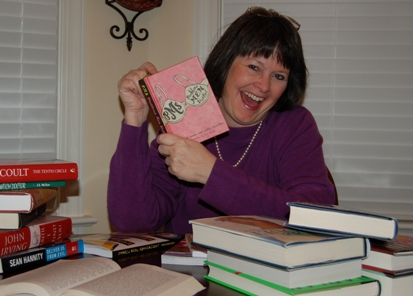 Introduction: One of the people who responded to my request for a new columnist was C. Hope Clark. From the interview below, you'll understand how I felt when Hope responded and, therefore, without further ado, I have great pleasure in introducing to you, C. Hope Clark ...
Aneeta: Hope, thank you for agreeing to this interview.
Hope: You are quite welcome. Always glad to talk to other writers.
Aneeta: Let’s start with something about you. Where were you born? Where did you grow up? What do you do for a living now and where do you live?
Hope: I was born in Rolling Fork, Mississippi. I know, you’ve never heard of it. My grandparents were farmers and my parents were visiting them when I decided to arrive. But with my father being Air Force, I grew up in Mississippi, Illinois, Washington State and South Carolina. I call SC my home since I’ve been here for 30+ years.
I requested an early retirement from the federal government in order to write. With that and my fulltime writing, I make my living. FundsforWriters.com is a career for me. I live on the banks of Lake Murray in South Carolina, where I write every single day, overlooking the ducks, deer, raccoon and other wildlife that live here with me.
Aneeta: I have a confession. When I first received your email, I recognised the URL. It took some time but I soon realised who it was and I must say, I am quite humbled that you’d contacted me! Having your website, Fund for Writers voted Writer’s Digest 101 Best Web Sites for Writers, from 2001 through 2008 is a great achievement. Congratulations! How did you come about setting up this website in the first place? What was its purpose and have you reached the goals you set out for it?
Hope: I started the newsletter first when the emails became too many to answer. My previous life in the federal government was centered around finance, grants and loans. So when I spoke to a group of writers in Atlanta about how to write for the internet in 1999, the conversation somehow gravitated on how to make a living, grants and other money issues. After the meeting, people started emailing me. The newsletter started to cut down on duplicate emails (and allow me to write). In two months, I had 1,000 members. Took me a week to design my first web site and it loaded slowly (everything was dialup in 1999-2000 when I started). I’ve since learned from trial and error how to prepare a web site. But all I wanted to do was show people where grants were and educate them on how to write without tunnel vision. People need to learn about the many money streams there are in writing – grants, contests, publishers, jobs and freelance gigs. Don’t put your eggs in one basket, so to speak. Some fans nominated me to Writer’s Digest when their contest was new. I was surprised to learn I had made the list! Now each year, FFW has seemed to have maintained that position, and I’m tickled to death about it.
Goal? I had no goal with FundsforWriters. I went into it kicking and screaming. I didn’t want to start a venture that was too close to the day job I still worked. I wanted to write fiction. Eventually, I faced the music and realized a higher power was pushing me toward FundsforWriters. A lot of writers don’t understand the networking, study and effort it takes to earn a living writing. So I feel I provide a service. I’m always amazed at how far it reaches and how many people it touches. Just stuns me. I really don’t have long-term goals for FundsforWriters. I maintain it, rotate the inventory (the ebooks), and have fun with the weekly editorials. I enjoy the connection to other readers, and only hope that it keeps growing.
Aneeta: I can see that you’ve got quite a few ebooks on the market. As this website is for storytellers, I would like to ask you about two which, I feel, would be most interesting. They are Short Story Writer and Agent in Your Pocket. Can you please describe these two ebooks?

Hope: These are actually my newest two books. Short Story Writer gives basics on writing short stories then it lists 240+ markets for those shorts. Short stories cover from flash to the longer shorts just under the size of novellas. The markets cover all of them – from 50 words to 25,000 words. A lot of people love writing shorts, and I thought readers would like to test getting them published.

Agent in Your Pocket is a guidebook on submitting to literary agents. It has 140+ agencies in it – most of which I’ve spoken to, written, or known through other writers. In this ebook you learn what an agent expects and how to prepare a query to them. I’ve also included agent blogs and web sites. Great information for the writer who has a polished manuscript ready for publication.
Aneeta: I’ve just read this piece of information and I like you even more – You’ll find me in my study overlooking the dock, talking to the birds and loving my dachshund who ever sleeps at my feet (and in my lap when I let her). Anyone who knows me even for a minute will know that I’m crazy about dachshunds. I have one and let’s just say she’s treated like gold – she’s the granddaughter my father does not have! So, tell me all about this dachshund of yours.
Hope: Dixie’s full name is “Cindy’s Dixie Doodle” on her papers. My first name is Cynthia, but I prefer using my middle name – Hope. Dixie is a miniature black-and-tan, and she is my baby. Everyone in the family will admit she’s definitely mine. She sleeps between my husband and me. She adores chasing the squirrels on the lake bank, and when I built this house, I had her built a window seat at the window with a cushion so she can watch the back for wildlife. She’s slowing down a bit now at 12 years old, but she’s traveled coast-to-coast with me.
Aneeta: As you know this website caters for storytellers. What advice would you give those who would like to become storytellers?
Hope: Write the story, then go back and take each chapter or scene and stir it up. Then go through it again and shake it up again. The first time around is never right. Even when you think you have it down pat, pull a “what if” and wonder what would happen if…and fill in the blank. I’m in the process of doing that now in my edits of my two novels.
Aneeta: Hope, this is all I have to ask. Is there anything you’d like to add?
Hope: FundsforWriters is about writers trying to make a living at their craft. The web site, ebooks and four newsletters we offer educate them on contests, grants, markets, publishers/agents and jobs. I welcome anyone interested in making a writing income, whether part-time or full-time, to come by and sign up. The opening motivational editorials are everyone’s favorite part!
Aneeta: Hope, thank you.
Hope: I appreciate the chance to speak to your readers. You can contact me at www.fundsforwriters.com –
This piece may NOT be freely reprinted. Please contact editor @ howtotellagreatstory.com for reprint rights.
Click here to return to the index of interviews on 'Blow Your Own Trumpet!'
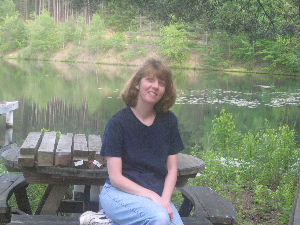 Introduction: Again, one of the people who responded to my request for a new columnist was Jodi Webb. Without further ado, I have great pleasure in introducing to you, Jodi Webb ...
Aneeta: Jodi, thank you for agreeing to this interview.
Jodi: Well, thanks for asking me. I have to confess that this feels like a piece of cake—a few weeks ago I was on a writer’s panel where the audience—which was composed of writers– asked questions. Live audiences are really scary.
Aneeta: Jodi, let’s start with something about you. Tell me a little about where you were born, where you grew up, what you do for a living and where you live now?
Jodi: I was in a tiny town in northeasternPennsylvania—Pottsville. It was home to the writer John O’Hara. I grew up in a tinier town called Cumbola in the same area and now live in an even tinier town (we aren’t even a town). Actually it’s just a road out in the middle of the woods. We have a huge meadow, gardens, a pond. When I tell people where I live I always hear, “I didn’t even know there were houses out there.” But it’s very relaxing. I should start my own writer’s retreat.
Aneeta: I understand, from you website (http://www.freewebs.com/wordsbywebb/index.htm) that you’ve written for many magazines and also had your own column. Do you care to elaborate on this?
Jodi: When I started writing it wasn’t with the idea of this being my career. My older daughter was an infant and I didn’t want a full time job but I was going crazy so I started writing articles here and there for different regional magazines. Through the years I also had “real jobs” like teacher, bookkeeper, typist, saleswoman, etc…but I always did a little writing. Somehow, over the years I began doing more and more writing and less and less “real jobs”.
Like most freelancers I’m always on the look out for that elusive regular gig that at least gives me the illusion that I have a dependable, steady income. I began writing for a trade magazine Toy Directory Monthly and after a few years they invited my to be their toy mom and write a column for retailers from a parent’s perspective—what do parents want from a toy store. I also wrote a column for www.writer2writer.com telling readers about writing markets. My older daughter is now 16(almost 17)and I’m just finishing up my first book Pennsylvania Trivia: Weird, Wacky, and Wild which will be released in September. I’m also working on a novel that I started this November as part of the NANO challenge(www.nanowrimo.org). And to round out my schedule are articles, business writing, and an idea for a children’s book I’m playing with.
Aneeta: I am sure that storytelling somehow features in your writing. Can you please explain what aspect of storytelling you find most helpful in your writing and why?
Jodi: Although I mainly write nonfiction I’m always very aware of what they drill into you in creative writing classes—if you don’t keep your reader interested they will stop being your reader. They’ll move on to a TV show, another book, or even the view outside their window. So I try to present my writing piece—whatever it is—so the reader wants to continue reading. I think the best way to do that is to focus on personal stories. For instance I’m writing a story about the Tomb of the Unknown Soldier at ArlingtonCemetery in DC. Now I can fill it with tons of facts about when it was established, what it’s made of, what general established the tomb guard. Can hear the words yadda, yadda, yadda in your head? Instead I’m starting out with the story of a military chaplain who saw an unmarked grave inFrance and felt tormented by it for some reason, even long after he returned from the combat zone. The people are the most important part of any writing piece—fiction or nonfiction.
Aneeta: Please tell me about some of the more memorable pieces you’ve written.
Jodi: It’s hard to choose. Everyone has a story, even if they don’t realize it, and most never get to tell their story to the world. When someone gets to tell their story through an article I write I like to think it’s memorable to them. A few years ago I told the story of a second grade school teacher who died of cancer. Her family set up a foundation called Karen’s Heroes. Each year the second graders in the school where she taught listen to presentations from five local charities and vote on how to donate a set amount of money. After the piece ran in American Profile her family received emails from schools across the country who wanted to know how the program worked so they could set up a similar program. That was incredible to me.
My first day of work at a newspaper a co-worker told me “Just remember, no one reads the bylines except your mother.” It’s true. So some of the most memorable pieces for me are ones where people actually took the time to write a letter or email and tell me they liked the piece. The most memorable ones for me were the ones that were memorable for my readers. But those contacts with readers are few and far between!
Aneeta: What advice would you give those who would like to venture into the world of storytelling?
Jodi: Make the personal connection between your reader and your writing. They should want to continue reading because they identify somehow with the characters or theme of your piece. Even if it’s about time traveling vampires taking over Mars something about it should ring familiar to them—an emotion, a situation, a relationship.
Aneeta: Jodi, this is all I have to ask. Is there anything you’d like to add?
Jodi: There are stories everywhere, everyday. As writers it’s just as important to be able to find those stories as to write the words down on paper. People were always asking me where I find my stories—finally I wrote an article telling people just how to find story ideas.
Aneeta: Jodi, thank you.
Jodi: Thanks, it was fun.
This piece may NOT be freely reprinted. Please contact editor @ howtotellagreatstory.com for reprint rights.
Click here to return to the index of interviews on 'Blow Your Own Trumpet!'
Page 13 of 22