
Transform ordinary stories into extraordinary ones with our proven 7-step method. Join thousands of storytellers on their journey to mastery.

 Introduction: In one of the newsletters I subscribe to, an article written by Rob was featured. I found that article informative and went over to visit his website. I can tell you his website has even more useful information for authors. I contacted Rob and asked him if he would consent to an interview. He agreed and without further ado, I have great pleasure in introducing to you Rob Parnell ...
Aneeta: Rob, thank you for agreeing to this interview.
Rob: It’s my pleasure, Aneeta. I feel very honored.
Aneeta: Please provide us with some background information about you – where were you brought up, your family and so on.
Rob: I was born in Winchester in the UK and went to school there. I was brought up on what’s called a Council Estate because my parents couldn’t afford to buy their own place. I had a fairly ordinary upbringing. My mother always told me I shouldn’t expect too much from life and my Dad used to regularly tell me I was useless – he says now, as a joke. To be honest, I couldn’t wait to get away – maybe to prove them wrong.
I started writing fiction fairly early on and my teachers were always encouraging. One in particular, Mr Dillon, our 10th Grade English teacher, used to read out my stories to the class and say, “Now, this is how it’s done.” It was quite embarrassing – and sometimes dangerous to your health – for a 15-year-old in an all boys school to be singled out like that.
But at least it sparked something in me, a realization: for some inexplicable reason, I’ve always completely understood fiction. How it works, why it works and how to make it the most effective it can be. It’s stood me in good stead all my life.

Aneeta: Now, I’ve read about your ebook, The Easy Way to Write a Novel in 30 Days or Less, from your website, http://easywaytowrite.com. My questions are these:
Rob: It was taking part in the Nanowrimo challenge for a couple of years in a row that made me realize that yes, it was possible to write the first draft of a novel in 30 days. I’m not saying it’s automatically easy but it can be, if you have the right mindset, which is why my book spends its first half tackling just that issue.
Most novice writers have this idea that writing should be hard, that every word should be wrenched from deep within – and is sacred once it’s on the page. This is the kind of thinking that needs to be dismantled if you want to write for a living. Working writers know that words are just tools to help communicate your vision to everyone else.
Rob: Now that I have some distance from it (I wrote the book initially in 2002 – it’s been updated since then) I think the book’s main strength is that it motivates you to be a writer. It encourages you to let go of disabling attitudes and let yourself write well and quickly. Getting the first draft down is usually the hardest thing for would-be writers to do, and so many never get there. I think that’s tragic. I want writers to get over the first draft hurdle – then they’ll know they can do it and have the courage to proceed.
My philosophy is that the way to improve as a writer is just to write. No amount of soul-searching or agonizing will make you better. You have to sit down and do it – every day – and that’s what my e-book tries to encourage – and support.
When I wrote my e-book, there was only Steve Manning’s ‘Write a Book’ package on the Net. I considered buying it but was talked out of it by people that felt it didn’t live up to its hype. I wanted to write something more practical, objective and affordable. In all the four years I’ve been selling it, I’ve had nothing but praise for the book because it’s honest and doesn’t promise anything that isn’t practical.
Of course now there are a lot of books about writing quickly – in 28 days, 14 days, even 7 days. I saw an ad the other day for writing a book in 24 hours! The Net is like that. Lots of hype and silliness. I’m proud that my books and courses and I have stood the test of time. To me it shows that people realize I’m sincere and really care about writing and writers in particular.

Aneeta: Let’s move on to your newest book, The Easy Way to Write Romance. Tell me a bit about this book.
Rob:
(This is not actually my newest book – far from it!) Actually the romance course was initially written in 2003. It was a huge success so I decided to keep it running. At any one time there are about 45 writers on the course and I tutor them all individually. I made the course available as an e-book recently because some people find that more convenient.
Since the Romance course, I’ve run courses on all kinds of genre fiction: Thrillers, Mystery, Dark Fantasy, Horror, Fantasy, Screenwriting, Poetry, Women’s Fiction, Journaling, you name it. (Most of them are still running.)
(BTW: in order to find all these courses, etc, you need to click on the ‘Search This Site’ tab on the index page.)
I also have a popular Writing Short Stories That Sell e-book that I give away free at the site, along with free writing lessons and a weekly newsletter. www.easywaytowrite.com
I regularly commission other writers to write e-books for me under the easywaytowrite banner – on Self Editing, Re-Writing, Article Writing, Copywriting, Writing Reviews for a Living, Beating Writer’s Block, Getting an Agent, Resume Writing, Character, Plot and Point of View, Bible Studies, even writing for the Mind, Body and Spirit market – all of which are available at the site. I’m proud that so many writers want to write for me. (I share the profits, of course!)
Recently I teamed up with Robyn Opie, author of 64 published books, to promote her site and her Writing for Children course that I think is the best on the Net.
Next year, we’ll be offering courses on Writing Autobiographies, Historical Fiction, Advanced Thriller Writing, Writing YA Novels, Science Fiction to name a few. I like to keep working hard and getting new things out to people. I have over 21,000 subscribers now that seem to be very hungry for whatever I can produce!
Oh, and did I also tell you (you did say it was okay for me to blow my own trumpet) I created the Australian Writing Academy in 2004 – it’s an offline writing college that caters for around 300 students in Australia currently. I’m planning to expand it to the US in the coming year.
Aneeta: Sounds very busy! I see also that you run 2 forums: Easy Way to Write Writer’s Forum andEasy Way to Write Critique Group. What is the difference between these 2 forums and what do you offer?
Rob: The first forum is a writer’s chat group where writers can share their thoughts, successes and frustrations with their peers. The critique group is a place where writers can submit their work to other writers and receive feedback. There are a few rules that you must abide by – being kind, supportive and encouraging etc – it’s a popular and friendly place.
Aneeta: Am I right to say that you offer a service called ‘Professional Manuscript Assessment’? If so, what does this service entail and indeed, what other services do you offer?
Rob: Every writer needs something different, at different stages of their career.
MS assessment entails providing a thorough critique detailing strengths, weaknesses, advice and addresses many of the technical issues associated with preparing a manuscript for submission to publishers. I mostly assess novels but have also worked on short stories, articles and non fiction books.
Other writers need their books copyedited or just proof read. I do that too.
Mostly I enjoy mentoring authors through their books. At any one time I’ll be mentoring around 12 to 20 authors, giving one on one advice, support and encouragement as well as a line by line edit of their work (if that’s what they need). Most of my authors have gone on to be published – usually within a year of me working with them, which is very gratifying.
It’s difficult to quote generic prices for these services so I usually don’t advertise that I do this. Most authors are referred to me or just contact me direct to talk about their writing first – then we take it from there. If writers want to get in touch with me to talk about mentoring, assessment or any other kind of personal coaching, they can reach me on
Aneeta: As you know this website is catered for storytellers. What advice would you give them?
Rob: Most novice writers make the mistake of thinking that writing stories is about them. It’s not, it’s about the reader. Always the reader.
Too many stories are rejected because the writer believes their vision of the world, their agenda, their way with words will dazzle and impress. It usually won’t.
Readers want to be entertained with story and stories are at their best when they focus on the characters, their agendas, obstacles and how they go about resolving their problems or gaining enlightenment.
When it comes to story, no words, no sentences, paragraphs or set pieces are sacred. The only thing that matters is the story. As I say often (and has been said many times before) if you come across a passage of your writing that seems particularly fine to you, immediately strike it out – it’s probably going to bore the reader/editor/publisher and label you as self indulgent. Write only for the reader and you won’t go far wrong.
Aneeta: Rob, I have come to the end of my series of questions. Is there anything you’d like to add?
Rob: Only that I believe that writing is the most important thing anyone can do with their lives. Writers are creators, they want the world to be a better place, which is fabulous.
Just think, all of the great civilizations, philosophies, religions, inventions, leaps in progress, art and technology began with the simple act of someone sitting down to transfer their thoughts onto paper. Now, to me, there’s something miraculous about that.
Aneeta: Rob, thank you.
Rob: It’s been a great joy, Aneeta. Good luck with your site and with everything that you do.
This piece may NOT be freely reprinted. Please contact editor @ howtotellagreatstory.com for reprint rights.
Click here to return to the index of interviews on 'Blow Your Own Trumpet!'
 Introduction: This interview is a little different in its style from my normal ones and you'll see why soon. So, without further ado, I have great pleasure in introducing to you Karl Moore ...
Aneeta: I’m chatting today with Karl Moore. Now Karl is an author, a developer, an entrepreneur, a self-development guru, and a whole bundle of others things. And that’s why I’m so thrilled to be speaking with him today. Hello Karl!
Karl: Hello Aneeta! Great to be chatting with you!
Aneeta: Firstly, rescue me from confusion. Are you Karl or Karlos?
Karl: Well, it’s officially Karl. But when I’m feeling friendly, I sign my e-mail messages Karlos. It’s the Germanic vs Spanish approach.
Aneeta: I see. Now, I’ve followed your work for some time and was browsing through your official site again this week. For those that aren’t aware, you’re the man behind www.karlmoore.com. I know you’ve done a lot of writing, Karl – tell me how you got started.
Karl: Well, it all began in the backseat of a Mondeo some eleven years ago. I remember reading through the articles in “Micro Mart”, a large UK computing magazine. And I sat back and thought “Hey, I can do better than that!”
So I did. I literally hassled the editor until he gave me a weekly column. I worked hard and continued to deliver solid content week after week. Then that one column turned into three, which then turned into a syndicated feature. And that’s where it all started.
Aneeta: So, determination was the key for you.
Karl: Undoubtedly. Just write, even if you’re not being paid wonderfully. The rewards will come later. Good writers are hard to find, and editors know it.
Aneeta: I know you’ve moved on a lot from those early days. You’ve written for dozens of magazines and newspapers – and now have a couple of books out on the market, one of which has been translated into many languages. Did you look forward to the publishing process?
Karl: Like Van Gogh looked forward to stereo.
Aneeta: Meaning?
Karl: Well, I think most writers are initially wary of the whole publishing world. They write their book thinking they’re the only person involved. They just type into Microsoft Word, send the file to a publisher, and Bob is your proverbial uncle.
Aneeta: Eh?
Karl: But it’s not like that. Writing a book involves many individuals. My book went from the editor to the technical reviewers, from the legal department to the indexer. You don’t write on your own. And then of course, you have to edit.
Aneeta: Let’s talk about your work at Writers FM. What is this site?
Karl: Well, Writers FM is an online radio station we setup about a year ago. It’s a totally free service. A little like your site, Aneeta, we setup the service to help authors grow. By listening to me interview other authors about how they made it, hopefully listeners will gain a little inspiration.
Aneeta: If anyone reading this hasn’t yet visited the site, be sure to tune in online at www.writersfm.com. You’ve interviewed an impressive number of individuals, Karl. Who was your favourite and why?
Karl: Now that is difficult. I would probably go for Edwina Currie. In the UK, she’s pretty well-known. She was the Health Minister for some time, then later revealed she’d been the secret mistress of the Prime Minister. So she’s hit the headlines a few times, and her books always rocketed into the best-sellers list. We enjoyed an excellent banter – and our forty minute interview ended up being one hour and a half!
Aneeta: Anyone else?
Karl: I really enjoyed chatting with Lucinda Hawksley, who is the great-great-great granddaughter of Charles Dickens. And Joe Vitale too, who developed a “system” for getting his book to the #1 best-selling position at Amazon.
Aneeta: Let’s chat about another writer’s resource you’re involved in. This time it’s a forum – My Writers Circle at www.mywriterscircle.com. Now this is a resource you helped to create…
Karl: Yes. We setup My Writers Circle way back in November 2005 and it’s grown fantastically. At last check, we had some 3200 members. But we couldn’t have done it without the fantastic work of Nick Daws, and our wonderful moderators. Nick is a fantastic author – and I know you’ve interviewed him on this site previously, Aneeta.
Aneeta: Absolutely. He’s inspiring. And talking of inspiration – I’ve been subscribed to your blog, Karl…
Karl: Ha ha! I’m honoured, Aneeta. Thank you!
Aneeta: Back in October 2005, you started your own personal blog online at www.karlblog.com. Practically every day you post your inspiring thoughts. I’ve seen you described by others as a “self growth author” – and you’ve certainly helped me to reflect!
Karl: I enjoy the world of self-development. I figure you have to be sorted on the inside before you can be sorted on the outside. My blog is really just an extension of that. What you’re seeing on the site is really just my personal growth in motion.
Aneeta: Would you recommend blog writing?
Karl: Yes, but for a specific reason. I found that it took a good few years to develop my writing voice. Create your own blog and force yourself to post every day for at least a year. Then check back on your original posts. See how your style has developed.
When I began writing, I was forced to churn out articles week after week. The early ones were terrible. Today, writing comes as naturally as breathing. Blogs are great for developing your voice, because you can write just as little as you want. And a little, frequently, really helps mature your style.
Aneeta: Fantastic advice, Karl. I’m guessing that after all your experience in the industry, and after interviewing so many well-known authors, you’ve picked up one or two tips on writing. The sort of advice the story-tellers reading this would love to hear. What top tips can you share with us?
Karl: Great question! Firstly, keep your writing readable. Short sentences, simple words. Anything else is confusing. Secondly, don’t give up. If you’re the sort of person that can’t bear to see a rejection slip, writing isn’t for you. Finally, give yourself time to find your voice. This will only happen with constant writing. If you don’t put in the effort, you won’t get the rewards.
Aneeta: Fantastic. A lot of story-telling writers tend to get stuck in writers block – and I’m sure your advice will help. Anything to add?
Karl: Well, I used to do a little “story-tellers coaching.” And my favourite trick for getting out of “stuckness” in fiction is to shift the scene and start from somewhere else. Perhaps start the book after the murder has been committed, or change the scene to a flashback, or put the beginning at the end, or the end at the beginning. Don’t think in timelines. Stick yourself in a corner of the scene, at any point throughout it, and just write what you witness.
Aneeta: Wow. That’s clever. Anything else you can share?
Karl: Uhm. Yeah – don’t get up early to write. Stay up late, like me!
Aneeta: You write late?
Karl: You bet. Unlike most writers, I can’t stand mornings. All of my most productive writing happens post-midnight.
Aneeta: Yes. I figured that out since the time noted on all the emails I receive from you are somewhere in the middle of the night!
Karl: Thanks!
Aneeta: It’s been a true pleasure. Allow me to thank you so much for spending your time with us here today! I hope to see you again soon!
Karl: My pleasure. Thank you!
This piece may NOT be freely reprinted. Please contact editor @ howtotellagreatstory.com for reprint rights.
Click here to return to the index of interviews on 'Blow Your Own Trumpet!'
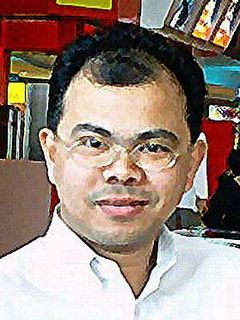 Introduction: After I interviewed Lydia Teh, I thought it would be interesting to speak with her editor, Eric Forbes. Therefore, I plucked up the courage and sent Eric an email requesting an interview. He agreed and I'm glad for he is one of the people on my list of 'people who should be interviewed' for a long time. Without further ado, I have great pleasure in introducing to you Eric Forbes ...
Aneeta: Eric, thank you for agreeing to this interview.
Eric: The pleasure is all mine, Aneeta.
Aneeta: Tell me a little about your background. Where do you live? Where were you brought up and so on?
Eric: I live right smack in the centre of Kuala Lumpur. I was born and raised in Kluang, right smack in the middle of Johor, many, many moons ago. I prefer living in the city centre than the suburbs. After reading economics at the University of Malaya, which I didn’t particularly enjoy but somehow endured, I had a succession of jobs in Kuala Lumpur before working as a book editor with a Malaysian publishing house. Since then, I have been in bookselling and publishing for a little over 20 years now. One thing’s for sure though: I can’t imagine doing anything else. Believe it or not, I really do enjoy what I do for a living.
Aneeta: Yes, I can quite believe you do enjoy what you do for a living. Eric, why do you read?
Eric: Why read? Yes, why read? I’m often asked this question. I come alive when I read the really good stuff. I read because I have no choice, really. Was it not Gustave Flaubert who once said that reading is like falling into a deep ravine from which you can never, ever climb out? Moreover, I like to know about the world around me, I like to learn about stuff, and good books are the best way to do this. When you add to this a predilection for interesting prose styles and an interest in the human condition, what else can I do but read? Most of us lead sheltered lives, but books transport us to worlds we never knew existed. With books, we go everywhere. There’re lots of lessons we can learn from a lifetime of reading. Fiction opens up our emotional spectrum and makes us aware of emotions we didn’t know we had in us. It grips and engages us with the questions it asks, the people and situations it creates, the complexity of emotions it stirs. A world without books, I think, is unbearable.
Aneeta: What do you enjoy reading?
Eric: I enjoy reading novels, short stories, poetry and some nonfiction, especially biography, culture, literary criticism, memoir, social history and travel literature. From an early age, I read everything that came my way. I grew up in an environment where scholarship was nurtured and revered and the value of books unquestioned. My father was an English and History teacher who instilled in me a love of literature and history. From my father’s collection of books in the 1970s, I read the classics: the Brontës, Daniel Defoe, Charles Dickens, Henry Fielding, William Makepeace Thackeray, Henry David Thoreau, Walt Whitman, William Somerset Maugham, Agatha Christie, John Creasey, Alistair MacLean, James Michener, Ian Fleming, Erle Stanley Gardner, Ellery Queen, etc. I read them because they were there and part of my father’s collection, perhaps they were my father’s favourite books, and my father shaped my reading tastes more than anyone then or since; it was he who ignited my adolescent love of words. He had a great love of 19th-century British and American fiction which he passed on to me, and he was open to 20th-century fiction and fiction in translation of almost any kind; it was from him that I learned to enjoy the fiction of D.H. Lawrence, William Somerset Maugham, Elizabeth Bowen and the translated works of Alberto Moravia, especially his novel, The Woman of Rome (1949), and his collection of stories, Roman Tales (1954). On my own, I discovered the works of William Faulkner, Graham Greene, Colleen McCullough, Marilynne Robinson, Philip Roth, John Updike, etc. I enjoy Australian fiction too, especially the fictions of Kate Grenville, David Malouf and Tim Winton.
Of course, I went through my fair share of Enid Blytons and Hardy Boys, Alexandre Dumas’s The Count of Monte Cristo and Mark Twain’s The Adventures of Tom Sawyer (1876) and Adventures of Huckleberry Finn (1884). Those were wonderful adventures and mysteries.
At the moment, I am more into contemporary fiction and essays.
I also enjoy reading literary journals. I can’t live without regular doses of the New York Review of Books, the London Review of Books, the Times Literary Supplement and the Australian Book Review.
Aneeta: How did you get into the ‘reading-writing’ scene?
Eric: I guess it was a natural extension of my work as an editor.
Aneeta: I know you have a blog, eric forbes’s book addicts’ guide to good books, at http://goodbooksguide.blogspot.com/. Please tell me a little about why you started this blog and what benefit you’ve derived from this blog?
Eric: It started out as a fun thing to do; something new to explore. I was cajoled into trying it. Through the blog, I get to share my writing with people who appreciate such things. The purpose of the blog is to encourage people who enjoy reading and writing to unleash their imagination and awaken to the joys and wonders of literature and the reading life. Professionally, it is also a wonderful way of sourcing for new book ideas.
Aneeta: I understand that you’re now an Editor/Publisher with MPH Group Publishing. What does this job entail?
Eric: I do enjoy the whole process of publishing a book: sourcing for manuscripts, typesetting them, editing them, packaging them, blurbing them, soliciting endorsements, printing them, etc. What I dislike most about the industry is the fact that good manuscripts are so hard to find. The editing process can be very monotonous. I hate the fact that I can’t say what’s on my mind most of the time. Also, the industry is more often than not commercial than creative. There are actually lots of wonderful ideas floating around, but we cannot do them simply because we are not sure if they would sell. Also, most manuscripts, in reality, are mediocre, and there aren’t many good ones to choose from.
Aneeta: As a publisher, what do you look for in a potential book?
Eric: Good writing, basically. However, there are several essential ingredients that make a book good. There are several criteria of what is considered good writing. Of course, personal taste matters, too, but only to a certain extent. When you feel something indefinable when you are devouring a sentence is one way of gauging wonderful writing. There are lots of good writers, and among these there those who shine. And there are of course lots of mediocre ones. But those that shine have been blessed with a special talent and they work hard on developing that talent. The great writers of the world struggle every day with what they produce. And they have doubts all the time. Talent’s one thing; you have got to work on it. Otherwise, it is just wasted talent.
If you are writing fiction, pay particular attention to the elements that readers normally look for in a good book. What makes a book good? What do we look for in a good book? We hope to find an intelligent mind behind a lively prose style, a distinctive point of view and pleasurable entertainment. Originality is always important, it must have an enduring quality, a distinctive voice, gripping plots, memorable characters, language, style, inventiveness, stories that tap into the contemporary state of mind, etc.
Aneeta: How do you see the future of Malaysian writers of literature?
Eric: We have excellent talents among us. But Malaysian publishers do not nurture good writers. The thing is, we need more readers too. The readership of novels and short-story collections is not big enough to justify the publishing of more such literature. Publishing of literature must be viable as a business.
Aneeta: As you know, this website caters for storytellers. What advice would you give them?
Eric: If you are serious about pursuing writing, the best way to learn how to write is to read as widely, deeply and omnivorously as possible—and read both fiction and nonfiction. Sadly, most writers don’t think like a reader because they do not read enough.
Aneeta: Eric, this is all I have to ask. Is there anything you’d like to add?
Eric: Writers must learn to develop self-editing skills. Most potential writers lack self-editing skills. Make sure you proofread and edit your manuscript before submitting it to a publisher. Most manuscripts are so badly organised and written that editors or publishers prefer not to look at them at all. Pay attention to your grammar, your punctuation, tone down on circumlocutious writing, overly long or dense paragraphs, avoid clichés or use them only sparingly, spellcheck the manuscript, use consistent spelling throughout your manuscript, etc. Remember what Isaac Babel said about punctuation: “No iron spike can pierce a human heart as icily as a full-stop in the right place.” Read up on the basics of grammar if you have forgotten the rules of grammar. Or consult someone who is good at it. Of course, all these are easier said than done. Doing your best is simply not good enough. You have got to go beyond. Joan Didion, the author of The Year of Magical Thinking (2005), once confessed that it often took her a whole morning just to write a single paragraph to her satisfaction. Writing is hard work.
Aneeta: Once again, Eric, thank you.
Eric: I don’t usually talk about myself. But I did enjoy myself. Thanks for having me. It was a pleasure talking to you.
This piece may NOT be freely reprinted. Please contact editor @ howtotellagreatstory.com for reprint rights.
Click here to return to the index of interviews on 'Blow Your Own Trumpet!'
 Introduction: Sometime last week, I received an email from a lady I interviewed sometime ago, Ruth Barringham. She mentioned a new resource and I followed the link to one page which led to another, then another and before I knew it, I was on Nick's site. I found much of what he said of interest and asked him if he would agree to be interviewed and he agreed. It is an interesting interview and without further ado, I have great pleasure in introducing to you Nick Daws ...
Aneeta: Nick, thank you for agreeing to this interview.
Nick: Hello, Aneeta. Thank you for inviting me.
Aneeta: Let us begin, as usual, with some personal information about you. Tell me, please, where you live, a little about your family and so on.
Nick: I live in Burntwood, Staffordshire, England. It’s a small town not far from Birmingham, England’s second city. I live with Jayne, my partner for almost 20 years. Jayne teaches IT to adults at two local colleges. We don’t have children, but we do have two cats, Ronnie and Reggie!
As regards my writing, I am the author of over 40 non-fiction books, including Living & Working in Germany, Living & Working in Italy, Stress-Busting, Start Your Own Home-Based Business, Advertising for the Small Business, The Internet for Writers, and many more. I have also written several full-length training courses, mainly on writing and editing, but also about business-related topics. I have written innumerable articles and other short items, and am an award-winning short story writer. My work has also been broadcast on TV and radio.
Aneeta: Before you became a freelance writer, what did you do?
Nick: I had a variety of jobs, including youth work, teaching, and counselling. My last job before I became a full-time freelance writer was as Information Officer for a national charity.
Aneeta: How did you get into writing?
Nick: As far as I can remember, I’ve always been interested in writing. But I suppose if you twist my arm, I remember when I was about eight or nine co-writing a “novel” in an exercise book with my then best friend, Timothy Nesbitt (where is he now, I wonder?). Even at that age I got a real kick out of doing this, and my teacher must have been impressed as well, as she let us work on the book when we should have been doing other things instead. Maybe that was the point when I first realised the attractions of being a writer.
But if you mean how did I become a full-time freelance writer, that arose from a situation that occurred in my last job, when I was working for the national charity. The top job in the organisation became vacant, and despite some misgivings I was persuaded to apply. I didn’t get the job, but the woman who did made it very clear that she saw no place for a rival in the office. I would have been OK working with her, but she did everything she could to undermine me. From being basically an enjoyable job, it became a test of endurance, and it reached a point where I’d simply had enough. So I decided to take the plunge, hand in my notice, and become a full-time writer.
As it happened, she probably did me a big favour, as without that incentive I don’t know I would ever have been brave enough to take the leap. It took a while to establish myself as a freelance – I certainly wasn’t an overnight success – but now I think it’s the best thing I ever did.

Aneeta: Now, I know from your homepage, you have done a tremendous amount of writing. It is stated there that you have published “over 40 books, seven correspondence courses, four multimedia tutorials and numerous published articles and short stories”. I do not think it will be possible to go through each one of these resources. What I propose to do is talk about those which look most interesting for storytellers, and people can of course look on your website at http://www.nickdaws.co.uk/ for information about the others. Can we start with your CD course “Write Any Book in Under 28 Days”?
Nick:Certainly. “Write Any Book in Under 28 Days” is my writing course on CD-ROM. It’s aimed at anyone who would like to write a full-length book, fiction or non-fiction, in the shortest possible time.
At the heart of the course is my unique five-step method of outlining and blueprinting. This is the method I have used to write many of my own books, and it has also been used successfully by thousands of students of the course across the world. You can see just a few of the many unsolicited testimonials my publishers have received at http://www.writequickly.com/author/testimonials.aspx.
“Write Any Book in Under 28 Days” contains a lot more than just the five-step method, though. I’ve also crammed it with hints and tips on writing professionally, based on my many years working as a writer. It’s not just the usual bland stuff you’ll read in most writing books and magazines either. I’ve been making my living as a writer for nearly twenty years now, and I really do know what works and what doesn’t.
If any of your readers would like more information about “Write Any Book in Under 28 Days”, they may like to check out this page on my website – http://www.nickdaws.co.uk/writeany.htm – where I have posted much more information and also an extract from the course.
Aneeta:Many thanks for that, Nick. And how about your other course, “Quick Cash Writing”? Is that on CD-ROM too?
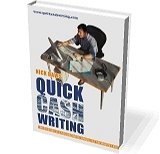
Nick: No, “Quick Cash Writing” is available as an instant download, although it’s from the same publishers, WCCL.
“Quick Cash Writing”, or QCW as I call it for short, was written to complement “Write Any Book in Under 28 Days”. Whereas the latter course is intended for people who want to write books, QCW is for people who want to start earning money from writing as soon as possible.
QCW covers a wide range of shorter paying outlets for writers. It starts with two of the easiest ways to break into publication, writing readers’ letters and fillers. It goes on to cover a huge range of other markets, some well known such as article-writing, others lesser known, including devising greeting card ideas and selling ideas for TV shows and movies.
Aneeta, I know your readers are mainly interested in fiction writing, so I should perhaps say that QCW also has modules devoted to writing short stories (a particular interest of mine) and short comedy material (TV and radio show sketches). And, as I mentioned above, there is a module about devising and selling ideas for TV shows and movies, which can be hugely lucrative if you can come up with a strong, original concept. Again, you can see more information about Quick Cash Writing at http://www.nickdaws.co.uk/qcw.htm.
Aneeta: I’m envious of you, Nick. You have a successful Forum, My Writers Circle. I tried to create one and this project had to be aborted in its infancy. Anyway, tell me a little more about this forum. How did it come about and what is its purpose?
Nick: The forum, at http://www.mywriterscircle.com/, is a joint project between me and my publishers, WCCL. WCCL publish a growing range of resources for writers – not only my courses! – and they felt that a forum would help them raise their profile by supplying a valuable service to the international writing community. They designed the site and provide technical support, but they needed a writer to bring it to fruition. As I’ve been working closely with them for several years, they asked me first, and I was delighted to accept their invitation. I have very much enjoyed collaborating with WCCL in developing, implementing and running the forum.
Mywriterscircle is a free service. It doesn’t make any money directly for me or WCCL, but of course it helps raise both our profiles. And there are other benefits as well. For example, I’ve used the forum several times to find other writers to collaborate with or take on projects I’m too busy to handle myself. It’s also a great research resource: with almost 3000 members, there’s nearly always someone who can answer any query you might have. And finally, I’d like to think I’ve made a lot of new friends via the forum.
Incidentally, I would like to invite every reader of this interview to sign up as a member of Mywriterscircle. You are assured of a very warm welcome, from me and all the other members of the forum.
Aneeta: Of all the services you offer like business writing, consultancy, fiction writing and so on, the one that intrigued me most was ‘Writing Tuition’. Nick, what does this mean and what do you do?
Nick: Ah yes! I’ve always enjoyed working with new writers and passing on my skills and experiences. For many years I was a tutor and external examiner for The Writers Bureau, the UK’s leading distance learning college for writers. I also taught creative writing classes in adult education for several years, though that isn’t something I’m doing at the moment.
I also pass on my knowledge in other ways, including speaking at conferences, running workshops and seminars, and with my courses such as “Write Any Book in Under 28 Days” and “Quick Cash Writing”. I love being invited to writers’ conferences and such like, though, so if anyone is currently organising such an event and needs a guest speaker or a workshop leader, my rates are very reasonable!
Aneeta: As you know, this website caters for storytellers. What specific advice do you have for storytellers?
Nick: You’ve probably heard this before, but my top advice is to write in scenes portrayed through the eyes of a single viewpoint character. This helps the reader to immerse him- or herself in the story, and identify with the character concerned.
Choose your viewpoint character carefully. Once you know this character, you will find that other ingredients of the story – dialogue, setting and so on – fall into place much more easily. Even with a one-page short story, you should be able to see your viewpoint character clearly in your mind before you start writing.
The other thing I’d say is don’t be too quickly satisfied with your plot ideas. The first idea that comes to you is very unlikely to be original. Instead, play with your ideas a bit, look for double-twists rather than simple twist-endings, turn your readers’ expectations on their head. Doing this will give your stories a unique slant, and really make them stand out from the rest.
Aneeta: Nick, I have come to the end of my series of questions. Is there anything you’d like to add?
Nick: I’d just like to recommend a couple more of my websites for your readers to check out. First of all, please do visit my blog at http://www.mywritingblog.com/. I regularly post items of interest for writers here, including reviews of new products, useful websites, special offers from my publishers, snippets of writing advice, and so on. If you’re interested, you can even read one of my short stories on my blog! Here’s the URL for it: http://www.mywritingblog.com/writer/2006/03/competition.html. Incidentally, it’s a mystery story, and you can read the solution in another post I made a week later.
And, of course, there’s my homepage at http://www.nickdaws.co.uk/. Some of this is just background information about me, which may not be terribly exciting, but you can also subscribe to my free e-mail newsletter, E-Writer, from the link in the main menu.
Aneeta: Thank you, Nick.
Nick: It was my pleasure, Aneeta.
This piece may NOT be freely reprinted. Please contact editor @ howtotellagreatstory.com for reprint rights.
Click here to return to the index of interviews on 'Blow Your Own Trumpet!'
 Introduction: Rob Parnell suggested I contact Lee Masterson to ask if she would consider being interviewed. I must confess now that for years I wanted to interview Lee but just never got round to it. However, with Rob's recommendation, I quickly sent an email request to Lee and was most pleased she agreed. Without further ado, have great pleasure in introducing to you Lee Masterson ...
Aneeta: Lee, thank you for agreeing to this interview.
Lee: It’s my pleasure! I’m honoured that you asked me to participate.
Aneeta: Please tell me a little about you – your background, your family, where you live and so on.
Lee: I live in the southern suburbs of Adelaide in South Australia with my wonderful, spoilt German Shepherd dog Cooper and a very neurotic black Persian cat named Scruffy.
Although writing is my first and favourite passion, I do have a ‘day job’ as well. I am a finance consultant within my own company (Eclipse Home Loans). Because of my financial background, I also write articles for finance or mortgage-related publications.
Aneeta: When did you first venture into the writing scene?
Lee: I remember when I was five or six years old, the teacher at school asked each student to write a story and present it like a book. Dutifully I wrote a story about a cat who wanted to be human, illustrated it and asked mom to help me make a cover for it. The teacher placed that little book on the library shelves for other kids to read too and from that day on I decided I would write more books to put on those shelves.
The first non-fiction sale happened when I was 16. I wanted to write for the local newspaper here in Adelaide. So I drafted an article, sent it out and they actually liked it!
The first paid piece of fiction writing came when I was about 18. I have always written weird little short stories that usually only see the inside of my filing cabinet (I write these just to get the stories out of my head – back then I used to be too paranoid to let people see those first creepy efforts). Anyway, I got brave one day, and entered one of these into a short story contest for the local newspaper in Adelaide. I received a cheque for $10 and publication. I still have the tattered, yellowed clipping from the newspaper somewhere…
Since then I’ve been published in many publications and in many formats all over the world. My non-fiction work generates my main writing income – I’m still working on developing a loyal audience for my fiction. Some of my work is published under a pseudonym, while other pieces are published using my married name.
Aneeta: It is your website, Fiction Factor, http://www.fictionfactor.com, by which I think people will most identify you. Please tell me a little about the history of this website. Why did you start it and has it achieved its aim?
Lee: Fiction Factor was created throughout the latter part of 1999 and launched officially in 2000. Tina Morgan and I were frustrated by the lack of real information (at that time) for fiction writers wanting to learn about improving skill and get work published. We both belonged to several writer’s groups and forums and the complaint was global. So we decided to do something about compiling enough information to fill a site designed to help as many writers as we could reach.
In the past 7 years that Fiction Factor has been running, writing and researching articles has taught us both a great deal about our own writing. I know I’ve learned to look at my own work more objectively because of my involvement with Fiction Factor. We receive emails from people wanting to know the ‘how’ or the ‘why’ of certain topics and we research the answers to the best of our ability.
As the website is quite costly to maintain, we experiment heavily with ways to help keep Fiction Factor free to all readers. We really don’t want to begin charging people to read the newsletter or to visit the site, nor do we want to become one of those newsletters that contains more advertising than actual content. Boring!
I don’t believe we have achieved our original goal yet – there are still so many writers wanting to learn and improve and find a published home for millions of manuscripts. We will simply keep sourcing more information and more articles all with the aim of helping more and more people!
Aneeta: Tell me about the cost of maintaining the cost of a free newsletter! I understand you’ve created sister-sites to Fiction Factor. What do your sister sites specialise in?
Lee: As Fiction Factor got too big to simply encompass fiction writing as a whole, we decided to create the sister-sites. Each site is tailored to cater for an individual niche within the writing arena. In order of creation, they are:
Freelance Factor (http://www.freelancefactor.com) – dedicated to writers wanting to break into the fiercely competitive world of freelance writing.
Romance Factor (http://romance.fictionfactor.com) – a site purely for those writers wanting to learn about writing and publishing great romance.
Fantasy Factor (http://fantasy.fictionfactor.com) – catering to those writers with a love of creating new, fantastical realms in which to stage their fictional stories.
Horror Factor (http://horror.fictionfactor.com) – this one is my favourite! A site created especially for writers of the scary and the horrific.
Erotica Factor (http://erotica.fictionfactor.com) – we realised quickly that some romance writers found the more sensual side of fiction more compelling – and the market place is just as lucrative as any other – so we felt the need to create an Erotica site to assist those writers too!
Children’s Fiction Factor (http://children.fictionfactor.com) – compiled with the help of a very good friend and great writer, Robyn Opie, this site specifically focuses on teaching writers to write for a children’s audience.
Christian Fiction Factor (http://christian.fictionfactor.com) The Christian writers market is quite difficult to break into – unless you know the right way to go about things! Sourcing information for this site is a little more difficult than the others, but we have plenty of quality information available.
Sci-Fi Factor (http://scifi.fictionfactor.com) – Our newest addition to the family, SciFi Factor is dedicated to speculative fiction writers wanting to delve into the strange and exciting new worlds of Science Fiction. This site is still being constructed, but will be publicly available very soon!
Aneeta: I know you are also the author of several books. I’ll list them here and please give me a description of each one of them:
Lee:
Write, Create and Promote a Best Seller – I wrote this in response to an email query I received from a reader. I firmly believe that “Best-Selling” and “Best-Written” are not the same thing at all. A best-selling book is one that simply sells lots of books. A best-written book may be an award winning literary masterpiece that doesn’t sell anything at all!
So I wrote the book with the aim of trying to help writers to understand that writing well AND selling well are traits and tactics that can be learned and then applied to most manuscripts.
Write Here, Write Now! – This is more of a motivational book, co-written by Tina Morgan. The chapters include dealing with rejection in a positive manner, finding time to prioritise writing, not giving up in the face of adversity (or criticism) and defeating writer’s block
Short Fiction Market Guide – This is the first market guide in a series yet to be released. Covering as many short fiction markets across several genres and countries as I could find at that time, this guide shows writers that the short fiction market is alive and well – and pays very handsomely too!
Writing Short Fiction That Sells– During an interview with an editor a couple of years ago, I learned that many editors will look more favourably on a novel submission from an author with an established publishing history. This includes a portfolio of short fiction. Many novel writers don’t realise the advantages of writing short fiction and how it can greatly improve your chances of having a novel accepted. The act of writing short fiction can also help to hone writing skills, as the word limits force a writer to be more careful with word choice, thus making the writing much stronger.
The Stygian Soul – the Stygian Soulis an anthology of dark fantasy fiction, compiled by some wonderful fantasy writers! My own little contribution, Angel, is my first attempt at writing fantasy. I’m very pleased it was accepted into this high-quality anthology, as I generally write horror or science fiction!
Due for release over the next couple of months are three genre-specific market guides – one each for horror writers, sci-fi writers and fantasy writers. To my knowledge, these market listing guides are the most extensive of their kind anywhere on the ‘net to date.
In the pipeline are three financially oriented books, designed to teach people to budget well and easily, how to reduce personal debt quickly and effectively and how to reduce a mortgage quickly without scrimping or living like a pauper.
Aneeta: As you know, this website caters for storytellers. What advice would you give those who are embarking on storytelling for the first time?
Lee: It’s all about the story! Remember to tell your story in your own way and have fun doing it.
Once the story is out of your head and you’ve written ‘The End’, go back to the beginning and only then think about the mechanics of the craft. Look at your handling of elements such as pacing, characterisation, plot, setting, tone, conflict, narrative, dialogue, continuity – all the wonderful, mundane bits and pieces that bind together a fun tale and make it compelling to read.
If you think you’ve finished your edit, go back and read it again with a red pen firmly in hand. Cut out any redundant text or pointless prose. Be harsh!
This time, if you really think you’re finished, format it to submission standard, research and seek out your intended publication and send it out the door. Today. Now. Without hesitation.
Then you wait for either your wonderful acceptance or yet another rejection (which should never be taken personally. Simply file it under ‘R’ for rejection and submit the story to another publication the same day).
Aneeta: Lee, this is all I have to ask. Is there anything you’d like to add?
Lee: Yes. I would love to be able to tell all writers to PERSIST. No matter how hard it gets or how many people tell you it can’t be done – persist. Never give up on your dreams and goals. Never allow anyone to denigrate those ideals. Never tell yourself you can’t do it. Be positive. Believe in yourself and your vision of where you want your career to go, and then keep on persisting.
It will happen J
As Richard Bach said: A professional writer is an amateur who didn’t quit!
Aneeta: Thank you, once again.
Lee: It was my pleasure Aneeta. Thank you for inviting me!
This piece may NOT be freely reprinted. Please contact editor @ howtotellagreatstory.com for reprint rights.
Click here to return to the index of interviews on 'Blow Your Own Trumpet!'
Introduction
Much to my delight, it happened again - this interview came about because a person I previously interviewed, in this case Lee Masterson, suggested I interview Tina. I contacted her and she obliged. Personally, it has been an interesting interview as Tina's been forthright about what constitutes a 'difficult writer'. Without further ado, I have great pleasure in introducing Tina Morgan ...
Aneeta: Tina, thank you for agreeing to this interview
Tina: Thank you for asking me.
Aneeta: Let’s start with some personal information about your. Can you please tell me where you grew up, a little about your childhood and family and where you are now?
Tina: I grew up in rural Ohio on a small farm with just about every type of animal imaginable. For several years my parents didn’t have a television and my love of reading blossomed. My parents were avid readers and they enjoyed a variety of genres so there were always a lot of books in our house. I read everything, from YA novels like Nancy Drew and the Black Stallion, to adult authors of all genres like Louis L’Amour, Victoria Holt and Earl Stanley Gardner. However, my favorites were the early science fiction writers: Andre Norton, Anne McCaffrey, James Blish, Frederick Pohl and many others.
I currently live in a rural community about 40 miles from where I grew up. Cornfields, pastures and creeks surround my house and I love it. I have three children. My oldest child is mentally handicapped with autistic traits and she has taught me so much about myself and what’s truly important in life. The other two are equally special and have enriched my life considerably.
Aneeta: I know about the history of Fiction Factor from the interview I conducted with Lee. I understand that you’re the Managing Editor of Fiction Factor. What does this job entail?
Tina: Lee has been wonderful to work with and she has given me a lot of flexibility. I contribute articles and help Lee with the submissions we receive. Website maintenance takes a great deal of time but I love working on the site, so I don’t mind. Promoting the site online and in person is another aspect of the job. Lee typically handles the newsletter but if we’re lucky enough to be online at the same time, I help with any last minute edits she might need. Unfortunately we’re rarely online at the same time as we’re on opposite sides of the globe.
Aneeta: Are you also involved in other websites and if so, which ones?
Tina: My personal website is Stygian Writings and you can find a complete listing of the books I’ve contributed to on the bibliography page: http://www.stygianwritings.com/bibliography.html.
The Fractured Publisher is a humorous fiction e-zine I manage with the help of Sheri L. McGathy. We feature short stories and flash fictions pieces that help promote the work of the authors involved. We just released our seventh issue: http://www.fracturedpublisher.com
Aneeta: I understand that you’re an editor of a publishing house. Which publishing house is this? Also, I’m sure you have your pool of stories about submission queues and slush piles. Do tell us some stories here, please.
Tina: I’m one of many editors for Dragon Moon Press (http://www.dragonmoonpress.com). Gwen Glades is the owner and senior editor and she handles the submission queues and slush piles. She’s often inundated with far more submissions that she can possibly read so she uses outside editors (like myself) to help edit the novels she’s accepted. I’m currently working on Val Griswold-Ford’s second novel, Dark Moon Seasons that is due out this spring (provided I get to work and meet my deadlines!)

Along with Sheri L. McGathy, I helped compile and edit the anthology, The Stygian Soulfor Double Dragon E-books last summer. This was a lot of fun as I was working with a great group of writers. The stories are all dark fantasy, some about redemption, others about revenge or survival.
Aneeta: As an author, I am always intrigued when editors make comments something along the lines of, “There are authors out there who are difficult”. Each time I make a submission, I’m trying so very hard to please the editors! I would like to know, what, in the eyes of an editor, makes the author comes across as being ‘difficult’.
Tina: What makes an author difficult? Hmm…there are lots of ways but the one I find most annoying is the writer who refuses to make the changes that would make the story or article shine. No matter what your level of experience or skill, every writer can use a little editing. After all, we’re all human and everyone makes mistakes and sometimes an editor can see problems we might not even realize are there. As an editor, I know that I sometimes make suggestions that an author is correct in rejecting, but this is where good communication and a desire from both author and editor to produce the best story possible is crucial.
Also, there are the authors who consistently miss their deadlines, though I’ve been fortunate with the authors I’ve worked with to date. One of the other major issues I see in Fiction Factor’s slush pile are authors who have no clue what the e-zine is about. They submit works that are totally inappropriate. We reject a lot of submissions that might have worked, if they had been spelling or grammar checked. Yes, it is the editor’s job to catch those sorts of mistakes before they go to print, but most editors don’t have time to struggle through a submission with numerous typos, spelling or grammar errors.
Aneeta: I know that you too are a writer in your own right and I get the impression that you interests lie in writing fantasy stories. Am I right? If so, please tell me a little about your writing history and how you became interested in this genre.
Tina: The seemly endless limits of science fiction and fantasy have fascinated me from the first fairy tale my mother read to me. I loved them all but I didn’t go for the standards like Cinderella or Snow White. Arabian Nights was my favorite and Andre Norton’s Dragon Magic reinforced my belief that fantasy could be set any place in the world and in any time frame. Anne McCaffrey’s Decision at Doona and The Ship Who Sang proved that a person didn’t have to be physically beautiful or even human to be worthy and loved.

My mother has the first story I ever told on a tape that she’s saved since I was four years old. (It was about an unfortunate princess.) For many years after that, I told and retold my stories in my own head but didn’t have the courage to share them until I met a good friend who shared my passion for fantasy. Ciara Grey offered the first critique I ever received and she has since become my writing partner. Without her help keeping all the details straight in our science fantasy series would be impossible. We’ve finished our first novel, Soulspelland the second, Betrayal is about half finished. Books three and four have been plotted and I’m looking forward to writing them.
Short stories have always been tough for me as I have a problem limiting my plots and characters but I’m improving and my short story, “No Time for Dragons!” will be appearing in A Firestorm of Dragons in 2008 from Dragon Moon Press.
Aneeta: As you know, this website is catered for storytellers. What advice would you give them?
Tina: Fiction is about telling a story and we should never lose sight of that. Read your work out loud. It should flow; it should have a rhythm and style that makes the listener want to hear more. Good stories (regardless of genre) have a beginning, middle and end. They have characters that capture our imagination and make us care what happens to them. They don’t have to be characters we like, we can hate them, so long as we want to keep reading to find out if they change or get theirs in the end.
Aneeta: Tina, this is all I have to ask. Is there anything you’d like to add?
Tina: It never occurred to me to write non-fiction until Lee encouraged me to give it a try. Thanks to her belief in my abilities I now have non-fiction articles over writing on many different websites. I’ve contributed to 4 writing books. The latest, The Complete Guide to Writing Science Fiction will be out with Dragon Moon Press this year and I’m really excited as we have some big names contributing to the book: Orson Scott Card and Piers Anthony.
The last bit of advice I’d like to leave your readers with is study the publishing industry. There are a lot of sharks in the publishing waters that will take the neophyte writer’s money and leave them with broken dreams. Learn what an agent is, what they’re supposed to do and why you shouldn’t pay them any money up front. Besides Fiction Factor’s Writer’s Alerts section, there is also Victoria Strauss’s Writer Beware and Preditors and Editorshttp://www.anotherealm.com/prededitors/ to help you achieve your dreams instead of becoming a victim.
Aneeta: Tina, thank you.
Tina: Thank you, Aneeta for giving me the opportunity to talk about my favorite passion, writing.
This piece may NOT be freely reprinted. Please contact editor @ howtotellagreatstory.com for reprint rights.
Click here to return to the index of interviews on 'Blow Your Own Trumpet!'
 Introduction: I received an email from Bill about a software he thought was useful and I should consider investing in. I receive many emails like this but this one was different - Bill made it a point to tell me he was a subscriber to my newsletter and this piqued my interest. After I had a look at the software I hopped over to his site (www.blakepublishing.com)and was fascinated with the material he has posted there. I asked him if he would agree to be interviewed and he said yes. Without further ado, I have great pleasure in introducing to you Bill Blake ...
Aneeta: Bill, thank you for agreeing to this interview.
Bill: It is a pleasure sharing with other creative souls and in your case because I find your Newsletter & Website very useful for writers.
Aneeta: Thank you. Before I venture to ask about your travels, tell me, please, a little about your childhood. Where did you grow up? What was your family background and so on?
Bill: I grew up on the east coast of the USA in Connecticut and spent a major portion of my life there before doing some changes as an adult – to Florida, across country to CA, Vegas, and finally in San Francisco where I met and married (2nd time) an Irish gal and moved to Ireland in 2002 where I still live with my one and only soulmate in life.
I was married the first time at about 24 for about 15 years and have a son and three grand-children back in Conn. The divorce in 1986 sent me on my mid-life suicidal journey into depression and homelessness of which will be my 2nd Novel.
I think that phrase used about many creative artists: “Tortured Soul” probably sums up a lot of the personal writings and poetry. I never knew my father. I grew up in 7 foster homes by the time I was twelve years old while my mother worked at a live-in job and we saw her if we were lucky on Sundays.
At 12 or 13 mom decided to marry and off we went to what I thought would finally be a “normal family” environment. As it turned out, he was an abusive stepfather and my mother did nothing as she needed him as her provider.
This was back in the 1950’s early 60’s.
They had two children = ½ sister and brother – I got stuck with a lot of the caring for them – and the cleaning of the house…
There was a small gas station business of which I had to run/work about 10-14 hours a day (plus school).
With school grades doing poor in my junior year from all the stress – I did not want to be around for his wrath – so I took off in an old car with no drivers license at age 16-17 from Connecticut all the way to Texas and got a room for a month before returning home.
Aneeta: In your email to me you said that you had moved from the States to Ireland and now have an apartment in Turkey. Would you like to share some of your more exciting experiences with us?
Bill: Because of my unstable childhood I usually get stuck-in and stay in one place. But thanks to my Irish wife, we have travelled – both before we left the USA and now here in Europe.
There were so many exciting and majestic places in the states I still have never seen but thanks to my wife, I saw the Grand Canyon, Hoover Dam, Hawaii, Lake Tahoe, the giant Redwoods and the beautiful wine country in California and more.
Moving in my 50’s to Ireland was a big adjustment for me. The cold winters are still very difficult to deal with, but I like the people and the country landscapes.
My goal is to use the income from selling my first novel {:)} to select a place in the sun for my senior years – but where not so hot in the summer. We have traveled to Majorca, Lanzarote, Italy, Croatia, Malta – and finally invested in an apartment in Turkey because of the prices as an investment were the best we found, and the location on the Turkish Riviera along with the nice people, climate, food and cheap prices.
I feel it is a very important and positive experience for a writer to see and learn new cultures and all that goes with it so as to broaden your view of the world and all the people and beliefs that make up the real and true stories that happen every day.
Aneeta: It’s obvious you’ve done a variety of work. Please provide us with an explanation of each one of these:
Bill:
Screenplays: While in San Francisco, I wrote 6 feature-length Hollywood movie
screenplays as being part of a screenwriters group that met at my house each month. I was the first to get an agent (very hard to do), had a few studio reads of my scripts but no sale after 5- years so I moved on to websites and ebooks. I had / have the ability to write any genre – and was told this was rare and that my scripts were all above average. But the nature of the business = it is who you know not how good your writing is. It is easier to get a book published than to sell a script.
Sample of some pages from one screenplay “Altitude” can be downloaded @ www.writer-freelance.com
Poetry:This was my way to express my feelings and emotions – never really studied the structure and forms of poetry, just wrote the words as they came. “White Mane” (which is posted on my portfolio website / Blog and a poem about being homeless are my two best poems. See: www.billyvirgo.wordpress.com for “White Mane” Poem.
Keyword Rich Articles: Articles are used for many purposes. As a storyteller, articles about writing or about your books can be offered and circulated in the following ways: free email subscriptions, submit to article websites and ezines, and offer as free content to other websites and authors. The whole point of the article is that it has your name, links, and contact information always included in the resources box at the end of each article. Good for promoting your book(s). The idea of keyword rich = include many keywords that relate to the subject / title / niche category of your book you are promoting.
Sample(s) can be seen at: the link for ezinearticle website @ www.writer-freelance.com
Web Content: This is just basically the words you see on the web pages of any website in addition to content such as free articles to read on the website.
PDF Ebooks: These are the digital format ebooks that can be downloaded instantly after an online purchase, as a free download, and as a link for a free download in a newsletter or email you receive. The majority of ebooks we offer on our many websites are in the PDF (Adobe) format. Most all computers come with the adobe / acrobat readers and if not, it can be downloaded fro free online. The .exe format ebooks can only be read on the PC and not the MAC, whereas the PDF can be read on both. This is the way I recommend you to start if you choose to offer your story as an online download.
Blogs: I started the Blogs to share information with others. They are a great way to also get feedback about your posts, opinions, writing, etc… I feel every writer should try to start and maintain a Blog that goes along with their writing projects. You can post pages of your work and ask for feedback as well as build up relationships with other writers from all over the world! Sample Blog with good ranking: www.mrvirgo.wordpress.com
Press Releases: I write Press Releases for myself – ebook offers, websites, etc. and also offer to write them as part of my freelance services. It is a quick method to announce to the online world and media that you have just written your first –or—book and tell others about the book, your writing experience and what your book can do for them and where they can buy it and review your work. I use PRWEB for my Press Releases. I have received the editor score of 4/5 on my submissions. Samples can be seen along with their stats at : www.writer-freelance.com
Sales Pages: I specialize in the sales page that goes along with books, ebooks that are used on the website for your book. You can see samples of sales pages @
www.blakepublishing.com/services.html
An autobiography: This is the hardest to write because it still brings back powerful emotions and memories. The worst part is that there is also a lot of time and history I can’t really remember. Two samples of True experiences are listed for PDF download as short writings – One = Childhood & One = Mid-Life titled:
“Lost Childhood” & “Homeless in Las Vegas” @ www.writer-freelance.com
2 Novels: At present these are the childhood and mid-life stories based on my life but with some fiction mixed in with the non-fiction. I am using Billy Virgo as the alias name and the first novel runs from early childhood until about early 20’s, The second novel is from about 40-45 with the suicidal journey to no where. I actually have both in process at the same time.
A Play:
I have a burning passion to do this play that will be a comedy-drama about old-age and homecare. My wife has done work for years this and I even did some for a few years in CA and the reality of the humor and drama that you experience is a real wake-up to our mortality and how we deal with getting older and our loss of independence. Fact = we will all grow old. If you don’t have a sense of humor you will not last and either will the homecare providers that care for them! Possible Title = “Pensions & Dentures” (Or Bedpans &—).
I have it all in my head and I can see it on stage with the wife in her bedroom and across the hall is the husband both yelling to each other, two home care people doing shifts and family members that are just waiting for them to die so they can fight over who gets what.
{Aneeta: NOTE: There are samples of all these types of writing posted for download or links to where they are at my Portfolio website: www.writer-freelance.com }
Aneeta: Let’s move on to the services you provide. Please explain the ones which will be of most use to a storyteller.
Bill: I can take the story / writing project from a word document and format it into colorful design numbered pages that can contain images; links, etc. and then are formatted into a PDF Ebook. The PDF format is popular because it can be read on both PC and MAC computers and is the most widely used worldwide. I can also design a 3-D book Cover Image to be used on the sales pages and website ads. This image is a key factor in the sales of any ebook online. We can also provide a graphic header for the website sales page along with the actual written sales page for the book. Samples of all theses services can be reviewed @ www.blakepublishing.com/services.html
Aneeta: As you know, this website caters for storytellers. What advice would you give storytellers?
Bill: To be a good storyteller, I think it sincerely has to be part of who you are. You write because you have to! We have all heard it a thousand times, “Write what you know about” – this is still good advice to start with as you can then transfer the emotions and memories into words that are real. Many authors started seriously writing only after keeping a diary or a daily journal – and that got the blood flowing for the need to share words as a writer. A story should touch all our senses and emotions when possible. I want to laugh, cry, worry, and care – all that makes us human.
Aneeta: Bill, this is all I have to ask you. Is there anything else you’d like to add?
Bill: I just want to say that anyone looking to get their first how-to guide, recipe collection, short story … published to test the market and their skills before going into the expenses related with print books, should consider starting with a digital ebook format that can be offered for free or for sale online for instant download worldwide. It is a great way to get your name and writings out to the public in a way that offers your readers “instant gratification” by way of a download to their computer. Many authors and publishers now complement their sales by also offering their printed book in this popular e-book format as seen on such websites as the Amazon and Barnes & Noble book websites.
I have worked with many individuals and companies that required their writing formatted and published as an ebook, many also needed a 3-D cover image for their ebook and we have always enjoyed helping new storytellers on their way by saving them time and money with our PDF Ebook Publishing Services @ www.blakepublishing.com/services.html
Aneeta: Bill, thank you.
Bill: Thank you Aneeta so much for allowing me to share with your many readers some of my knowledge and experiences as a writer-storyteller over the years. I wish all the best for all your readers and yourself as storytellers that share with others.
This piece may NOT be freely reprinted. Please contact editor @ howtotellagreatstory.com for reprint rights.
Click here to return to the index of interviews on 'Blow Your Own Trumpet!'
 Introduction: I am a subscriber to Dan Poynter's newsletter and in one of the latest editions, I saw Robert's book, Courageous Souls mentioned. I was very interested in the topic mentioned therein and I wrote to Robert to request a copy for the purposes of review. In the process I wondered whether Robert would be interested in an interview; he was and I must say, the information he has shared is very interesting indeed. Without further ado, I have great pleasure introducing to you Robert Schwartz
Aneeta: Robert, thank you for agreeing to this interview.
Robert: You’re welcome. Thank you for your interest in Courageous Souls.
Aneeta: Tell me a little about your background. Where did you grow up? What was your family like and what do you do for a living?
Robert: I grew up in Cleveland, Ohio in the US. My father was a pharmacist and a businessman, my mother a homemaker. There was nothing about my family or in my background to suggest that I would someday collaborate with mediums to write a book about how we plan our life challenges before we’re born. No one in my family is a medium, nor has anyone as far as I know gone to see a medium. Around the dinner table, we didn’t talk about metaphysical subjects. We talked about what I learned at school that day, what my father did at work, how the lawn needed mowing. Nothing about Spirit or the soul.
From that conventional background, I went on to do conventional work. I was a journalist for a number of years, then a marketing and communications consultant. But I was spectacularly unfulfilled by that work. I always wanted to do something more with my life, but I didn’t know what the more might be.
Aneeta: I know from your website, www.courageoussouls.com, that you went to see a medium at some stage. Can you describe this experience for us please?
Robert: It was my dissatisfaction with my life that brought me to the medium. Once there, I was introduced to the concept of spirit guides. Not only was I introduced to the concept, I was introduced to my guides themselves. Through the medium, I was able to speak with them. They knew everything about me – everything I had done, said, and thought. They even knew about a prayer I had said silently and alone in the privacy of my home some five years earlier. As you might imagine, when you’re talking with beings who know everything about you, it gives them a fair degree of credibility. So when they told me that I had planned my life before I was born, I was open to the idea.
They said that I had planned many of my greatest challenges before birth. Naturally, I said, “Why in the world did I do that?” They explained that I had sought these challenges for purposes of spiritual growth. That made quite an impression on me. In the weeks that followed, I kept thinking about that concept. I realized that a knowledge of pre-birth planning could bring great healing to people. It could help them see their challenges in an entirely new light.
Aneeta: Let’s get right to it. Tell me about your book, Courageous Souls.
Robert: My book is a collection of ten stories of people who planned common challenges before they were born. These challenges are physical illness, having handicapped children, deafness, blindness, drug addiction, alcoholism, losing a loved one, and severe accidents. The information about their pre-birth plans was obtained by mediums and channels, including one who has the ability both to see and to hear the pre-birth planning sessions we have with one another. So, I was able to obtain actual conversations that souls had prior to birth.
It was an amazing experience. I often felt as though I had been transported to another world.
When people discover that we plan our lives and challenges, it allows them to completely reframe their lives. Often when something bad happens, we tend to see it as meaningless suffering. But when we realize that we planned our challenges, they become rich with meaning. It allows people to move beyond guilt, blame, and victimization and eventually arrive at a place of peace and even gratitude for their challenges.
Aneeta: Was there a specific technique you employed when narrating these tales?
Robert: Each story has three parts: an interview with the person, focusing on one specific challenge the person faced; then each interviewee has between one and three sessions with the mediums in which we ask Spirit, “Did this person plan this challenge before birth, and if so, why?”; then each story concludes with my commentary. In the interview, I try to step aside and let people tell their own stories. In so many books, the stories are told through the filter of the author’s mind. I wanted people to tell their stories in their own words. A first-person narrative has so much power to it. It’s much more visceral.
Aneeta: What has the response to this book been so far?
Robert: Very positive. I’ve heard from many people who say it’s helped them look at their lives in a new way. People have come forward and said, “I’ve always wondered about this.” People tell me that the book is much needed and that it confirms an inner knowing they have that life isn’t either random or meaningless, but rather filled with purpose.
Aneeta: As you may know, this website caters for storytellers. What advice can you give storytellers?
Robert: Feel the story you’re telling. An intellectual understanding is all well and good, but stories are truly powerful only to the degree they connect with the reader’s heart. You can’t connect with your reader’s heart unless you feel the story in your own heart.
Aneeta: Robert, this is all I have to ask of you. Is there anything you’d like to add?
Robert: I’m working on the second book in the series and looking for people who would like to share their stories. I would ask people to write to me by email at
Aneeta: Robert, thank you.
Robert: Thank you.
This piece may NOT be freely reprinted. Please contact editor @ howtotellagreatstory.com for reprint rights.
Click here to return to the index of interviews on 'Blow Your Own Trumpet!'
 Introduction: Noël has been a subscriber to my newsletter, Great StoryTelling Network newsletter for a long time now. From time to time, I've added announcements he's made in this newsletter. When he told me about being given an award from Writer's Bureau, I thought it only natural to want to interview him. He hails from a place I've only read about but never visited, which is the Portuguese colony in India. I have great pleasure in introducing to you, Noël Gama ...
Aneeta: Noël, thank you for agreeing to this interview.
Noël: Hi Aneeta, this is a welcome reversal of role for an HR guy!
Aneeta: Let’s start with a little about you. Tell me, please, something about your childhood, where you grew up and life before you joined the workforce.
Noël: Yes, those are the days I dream about most, which inspired and motivated me to launch my first Blog2Book project, “Saudades! Folk Memories of Damão.”
Damão was a Portuguese colony for 400 years. It became part of India as recently as 1961. Hence, it is not surprising that there is a strong Portuguese influence in our music, songs, folk dance, cuisine, sports, dress and most importantly, temperament!
I grew up in this unique multiracial, multicultural and multilingual environment. As such, my mother tongue is Portuguese though I had my formal education in English.
Like the culture of Damão, my book is intended to be an exotic mix of local history, folklore, memoir, travelogue, and romantic colonial lifestyle, enticing the intrepid traveler as well as mitigating the acute nostalgia of natives and expatriates.
Aneeta: I understand that you’re in Human Resources. What does your work involve?
Noël: As Head of HR, my primary job is conceptualizing, making sound policies, framing effective rules and devising systems that work. I have put my writing skills to good use by authoring a number of policy and procedural manuals and even writing B2B copy. Again, when it comes to implementing these very policies and systems, persuasive writing plays a great supporting role. In fact, this will be the essence of my forthcoming Red2Green series of ‘How-To’ HRM e-Books.
Aneeta: How did you get into writing?
Noël: In school, my teachers always said my essays were outstanding. When I began working, my boss said the same about my correspondence. But it never occurred to me to write professionally until I found Writers Bureau three years ago.
Aneeta: What do you write about and do you use a particular storytelling technique?
Noël: I write non-fiction topics that interest me. I use copywriting techniques for ‘selling’ my story to the reader – not the editor. A good example of my style is at www.wildlifefile.blogspot.com
Aneeta: Well, I know that you’ve been awarded the Writers Bureau Writer of the Year Award for 2007. Tell me about this award, please.
Noël: The ‘Writer of the Year Award’ is open to all students of The Writers Bureau and is given to the student who has developed the most as a writer. Success is not judged merely on the financial gains but on publishing success including breakthroughs into new markets, success with a genre you thought you wouldn’t want to try, etc. The winner receives a £250 cash prize and there are four runners-up awards of £50 each. The winners are published on WB’s website and in promotional material. The Award is judged in January of each year. Applications must be sent in by 31st December of the preceding year.
Aneeta: What impact has receiving this award had on your life?
Noël: Now, I know that the write path is the right path for me!
Aneeta: I understand you run several websites. Would you like to describe each one of them?
Noël: Well, you could call them all websites since a blog is a website. But to be frank, I have only one website at www.Noëlgama.com with an ever-increasing number of blogs or groups of blogs, attached to it – all managed with Apple’s iWeb application and a DotMac account. Each group of blogs is a Blog2Book project. Each blog corresponds to a chapter and each posting to a topic in a ‘book’. The blog/book is intended to be a collaborative as well as corroborative effort with validation built-in.
I like blogs because they have a very personal touch, written in the first person like any diary entry while a website is usually written in the third person and may not even be written by the owner of the site.
Secondly, search engines love blogs.
And last but not the least, blogs don’t require me to write code – just good copy!
Aneeta: What are your plans for your future as a writer?
Noël: Now is the best time to be a writer anywhere you may be in the world. India is poised to become one of the world’s biggest publishing hubs. Self-publishing is big business. Add the three miracles of technology – the Internet, POD and e-Book publishing – to these three facts and you have a winning formula for business success as a self-publishing author!
Aneeta: As you know, this website caters for storytellers. What advice would you give them?
Noël: It was only when I came across this website that I realized effective writing is about good storytelling. Writing is just one of the mediums to tell stories. Storytelling is not only about fiction – it takes non-fiction from being merely factual to being real.
Aneeta: Noël, this is all I have to ask. Is there anything you’d like to add?
Noël: Michael Masterson of AWAI talks about ‘glicken’ – the cherry on the cake. Here’s the glicken I got from my venture into writing: I got one-on-one with people like, Marcia King-gamble, Peter Bowerman, Nick Daws, Carol Anne Strange, Clare O’Brien, Steve Slaunwhite, Rob Parnell, Michael Green, those wonderful people on MyWritersCircle & WritingIndia and… Aneeta Sundararaj – a wonderful human being!
Aneeta: Noël, such praise! Thank you.
Noël: Foi de grande prazer! (That’s Portuguese for ‘My pleasure!’)
This piece may NOT be freely reprinted. Please contact editor @ howtotellagreatstory.com for reprint rights.
Click here to return to the index of interviews on 'Blow Your Own Trumpet!'
Page 9 of 22