
Transform ordinary stories into extraordinary ones with our proven 7-step method. Join thousands of storytellers on their journey to mastery.

 Introduction: Some months ago, Jack Stewart suggested I contact Peter to ask if he would like to be interviewed. I looked at Peter's website http://www.psychotherapy4all.com and duly contacted him with my request. He agreed but asked that the interview be delayed until now. I waited and it has been worth the wait. So, without further ado, here's Peter Adamson.
Aneeta: Peter, thank you for agreeing to this interview.
Peter: My pleasure – thank you for interviewing me.
Aneeta: Please give me a little information about your background. Where did you grow up, what do you do for a living and where do you live now?
Peter: I grew up in Wigan, in the Northwest of England, the area and its people were shaped by coalmining and cotton-mills. I trained originally as a high school mathematics teacher but I’ve re-trained to become a psychotherapist.
I now live about a dozen miles from Wigan in North Cheshire, it’s a complete contrast in that it is far more green and agricultural – there is a flock of forty sheep less than a hundred yards from the house, there is a fabulous garden-centre on our door-step and a fledging forest a short walk away.
Aneeta: I understand that you’re a psychotherapist. Forgive me if my next question is very basic but I’ve always wondered about this: what is the difference between a psychotherapist and a psychologist?
Peter: There are no basic questions and this one is very relevant to the work I do. A psychologist looks at a person or an animal or a group and seeks to establish what drives them to do display a particular behaviour and also perhaps measure a particular response to a particular stimulus.
I’m more interested in a person’s emotions. Is there a root cause as to why someone is frightened or angry and helping the person become calmer as a result? I’m interested in helping the person achieve some balance by looking at the whole of a person’s life (holistic approach) rather than some aspect of it. Eg someone experiencing panic-attacks may be simply dehydrated and swapping diuretics for water may actually reduce or resolve the symptoms The problem then becomes how can I encourage the client to value themselves sufficiently to start to make beneficial changes in their life. In a nutshell – psychology seeks to be a quantifiable science and psychotherapy is more an art form to encourage people to change.
Aneeta: I understand from Jack Stewart that you’ve written your first novel. What is this novel all about?
Peter: Jack is a little premature, I’m in the process of writing my first novel – I’ve written eighty thousand words so far with about another twenty or thirty thousand words to go. I’ve just rewritten half of that because I wanted it to be in a different style to how it was originally written.
It’s about a maverick psychotherapist, Phil Szatire and his family and the people he meets. Phil has a severe phobia about soccer and although his work with clients is of the highest standard, his personal life is starting to unravel rather dramatically, especially when he is forced to attend the last game of the season.
Although it is written in a satirical format, it is also useful as a self-help book because the techniques really do work. Stories linger longer than facts and are much more interesting, so my hope is that the book is greater than the sum of its parts.
Aneeta: Do you use storytelling much in your work? If you do, what benefits do you see in so doing?
Peter: We are back to the art form again –the answer is yes, a lot!. Storytelling affects the imagination; that for most people is in their right hemisphere. Logic, language and learning take place in the left hemisphere for most people. If you want someone to remember something important it is necessary to evoke the imagination, have some passion or emotion attached to it. Also the story helps to drive the teaching point deeper into the subconscious and it meets with much less resistance than a plain factual message.
A typical example might be a client who helps everyone but is taken advantage of; simply telling them in a logical way to not let it happen isn’t going to resonate with the emotional centre where love, anger and fear reside. Telling them a story about rabbits might help encourage them to set higher boundaries in the future because it is a story that engages with the imagination or emotional centre. There is always a moral to the tale, often the client’s subconscious has grasped it whilst the conscious mind is trying to fully appreciate what it has learned.
Your question is ironic as there is a part of the novel that reflects this. Phil is the psychotherapist and Tara is his client:
The tradition of storytelling in therapy was almost genetic, each subsequent generation of therapists learning and inheriting skills from their predecessors. In their daily lives parents wove magic stories to lull their children to enter a magical world and wake up refreshed. So too, therapists and their clients were engaged in the same process. Perhaps the greatest exponent of this style of therapy was Milton Erickson. He was an American psychiatrist famed for being able to work with impossible clients. Often, he would encourage them to go into an everyday state of relaxation and tell them a story or make some salient point that was absorbed by the person’s subconscious mind in many profound ways at the same time.
He would engage their interest with a stock phrase, That reminds me of a story…. Then he would proceed to say something eloquent on one level whilst saying something different and much more eloquent on another more sublime level. The message would be encouraged to grow in their subconscious mind, a mind that would be always ravenous for new information-based nutrients. New behaviours and habits could be generated from even a single phrase just as a garden may be cultivated from a single herbaceous cutting.
“Tara, did I ever tell you about The Rabbits?” Phil adjusted the position of his arm slightly and Tara’s arm followed the same pattern without her noticing. This simple tell-tale sign showed that they were still in rapport, the wonderful magic that made therapy and real communication possible.
“Many years ago I lived in a different house. We had new neighbours move in, a young couple with a little girl and a couple of the most adorable floppy-eared rabbits imaginable. They let the rabbits play in the garden and all was well in the world. The seasons moved round from Summer to Autumn and we stocked the garden with Winter flowering pansies. One day I noticed the rabbits in our garden so I tried to lure them back into their own garden with carrots. They weren’t very impressed with common fare having sampled the delicacy of the pansies. After a week of this, I complained to the neighbour who put up some wire mesh about knee height. Still the rabbits came over the fence to sample the gastronomic delights of the rockery. I complained again, this time the neighbour put the mesh up to waist height. Still the rabbits thought they had a season ticket to dine. Eventually I stopped them by blocking the slats in the fence with timber. It’s amazing how high a rabbit can climb if it wants to trample your garden!”
Tara looked thoughtful as he continued, “It’s just the same with people, if your boundaries are too low to start with, then you have a difficult job keeping them from invading your space. Often you might hear someone say that Fred is very cold and then someone else will leap to Fred’s defence and declare him to be a sound bloke once you get to know him. Fred has learned from bitter experience to set his boundaries high and lowers them only when he is sure that you are not going to trash his garden, rob his wallet or stab him in the back.”
“Yes, I can see that. I need to raise my boundaries with some people but it is very hard sometimes.” Tara looked at Phil for more support; she had the concept in mind but she still needed more encouragement and insight.
{Having read this story it should now resonate with those readers who have a problem with boundaries!}
Aneeta: As you know, this website caters for storytellers. Can you please tell me do you have any advice for those who would like to venture into storytelling?
Peter: Yes, for the longest time I can remember I had always been telling myself, one day I will write a book. Now I can change gear a little bit and say that I am writing a book. At some future point I will be able to say that I wrote a book. Changing the tense, changes the tension!
It’s a lot more fun and tremendously satisfying actually writing a book rather than declaring I will write a book. One day I hope that the level of fun and satisfaction will increase dramatically as I will have written the book.
Aneeta: Having written some books, I can say that yes, the level of fun and satisfaction does increase! Peter, this is all I have to ask. Is there anything you’d like to add?
Peter: The book is called Slapped With a Wet Fish! But that’s a whole new story.
In addition I would like to quote another passage from the novel to inspire anyone who may want to start writing but is still being hesitant:
{ This passage is about Phil’s wife Dana, a very stressed English teacher desperately wanting to change her job}
She remembered the amazement she had experienced when she had first seen the advertisement. She had constructed countless reasons and arguments why she shouldn’t apply for it. She was too old, not experienced enough, had a family, too desperate, they would pick someone else, the post had already gone to someone better qualified or an insider. She had acknowledged them all as valid, they could say ‘No’ but they had to say ‘Yes’ to someone; it was just like playing the lottery, someone had to win occasionally.
Then it hit her like the proverbial ton of bricks, she had remembered the feeling that she had felt when Phil had asked her out. She had been working as a temporary administrator at the hospital to finance her studentship and her dark tresses, green eyes and slim figure had attracted plenty of lecherous advances from the testosterone twits working there. She had declined them all, she was hell-bent on studying and getting her degree and her career started; she was going to be Head of English and rescue the world from its ignorance and illiteracy.
One bright Summer’s day, a new assistant psychotherapist walked in, fresh-faced, happy and carefree. He had a different aura about him; he always treated her pleasantly and respectfully, asked her about her life and her ambitions. By the end of the first week, he had asked her to go out with him but he had cheated a little. Sometimes men are shy when asking a girl for a date and they will bring a mate with them; a stooge who will quickly disappear once the aspirant Romeo has asked his Juliette to go to the pictures or the pub with him. Only Phil could turn up with a dead German poet. Phil had prefaced his date suggestion with a couplet attributed to Goethe:
Whatever you can do, or dream you can, begin it.
Boldness has genius, power, and magic in it.
“I thought I would be bold and ask you out for a drink?” He had smiled and waited as her barricades crashed around her and she fell hopelessly in love with the quirky suitor who had answered the request of her heart’s desire so easily. On that first occasion and every time since then, whenever she had heard or even thought about Goethe she had felt that deep magic stir within her.
Aneeta: Peter, thank you
Peter: Thank you, Aneeta.
This piece may NOT be freely reprinted. Please contact editor @ howtotellagreatstory.com for reprint rights.
Click here to return to the index of interviews on 'Blow Your Own Trumpet!'
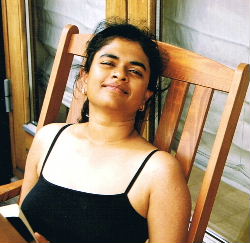 Introduction: I have been reading about Amulya and her work for some time now. A few months ago I contacted her and asked if she would like to be interviewed for the site and she agreed. She has written some very interesting stories so, without further ado, here's Amulya Malladi.
Aneeta: Amulya, thank you for agreeing to this interview.
Amulya: It’s my pleasure.
Aneeta: Amulya, please tell me a little about your life – where were you born, what did you study in school and college, what do you do now for a living and where do you live?
Amulya: I was born and raised in India. I moved to the United States to study when I was 20 years old. I have a bachelor’s degree in engineering and a master’s degree in journalism. I have always worked as a marketing writer/manager in the corporate world. I now live, work, and write in Copenhagen, Denmark.
Aneeta: I know that you’re a published author and naturally, by extension, a storyteller. Before we go into detail about your books, tell me please, when did you start your career as a writer and why?
Amulya: I started writing when I was 11 years old. There really was no specific reason to start writing—it was just something I felt I needed to do.
Aneeta: What kind of books do you write and why have you chosen to focus on this genre?
Amulya: I don’t think I have a genre and I don’t choose to write a type of book. I choose to write a different story each time without thinking about the genre or type of the book. My old editor, Allison Dickens, always said that I wrote books about women who are trying to find their place in society—I guess that rings true for most of my books.
Aneeta: Let’s consider your books in detail now – tell me about your first 4 books, please – The Breath of Fresh Air, The Mango Season, Serving Crazy with Curry and Song of the Cuckoo Bird.Please give a short description of each one and what is, to you, special about each book.
Amulya: A Breath of Fresh Air was about the survivor of the Bhopal gas tragedy and this story was important to me because I was a child in Bhopal when the gas leak took place.
The Mango Season is about a young Indian woman coming back home to India from the United States to tell her parents about her American fiancé. This was a fun story to tell because it allowed me to look into the dynamics of a large south Indian family.
Serving Crazy with Curry is about a family dealing with the attempted suicide of one of the family members. I enjoyed writing this very much—I think this is most my style as it is dark with a very dry sense of humor.
Song of the Cuckoo Bird is about an ashram in southern India and very close to my heart because I used to go to this ashram by the Bay of Bengal when I was a little girl.
Aneeta: Now, I know from you website, http://www.amulyamalladi.com that you have a new book which is due to be published soon, The Sound of Language. Please tell me what this book is about and when it’s going to be published.
Amulya: The Sound of Language is my first book that is not about Indians or India. It’s about the friendship between an Afghan refugee and a Danish beekeeper. This story is about finding your place in society and it’s also about how refugees struggle to make a life in a new country as they battle learning a new language, deal with racism and suspicion, and try to find home.
Aneeta: As you know, this website caters for storytellers. What advice would you have for those who would like venture into storytelling?
Amulya: I have the basic two: read and write. I meet writers sometimes who say they don’t have the time to read and that always strikes me as odd. If you don’t read how can you write?
And once you do write the book, I say to you what everyone says: edit, edit, edit, and then edit some more.
Aneeta: Amulya, this is all I have to ask. Is there anything you’d like to add?
Amulya: My latest novel, The Sound of Language comes out on 26 December 2007, so you know what to do with all those Amazon and BN gift certificates you find under the Christmas tree. I look forward to hearing what you think of the book.
If you are in a book club, please send me an email at
Aneeta: Yes, I shall look forward to reading a copy of your newest books. Amulya, thank you for agreeing to this interview. I wish you luck in the publication of your latest book.
Amulya: Thanks, Aneeta for taking the time to interview me and read my books.
This piece may NOT be freely reprinted. Please contact editor @ howtotellagreatstory.com for reprint rights.
Click here to return to the index of interviews on 'Blow Your Own Trumpet!'
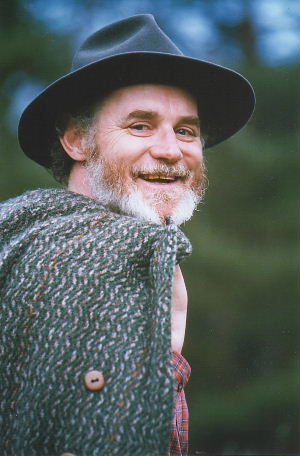 Introduction: I was looking for suitable people to interview when Karen Chace suggested I contact Jay. I visited his website, read all the stuff about him, was somewhat awed by all he has done and plucked up the courage to send the email requesting an interview. He agreed and I was relieved! Therefore, without further ado, I have great pleasure in introducing to you Jay O'Callahan ...
Aneeta: Jay, thank you for agreeing to this interview.
Aneeta: Let us begin with a little information about your early life. Can you please tell me where you grew up, what was your childhood and youth like, where do you live now and what do you do for a living?
Jay: I grew up in Cambridge, Massachusetts and was intrigued with brick sidewalks and the steep stairs in my grandmother’s house. When I was seven my parents bought a big old house in a neighborhood called Pill Hill on the edge of Boston. I would spend my afternoons climbing a beech tree that was seven realms high. I wanted to be a pirate when I grew up. The neighborhood was filled with unusual people who read a lot and liked to gather to sing. I was intrigued with the political currents that sparked the neighborhood.
Now I live in Marshfield, Massachusetts close to the Atlantic Ocean. I’m a storyteller and spend my time creating stories, giving workshops and telling stories. Three of my stories have become children’s picture books and a favorite one, “Raspberries,” is in the works. The rest of my work is on CDs because the sound of the characters’ voices is so important. I perform my long works in theatres and occasionally work with orchestras.
Aneeta: When did you decide to call yourself a storyteller?
Jay: Thirty years ago I called the principal of one of the schools in Marshfield and told him that now I was a professional storyteller. I told stories at his school before just for fun and he said, “What does it mean you’re a professional storyteller?” I said, “It means you pay me,” and that was the beginning.
Aneeta: The storytelling credits to your name are many and I must admit, I’m somewhat in awe of all that you’ve achieved. Tell me, please, of all the accolades that you’ve received as a storyteller, which one has meant the most to you and why?
Jay: Last week I did a workshop in Alabama with musicians, ministers and people interested in the spiritual life. After I told a story about climbing the “Big Tree” seven realms high, one of the ministers said, “Keep climbing.” He meant keep exploring the spiritual life, and that was the best accolade.
Aneeta: I’ve done this next bit with a few of the people I’ve interviewed and it’s always been a success. Therefore, I’m going to ask the same of you: would you please share with us a short story?
Jay: As a little boy I was upset with what happened to Humpty Dumpty, so recently I wrote this story. I’ll also include another story, “Jonathan,” in case your readers aren’t familiar with nursery rhymes.
The Good Egg
By Jay O’Callahan
One fine spring day
Early in May
Humpty Dumpty climbed
High on a wall.
He was feeling quite smooth
And round and tall.
He sang a ditty,
He thought rather pretty.
“London Bridge is falling down,
Falling down, falling . . .
Ohhh . . . Hellllllllllp!”
Humpty Dumpy had a great fall
From the wall.
All the king’s horses
And all the king’s men,
“We can’t put you together again. Good day.”
“No stay,” begged Humpty Dumpty.
“I’ve got a glue called lumpty.
It was in my pocket,
With my locket.
And it dropped on the beach.
Just out of reach.”
But the King’s men left,
Humpty Dumpty bereft.
“Help!” Humpty Dumpty sighed and balled.
And Little Jack Horner,
Sprang from his corner crying,
“Little Miss Muffet
Put down your curds and whey,
Listen to what I say.
Humpty Dumpty had a great fall
From the wall.”
Miss Muffet jumped off her tuffet
Shouting, “Mary come help,
That’s Humpty Dumpty’s yelp.
He had a great fall from the wall.”
Mary said, “Little lamb,” Baa, baa.
I’ve got to scram.
Humpty Dumpty had a great fall
From the wall.” Baa, baa.
Mary shouted, ”Simple Simon pie man,
Put down your pies.
It’s Humpty Dumpty that cries.
He’s had a great fall from the wall.”
Simon yelled, “Jack and Jill! Come down the hill.
And Little Old Woman come out of your shoe,
And bring all of your children too.
And dear cat with your fiddle
Come and don’t diddle.
Humpty Dumpty’s in trouble
We must go on the double.”
They found Humpty Dumpty
And the glue he called lumpty.
They put a bit on the bottom,
And a bit on the top
So he could bop.
Some on his side
So he could roll and slide
Some on a curve.
And Humpty Dumpty sighed, “It’s more than I deserve.
I’ve a crack here and a crack there.
And down his cheek ran a tear.
But my fall from the wall,
Gives me the chance to say
Again we can play
Thanks to one and all.”
The cat fiddled a tune
He got from his pappy,
That made them all happy.
And the cow jumped over the moon.
Jonathan
By Jay O’Callahan
A few years ago at the National Storytelling Festival in Jonesborough, Tennessee, I’d just finished telling stories. I was crossing Main Street and there were thousands of people on the street. A woman tapped me on the shoulder and said, “Can I tell you a story?” I was rushing off to another performance, but there was something about her eyes that made me pause. I said, “All right, let’s sit down.”
The woman said, “You may not remember, but you did me a favor in Michigan years ago and I want to pay you back with this story. I work with children who are dying of cancer. I was working with Jonathan, who was eleven, and dying of leukaemia. Jonathan said to his parents, “When I die, cast my ashes on Lake Michigan.”
When Jonathan died, his parents and his brother, Charlie, who was five, went out on their boat on Lake Michigan and cast Jonathan’s ashes on the waters. A Monarch butterfly flew down to the boat and Jonathan’s mother said, “Look! That’s Jonathan!”
The next day they went out on the boat and again a Monarch butterfly flew down to the boat and Charlie, five, said, “Look! That’s Jonathan!”
The next day they were on the beach at Lake Michigan. Charlie had a stick and was stirring up the sand. An old, grey moth flew up from the sand and Charlie shouted, “Look! That’s Jonathan. . . . but he’s wearing a different shirt!”
I went on to the next performance at the storytelling festival and told everyone about a five-year-old poet named, Charlie.
Aneeta: Thank you. One of the problems I’ve always faced is the structure of any story I tell. As a lot of my tales are based on what happens around me, the tales can be very complex and I often get tangled up in the many narratives. My question, therefore, is have you ever had problems in terms of structuring your tales and how do you overcome them?
Jay: The structure of every story differs. For me it evolves out of the story itself. There’s a long story called “Father Joe” where part of the story takes place in college and part takes place on board an aircraft carrier during World War II. I used to tell the college part first and the battle part, on board the carrier, second. Then I reversed. Neither worked. My friend, Doug Lipman, a superb storytelling coach, said, “You’ve tried everything now break the story up.” So now there’s a college scene followed by a shipboard scene followed by a college scene, etc. Now the story has integrity. Sometimes it’s crucial to have a good listener and a good coach. It’s also important to experiment and generally that leads me to the right structure.
Aneeta: On your website, http://www.ocallahan.com, it is clearly stated that you’re working on a novel. Are you able to share with us a little of what it’s about?
Jay: The novel is called HARRY’S OUR MAN. It’s about an assistant history professor who cannot get over the memory of being in Hiroshima a month after the atomic bomb was dropped. The memory of that causes him to run for Congress and that sets off a wild series of events that change his life.
Aneeta: As you know, this website caters for storytellers. Do you have any advice for people who would like to become storytellers?
Jay: My advice for people who’d like to become storytellers is to tell, tell, tell. When I was a boy of fourteen I told hundreds of stories to my little brother and sister. I kept telling stories informally to children at family gatherings and parties. Then when my own children were born I began to tell them hundreds and hundreds of stories and that led me to becoming a storytelling.
Aneeta: Jay, this is all I have to ask. Is there anything you’d like to add?
Jay: Storytelling is not only fun it’s a way of playing with language, sound, gesture and the mystery of life.
Aneeta: Thank you, Jay.
This piece may NOT be freely reprinted. Please contact editor @ howtotellagreatstory.com for reprint rights.
Click here to return to the index of interviews on 'Blow Your Own Trumpet!'
 Introduction: Again, Karen Chace was instrumental in putting me in touch with yet another storyteller. This time, I was fortunate enough to come into contact with Judith Black. As she has many stories to feature, I'll not take up much more time and without further ado, I have great pleasure in introducing to you Judith Black...
Aneeta: Judith, thank you for agreeing to this interview.
Judith: Storytelling is like ethnic restaurants, the more there are in a neighborhood, the more folks will be become aware of them.
Aneeta: Let’s start with a little about you. Where were you born and brought up? Where do you live now? What do you do for a living?
Judith: Born and bred Pittsburgh, PA, I now live in Marblehead, MA where I care for an organic garden, story tell full time, and participate in the life of this town.
Aneeta: From your website, http://www.storiesalive.com/index1.htm, you’ve clearly been in
this field for a long time. I must admit that I’m almost at a loss as to what to ask you! But, let’s start with your written work. Please share with us some of your books/publications. Which ones are your favourite and why?
Judith: Putting out a CD is like pregnancy and birthing, only protracted! You love every one of your children, and though they came at different times in your life and represent different struggles and mixes of ‘genetic material.’ I would be hard put to favor one over the other.
If you are parenting small children:
Glad to be Who I am celebrates and empowers young listeners through both traditional and original tales. From a female version of Jack and the Beanstalk, known as Molly Whoppie, to a jazzy Three Billy Goats Gruff, and a heartfelt tale from the big brothers vantage point about his Dumb Baby, these tales speak to the heart and experience of young children. Ages 4 and up ($10) “Stories heavily laced with ‘hip’…she puts forward straight wonder.” Parents Choice Magazine -A Gold Medal Winner
Oops Ma!: Songs and Stories of Family Life is a hilarious set of seven stories, with songs, by Victor Cockburn, reflecting the trials and tribulations of a family’s daily rituals. From those little footsteps approaching your bed before the sun has risen to the endless debates about how many bedtime books to read, these stories pull their issues from our daily lives, and their resolutions from the best that our imaginations and humor can conjure.
Ages 4 and up (CD$15)
If you are looking for material that nurtures and educates school aged children:
Blooming: Stories For Girls to Grow Onis a joyous compilation of five folk, original, and historic tales created to inspire all the bloomin’ possibilities in a growing girl. From the childhood of Woman’s Rights advocate Lucy Stone, to the court of an ancient mandarin, these tales offer models of how to walk towards the many aspirations that young women hold in their hearts.
Ages 7-14 (Cassette $10 CD $15)
Hell for a Picnic, commissioned by the USS Constitution Museum, introduces you to a young powder monkey who enlists aboard Old Ironsides to search for the father he barely remembers. This exciting action tale, which takes place on the high seas in the midst of the war of 1812, provides accurate historical information within an exciting, emotional context.
Ages 8 through adult (CD$15)
The story above and the following offer a look at American history through non-traditional portholes, filling in gaps too often left in history books:
The Home Front are stories about the women who during WWII armed America’s vital third front. “Rosie the Riveter,” commissioned by National Public Radio, creates a folk heroine out of Rosie while exploring the issues women faced when entering the industrial work place.
“From Her Arms to His,” commissioned by the US Department of the Interior, is the story of one young woman who goes to work at the Springfield Armory. We experience her life, and America, through the letters she writes to her husband on the Italian front.
Ages 12 and up (90 minutes $10)
A study guide for middle and high school students is available for an additional $5.
From Her Arms To His
Ages 10 and up (1 hour CD $20)
Meet Lucy Stone
Meet the public and private Lucy Stone (1818-1893) and enter her world as she yearns for an education deemed unacceptable for girls, obstinately rejects the idea of marriage and over comes every obstacle to become the ‘shining star’ of the antislavery and woman’s rights movements. She will make you privy to her crisis when wooed and pursued by Henry Blackwell, and live through her angst of choosing between two life long commitments when the 15 Amendment causes a split in the ranks of the woman’s movement.
ages 11 and up (CD $15)
Stories about our adult lives, comedies that reflect our struggles foibles, and hopes:
Banned in the Western Suburbs: Stories about adult passions, choices and relationships are for the big people. These are tales about the projections, insecurities, fantasies, and realities that well up when one is attempting to attract and negotiate relationships with the opposite sex. Included in this collections is The Window Washers, as performed at the National Storytelling Festival’s Midnight Cabaret. You’ll laugh till your weep.
Ages 16 and up (2 CD set $20)
Adult Children of…Parents: is a comedic saga about the coming of middle age, and dysfunctional (is there any other kind)families. Can one woman raise her child, make peace with her parents, and grow in a way that is not a warped extension of her own childhood? The issues of this tale touch all of us who are trying to grow out of where we came from and into who we could be.
Ages 14 and up (Audio Cassette $10 CD $15)
Retiring The Champ: Coaching Life’s Last Big Bout
End of life care can be a great black hole or the beginning of new understandings and relationships within a family. When Michael, who always referred to his mother as “the little Pitt Bull,” discovers he is the only one available to guide her through the maze of Alzheimer’s and into death, he feels the same thrill you and I might at the prospect of going for a root canal. You are hereby invited to take this journey; the physical one from downsizing and dealing with the medical and elder care establishment, the social one involving the delicate weave of family relationships and the spiritual one that takes this son from angry boy to soulful adult.
Ages 14 and up (double CD $20)
Esau My Son is a funny, touching, and poignantly honest story about one parent and educators learning curve raising a ‘difficult’child, and the ultimate lesson that not everything of value can be guaged by a cognitive profile.
Ages 11- Adult (CD $15)
Finally, stories that have emerged from my own ethno-religious background, and share new understands of Judaism:
Waiting for Elijah This collection of traditional, literary, midrashic and original stories will introduce and deepen your understanding of Jewish holidays and traditions. From young Sarah’s anticipation of Aunt Tillie’s Fatal Pinch, to Miriam’s account of the Exodus, these stories bring you into the contemporary experience and ancient wisdom that is Judaism.
Ages 6 through adult ($10)
“Stirs us into warm holiday anticipation” Lilith Magazine
Looking For G-d’s Doorbell is a tragicomedy about the American bar mitzvah experience. When your child asks for the hundredth time “Why are we doing this,” a parent is obliged to find an authentic answer. This is the story of that journey.
Ages 11- Adult (Audio Cassette $10 CD $15)
Aneeta: I understand you also run some workshops. What do you choose to focus on in these workshops?
Judith: I have taught for Lesley University for over 20 years. Having a degree in Early Childhood Development from Wheelock College has been a great boon throughout my life. In these college classes I offer teachers techniques for using storytelling to extend cognitive, curricululrar, and social/emotional objectives in their classrooms.
I teach an annual class in home: www.tellingstoriestochildren.com
It is always the last week in June as school gets out, and it is one of the great blessings in my life. People come from around the country to dedicate 4 full days of their lives to exploring their own passions and skills as tellers. Teachers, actors, ministers, rabbis, librarian, web site developers, folks in mid-life transitions, and storytellers have all joined in my living room, and together, we fire up their dreams, skills, and possibilities.
When I am hired to teach, the most important thing is determining what will most benefit the group proffering the invitation. Folks who have been telling for long periods are often most interested in a ‘Masters Class,’ where they will exercise and get input on their telling ‘chops.’ Educators want to know how to utilize this work in their classroom. Parents want to know how to share their lives with their children and ignite the child’s imagination. The choices of workshop topics are numerous, but the most important thing is matching the teaching to the needs of those you are working for.
Aneeta: As you know, this website caters for storytellers. What advice would you give to people who would like to venture into storytelling?
Judith: Tell Tell Tell. Tell to folks sitting next to you on the bus. Tell to your family around the meal table. Tell at you local church or synagogue. Tell at you ashram or mosque.
Listen Listen Listen. Listen to others tell. Listen to how your story wraps around the listeners before you. Listen to how your voice (metaphorical voice that is) resonates in your world.
Aneeta: Judith, this is all I have to ask. Is there anything else you’d like to add?
Judith: Our world governments are not in the best of hands these days. It feels as if money and evangelical belief systems are the only common denominators for decision making. I believe, that as small as the effort seems in this great shadow, that storytelling can open people people’s hearts and imaginations to kinder ways of being.
Aneeta: Thank you, Judith.
Judith: Thank-you for this opportunity.
This piece may NOT be freely reprinted. Please contact editor @ howtotellagreatstory.com for reprint rights.
Click here to return to the index of interviews on 'Blow Your Own Trumpet!'
 Introduction: I was surfing the net the came across Terry Whalin's website, http://www.right-writing.com. The more I read about his work, the more intrigued I became. So, I contacted him and asked if he would like to be interviewed. He agreed and without further ado, here's Terry Whalin.
Aneeta: Terry, let us begin with a little personal information about you. Where were you born and brought up? What was your youth like? What do you do for a living? And, where do you live?
Terry: You raise an interesting question and something rarely asked. I was born in Huntington, West Virginia in the railroad hospital because it was the cheapest place for my parents—even though we lived across the Ohio River in the small town of Raceland, Kentucky. It’s where I spent my first twelve years then we moved to a suburb of Baltimore, Maryland for a couple of years then to Peru, Indiana for my high school and college years. My family roots go back many generations in Kentucky. Actually one of the counties in Kentucky is named after my five-great grandfather and my mother still lives there.
My youth was fairly normal even with a few moves and I have always loved books and stories about real people or biographies. In the library, I read stacks of stories about Abraham Lincoln, James Madison, Andrew Jackson, Booker T. Washington and many others. I’m certain that’s why I’ve written many biographies and also written many books for other people.
I have been in publishing for over twenty years in a number of different roles—magazine editor, book editor, freelance editor, writer, ghostwriter, co-author or collaborator and literary agent. Through this diversity, I make my living.
For over three years, I’ve been in Scottsdale, Arizona or just outside Phoenix, Arizona which is the fifth largest city in the United States.
Aneeta: Tell me, please, how did you end up in the publishing industry? Have you always wanted to be in this industry or did you chance upon it?
Terry: It was a high school English teacher who encouraged me to join the staff of the high school newspaper. My senior year, I was the editor and it spurred me to study journalism at one of the top journalism schools in the US, Indiana University. I know firsthand the power of a book to change a life. You can read about one of my most life-changing experiences in this magazine article called Two Words That Changed My life: http://snipurl.com/mylife Notice the key role of the book in this process. The experience changed my life direction and I spent ten years in linguistics and working overseas. Then I returned to my writing and I’ve been involved in some aspect of publishing for over twenty years. I’ve written for more than 50 print magazines and written more than 60 books. My first book was published in 1992.
Aneeta: I am aware that you have three websites: http://www.straighttalkeditor.com/http://www.right-writing.com/index.html and http://www.whalinagency.com/. Can you please tell me what are the functions of each one of them?
Terry: While I’ve been active in the print aspect of publishing, I’m also an active member of the online community. I own over 25 websites and each one has a different purpose, audience and function.
http://www.straighttalkeditor.com is my free Ebook, Straight Talk From The Editor, 18 Keys To A Rejection-Proof Submission. I combine stories with practical insight from my experience of reviewing thousands of book proposals and pitches from would-be writers. Originally I published this Ebook as an Amazon Short which sells on Amazon.com for 49 cents yet it is only available to a United States customer. I had an exclusive arrangement with Amazon for six months but now that is expired and I’m using the book as a free tool to help writers and also a means to build my newsletter list for Right-Writing.
http://www.right-writing.com has thousands of pages of information for writers about many different aspects of writing. I wrote some of the articles but they come from a wide variety of authors who have given me permission to use their material. I started this site as a way to quickly answer writers questions about different aspects of publishing. Instead of long individual emails, I can often point to an article on Right-Writing. Please note my Right-Writing News (the newsletter) has over 400 pages of how-to write information in the over 28 back issues. This back issue material is only available to subscribers—yet it is free: http://www.terrylinks.com/rwnews I hope your readers will check it out and subscribe.
http://www.whalinagency.com is the website for Whalin Literary Agency, LLC, which is my agency. In the submission guidelines, I give details about the types of projects which I represent and how I want to be approached. It is hard to get a literary agent and one of the best points of advice I can give you is to follow the guidelines because you want to make the right first impression. You would be surprised at the strange things people do to get attention—and most of it is negative attention.
Aneeta: Yes, let’s talk a little more about your role as a literary agent. Please tell me some of the more memorable clients you’ve had and some of your experiences with them.
Terry: My literary agency is a long-term strategy and I represent authors in the general market and the Christian marketplace. I started the agency in early 2007 and have been highly selective about the clients that I sign for the agency. Why? Many agents have told me it takes at least two years to make a profit in a literary agency. Also I’ve seen a number of agents who have taken way too many first-time authors and gone out of business. I’ve received hundreds of pitches from authors but only taken less than a dozen clients. As an editor and a writer, I’ve worked with a number of literary agents and seen firsthand how they operate. First of all I work on a commission. If I’m not selling for my clients then I’m not making any money for the agency. I don’t have reading fees or anything which raises questions about the business practices. I hope your readers will look at this article from Victoria Strauss and follow the sound advice in it:
http://www.right-writing.com/published-safest.html Unfortunately anyone can hang out an agent shingle and call themselves a literary agent. Some are much better than others in this area. Here’s a good resource when you are looking for an agent and to ask the right questions at the beginning of your relationship:
http://www.aar-online.org/mc/page.do?sitePageId=10336 I’m looking for a long-term successful relationship with each of my clients for Whalin Literary Agency.
As far as my clients, I’m in the early stages with many of them to place their projects. I’m not ignoring your question but I don’t have a lot of memorable agent stories for you. I fully understand the power of the Internet. I’m cautious about the names and information I give because I do not want the information to be harmful to me or any of my clients. To show you the power of the Internet, I’ve written about an article in The New Yorker magazine and later that day the journalist (who I did not know), wrote me to thank me for my words. I’ve had it happen repeatedly. I treat anything that appears online like something I would be proud to have out there in five or fifty years. Many people seem to forget this aspect of the Internet.
I work back and forth with my clients in the agency to perfect their manuscripts and book proposals. I want to make the best possible first impression on the editors where I send something from the agency. I pattern my back and forth process with authors along the lines that I’ve learned from some of the most successful literary agents in the publishing community. I know this truth: You only get one chance to make a good first impression.
Aneeta: I see, also, that you’ve worked as an acquisitions editor for Cook Communications and Howard Books. For those of my subscribers who are new to the publishing industry, can you please explain what an acquisitions editor does?
Terry: An acquisitions editor is the person who champions the author’s material inside the publishing house. I wrote a detailed article about what an editor does in this article:
http://www.right-writing.com/acquisitions.html I interfaced with literary agents and individual authors who wanted to get published. I worked with the print manager and business manager to put together the financials for each book. The typical book acquisitions editor acquires about 12 to 15 books in a year. The last year that I acquired full-time I contracted over 30 books. As a writer, you want to meet and get to know as many of these acquisitions editors as you can—because they are the hands-on people who bring books into the publishing houses.
Aneeta: I would like to back-track a little and ask you about those more than 60 non-fiction books you’ve written and published. I understand that your latest is one entitled Book Proposals That Sell, 21 Secrets To Speed Your Success. Please tell me a little about this book.
Terry: I wrote Book Proposals That Sell because I had read most of the how-to-write-a-proposal books on the market. None of them were written from the perspective of the acquisitions editor. The book includes endorsements from editorial directors, acquisitions editors, bestselling authors and top literary agents. You can see some of these comments about the book and its value at: http://www.right-writing.com/editors.html There are more than 75 Five Star reviews for this book on Amazon.com and you can see the various ways to get the book at: http://www.right-writing.com/ways.html If you live overseas or want the book instantly along with an unconditional 60-day guarantee, then consider the ebook version at: http://www.bookproposals.ws. Book Proposals That Sell is a proven product and I know a number of first-time authors who have used the material to land a top literary agent or their first book contract. I wrote the book to help writers.
Aneeta: What about Running On Ice: The Overcoming Faith of Vonetta Flowers?
Terry: I knew very little about track and field or bobsledding before writing Running On Ice. I was the replacement writer for this project and wrote it in six weeks from start to finish. It meant a lot of intense work with Vonetta and others who knew her. Plus I went to Park City, Utah which is outside of Salt Lake City and rode the summer-time version of the bobsled. It was on concrete instead of ice but still gave me the single ride experience of a bobsled to write about it. It’s like a number of the books which I’ve written for other people and about experiences that I’ve never had. I learn a tremendous amount in the telling of a good story. For Running On Ice, it is the story of how a much decorated track and field star from Birmingham, Alabama was competing in the Summer Olympic Trials in Sacramento in 2000 before the Sydney Olympics. She didn’t make the Olympic team and thought her athletic career was over. Vonetta’s husband, Johnny, spotted a note they were trying out women for an Olympic bobsled team. Because of her track and field experience, Vonetta had the perfect skill set to become one of the top bobsledders in the world and the first African American to win a Gold medal in the Winter Olympics. While it involved intense storytelling and long hours of work, I enjoyed this book.
Aneeta: Do you have any works you’d like to share with us?
Terry: While all of my books are nonfiction, I’ve had the opportunity to tell many true stories about people’s lives. For example, Bishop Philip Porter, the chairman emeritus of Promise Keepers was the leading African American in the fastest growing men’s movement in America. For years, Bishop Porter has been at the forefront of racial reconciliation. As a writer, I told his story about integrating an all-white college in the 1950s and many other stories. I wrote the stories of individuals who lost over 100 pounds using a diet program called First Place. These stories appeared in a book called First Place which was published over ten years ago and has sold over 100,000 copies. I want to encourage you to write stories beyond your own stories. There are many of them out there crying out for you to write them in magazine articles and books.
Aneeta: I would imagine that storytelling does feature in your work. Is this true and if so, how much?
Terry: At first glance, many people think storytelling is only fiction. Good storytelling is not just fiction but also in the realm of nonfiction. If your true stories are going to come to life, they need to have many of the same elements as good fiction such as moving dialogue, vivid settings, rich characters woven together in a true story. It takes work and craftsmanship to put together such storytelling—and often years of practice and experience. Take a look at the classic book, In Cold Blood from Truman Capote for an example of what I’m talking about.
Also don’t think that a book is the only place you can practice your storytelling craft. It is equally important in magazine articles and shorter forms of writing.
Aneeta: Terry, as you know, this website caters for storytellers. Do you have any advice for those of my readers who would like to venture into this field?
Terry: Many years ago, bestselling novelist Dean Koontz wrote a book called How To Write Bestselling Fiction. He includes a chapter which gives a key bit of advice for any storyteller: read, read, and read. As an editor and literary agent, you’d be surprised at the people who are trying to write romance or mystery yet when you quiz them about it, you learn they don’t read romance or mystery. If you want to tell good stories, you need to be reading good stories. Second you need to take every opportunity to practice your craft of storytelling. As I’ve mentioned earlier, you can not only tell your own stories, but tell the stories of others. There are many opportunities all around us for storytelling experience.
Aneeta: Terry, this is all I have to ask. Is there anything you’d like to add?
Terry: I’ve not talked about my blog on The Writing Life. I have over 750 searchable entries at: http://www.thewritinglife.ws hooked to my right-writing.com and you can get the updates on email at: http://www.feedblitz.com/f/?Sub=66512 There are over 270 people who receive the updates via email. I have over 300 readers a day of this material. I don’t blog every day but several times a week about new how-to books that I’ve read or an interesting magazine article or some experience that I’ve had in publishing. Each entry is targeted to people who want to learn more about writing and publishing. Because the blog is searchable, it has become a rich resource of material for continued learning about the craft of writing.
Aneeta: I so envy you those 750 entries. I’m just hopeless at keeping a blog. I find it so hard to find something to write about each day. Well done! And Terry, thank you.
Terry: Aneeta, it’s been my privilege to touch your readers. My email is attached to most of my websites and I’m easy to reach. I hope your readers will make use of the rich treasure of resources that I’ve been creating online for them and they will recommit themselves to continually growing in their craft.
This piece may NOT be freely reprinted. Please contact editor @ howtotellagreatstory.com for reprint rights.
Click here to return to the index of interviews on 'Blow Your Own Trumpet!'
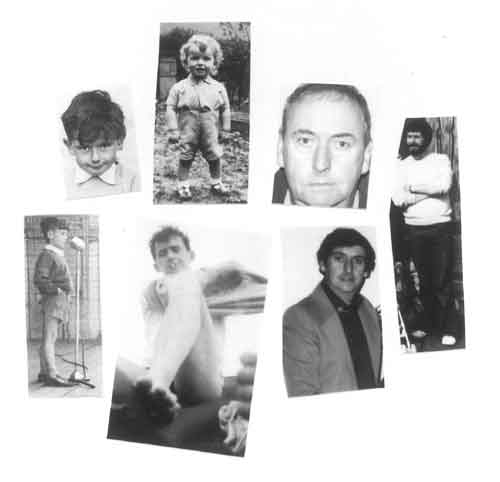 Introduction: I received an email some weeks back from Sharon Bakar. She introduced me to Bill, who had written an email to her. I looked at his website and I was fascinated by his work. So, I asked if he'd be interested in an interview and he was. I also chose this the title for this interview based on the photo Bill chose to send to me - he describes this photo as 'The 7 Ages of Bill'. Without further ado, I have great pleasure in introducing to you, Bill Keeth ...
Aneeta: Bill, thank you for agreeing to this interview.
Bill: Not at all, Aneeta. It’s very good of you to invite me.
Aneeta: Let’s start with a little about you. Please tell me where you were born, brought up and a little about your youth.
Bill: I’m a Mancunian, born and bred. I lived in the north Manchester suburb of Blackley (pron. Blake-lih) for the first 24 years of my life and I’ve worked in and around north Manchester for more years than I care to remember. Age 11-18, I bussed it across town to Xaverian College, Victoria Park. Later, I did a stint in the Civil Service, which is where I met my wife. Nowadays, I live in Middleton, Greater Manchester and I write fiction with a north Manchester-based storyline.
Aneeta: What do you do for a living?
Bill: Work-wise, I suppose, I’d better begin at the beginning. I’ve delivered newspapers, worked in a grocer’s shop, been a window cleaner, a topper and tailer of onions in a pickle factory (£0.65 for 4 hundredweight of shallots – a wage to bring tears to already watering eyes), a postman, bar man, waiter, civil servant, salesman in a tailor’s shop, warehouseman, navvy, football pools and insurance collector, play centre supervisor, newspaper haulier, shellfish salesman, cabbie, DJ, art dealer, retailer (of TVs, typewriters, in-car stereo, 7” vinyl singles) – and, for my sins, though I am now “escaped” (laughter verging on the unhinged) a teacher. Nowadays I have the time to write. (You don’t suppose I did all that work without making a few investments, do you?) But for thirty years or more I had to make time to write.
Aneeta: When did you start writing and why?
Bill: There were always books at home, you know. I think that’s important, because a writer must first be a reader – must always be a reader. And I was lucky enough to have a couple of inspirational English teachers over the years. Even so, I don’t recall reading much apart from comics when I was a kid (The Dandy, Beano, Eagle and American comics, too: Superman, Batman and Robin, Blackhawk, Green Lantern) except for Richmal Crompton’s William series and books about a family called the Brydons that Kathleen Fidler used to write about. Oh, yes, there was Pocomoto, too by Rex Dixon. Then I got into John Steinbeck in my teens – Ian Fleming, too, I’m ashamed to say. But those Cape first editions were really well-presented. And I was very much into classical history for a few years via Robert Graves, Peter Green, Henry Treece, Mika Waltari and Mary Renault. But I’ve wanted to be a writer since reading Steinbeck’s Tortilla Flat in VIth form (not that it was on the syllabus) at the same school, coincidentally (Xaverian College), as was author Billy Hopkins twenty years or so before me, and Anthony Burgess, coincidently too, half a dozen years before him.
By the late 1950s/early ’60s I was very much into the great northern writers – Yorkshire men John Braine, Keith Waterhouse, Stan Barstow and David Storey; Nottingham’s Alan Sillitoe; and the late, great Bill Naughton from Bolton (Lancashire, as it then was – it’s Greater Manchester now). And it was around this time (1962) that Burgess’s A Clockwork Orange was published, reading which was an eye-opening experience for me because, quite apart from the revolutionary quality of the book, it was around this time, too, I first learned that Burgess was an old boy of the school I’d attended and, just as importantly perhaps, that he was also a former resident of the north Manchester suburb of Harpurhey (pron. Harper-hay), which is contiguous to the suburb of Blackley where I lived at the time. Writing a long-binned first novel back in 1977, I subsequently (indeed, consequently) became a founder member of a writers’ workshop at Manchester College of Building.
Aneeta: I understand you have two books published, Every Street in Manchester and Manchester’s Kiss. Can you please tell us a little more about these books?
Bill: Every Street in Manchester [ISBN 1859880657], my debut novel, was begun as a short story entitled ‘It Wasn’t Consummation’. This was around 1982 during a particularly dreary time in my professional life when my face didn’t fit: I wrote it in a blazing rage at circumstances beyond my control that were affecting me and my family. (There are circumstances beyond the narrator’s control in the story, you’ll notice, though no way does rage enter into it.) Then, more recently, certainly since the turn of the new Millennium, I got a yen to develop this short story into a full-length novel. It took me seven or eight months to do so.
Here’s how an advertising handout I’ve used describes Every Street in Manchester: ‘A latter day Manchester man relates his life story in a Mancunian vernacular with editorial assistance from a friend. The result of their joint endeavour is a tragicomic novel spanning the second half of the twentieth century in a northern suburb of the city from where the Third World is temporarily accessed via the Pennine Way.’
And here’s how I might personally describe it at a book presentation, say: Every Street in Manchester is a love story from start to finish, though that’s not to say it’s a Mills and Boon, or even a Catherine Cookson type of love story, Because the main character’s no catch. But the storyline running through the book is boy meets girl – boy stays with girl, too. Well, as far as circumstances permit.
It’s a love story about a time and place too: north Manchester in the second half of the twentieth century, and it’s about the kind of music people enjoyed in that time and place. It’s also a story about the world of work – shop work, navvying, office work, taxi driving, delivery work and so on.
There are loads of local landmarks in Every Street in Manchester, with the title itself locating the story immediately to the north of the city. But though the man and wife in the story work at a road transport depot on Every Street, the relevance of the book’s theme is more far-reaching than that, like the old Mancunian joke that alludes to potential access to every street in Manchester via that eponymous address in the district of Ancoats (pron. Ann-cotes.)
So in a manner of speaking, it’s as if Billy Hopkins (best selling author of Our Kid, High Hopes, Kate’s Story, Going Places, Anything Goes and Whatever Next!) decked on a bus at Collyhurst Street, and got off it at Moston Lane corner some twenty-odd years later. But there all similarity ends. Because the hero of Our Kid always had a lot more going for him than Tony Dinch, the main character in Every Street in Manchester ever has. Because Dinchy is a bit of a dumb cluck: he’s thick as a navvy’s butty to the power of two short planks; he’s the urban equivalent of a village idiot. He doesn’t know too much, that’s for sure – he can’t even speak properly, let alone do any of the other subjects on the school curriculum. Dinchy is socially inept in many ways too. He’s so stupid he needs his more articulate friend, Byron Marlfield, to help him make sense of his story. Heck! He needs Byron to help him tell his story. (Byron is responsible for perhaps 25% of the narrative.)
But the fact that Dinchy doesn’t know too much doesn’t mean he knows nothing at all. He knows where he comes from for a start (the storyline looks back through his grandmother’s eyes to the two World Wars); and he knows when he’s well off too – with his wife, Shirlee, that is. Not that Dinchy and Shirlee are well off in any material sense that’s important to the people around them. No, in that sense, and certainly by the end of the book, they’ve got nothing at all. But in a kind of a way they’ve got everything. Because they’ve got each other, and this is one aspect of the relevance of the spoof quotation on the front cover: ‘A voice from the city, a plea for the world’.
Another aspect of the relevance of this same quotation is concerned with the way in which the two narrators (Dinchy and Byron) access the Pennine Way on a sponsored walk in aid of a Third World charity – a charitable effort which is echoed in the real world by the fact that a specific percentage of the cover price of each copy of Every Street in Manchester is donated to famine relief.
Here’s what it says on the inside back cover. ‘As a token of support for UN Resolution 2626 (1970), signatories to which have promised to allocate 0.7% of their GDP to international development, an obligation the UK has yet to honour, 0.7% of the cover price of each copy of Every Street in Manchester will be donated to CAFOD for famine relief’.
Subsequently shortlisted for the Portico Literary Prize, 2006, (www.theportico.org.uk) Every Street in Manchester is available from Borders, Waterstone’s, Amazon.co.uk and direct from www.novelnovella.com. The book has been featured in the Manchester Evening News and the Lancashire Magazine as well as on local TV and radio stations. Close on two thousand copies of Every Street in Manchester have been sold in the Greater Manchester area and beyond.
Manchester Kiss [ISBN1859880673] is a continuation of the north Manchester saga that begins with Every Street in Manchester. Here’s how a similar advertising handout describes the book: ‘Patrons of the same public house, a group of north Manchester people now confront the reader (and each other) with personal reminiscences, observations and opinions by means of which they give voice to many of their grievances, aspirations and fears.’
Manchester Kiss was published in November, 2006, in the same week that the Portico Prize Presentation Dinner was held at the Midland Hotel, Manchester.
Q. When did you write Manchester Kiss?
A. I began to write it immediately Every Street in Manchester was finished. I’d got up a good head of steam, so to speak, and, like a competitor in a race, I had my sights set on some point beyond the finishing post. And things just went on from there.
Q. How long did it take you to write the book, would you say?
A. I finished it in no time at all really – a few months perhaps, though there was an extensive Pennine Way section in the first draft, which I later removed because it seemed even more of a culture shock than having verse and correspondence alongside the narrative.
Q. What made you turn your hand to writing another novel so soon?
A. Well, I knew from the start that no commercial publisher was going to look at Every Street in Manchester. Par for the course really. But you never know, so I still had to go through the motions of submitting it – and I needed Manchester Kiss to keep me going when I might be feeling a bit downcast with the expected rejections – which duly materialised, of course. With regard to the way in which Manchester Kiss is written I had various objectives in mind.
Q. Yes, it’s an unusual format, to say the least, isn’t it?
A. I wanted this second book to be completely different from Every Street in Manchester – as a personal showcase, for one thing. But I also felt I needed to get away from first person narration so as to stretch myself as a writer. Also, I’ve got this personal bee in my bonnet about the sort of baggage we carry round with us from our past which can sometimes have as much bearing on the things we say and do today as something that happened only yesterday – and it seemed to me that this idea might best be suggested via the non-linear nature of Manchester Kiss.
Q. I hear what you say, but come on, I mean, you’ve got bits of correspondence and verse intermingling with the narrative, haven’t you? And, as I understand it, the reader’s invited to tackle the book in any order, isn’t he? What’s that all about?
A. The American writer, John Dos Passos used to intersperse his narrative with factual reports from newspapers; and British writer, B S Johnson, famously wrote a novel entitled The Unfortunates which the reader was invited to read in any order. I’m not comparing myself with these two writers in any way, other than in pointing out that the narrative techniques employed in Manchester Kiss together with its non-linear format are by no means unique within the novel form.
Q. Okay, but why did you feel the non-linear format was necessary to the telling of your tale, let’s say?
A. Well, it’s necessary only inasmuch as I think that to do it this way tends to replicate real life. Ask yourself, for instance – does your own life really run from A to Z in a linear narrative pattern? Does this interview? And does the past break in on your real life from time to time? Does the future you so carefully planned for yourself occasionally hinge on something uncontrollable – some event in the past or even an accident of birth?
Q. But what about the correspondence and the verse?
A. The idea of verse and correspondence – and, indeed, the photographic illustrations intermeshing with a non-chronological narrative is simply an extension of this same non-linear format.
Q. So is Manchester Kiss linked with Every Street in Manchester in any way?
A. Well, Manchester Kiss centres on the lives of a group of north Manchester people, some of whom first appeared in Every Street in Manchester. Each of these people has his own career and life story which quite naturally come under discussion when these same people meet up to shared purpose on high days and holidays in the same public house – the North Parade.
Q. Is that a Manchester pub?
A. It’s a fictional north Manchester pub, supposedly on Victoria Avenue East, which is on the northern perimeter of the city. Mancunians might picture it as being somewhere between the Berkshire and the kiddies’ party venue that I call the Sticky Warehouse. The location of the pub is important in that legend has it that Victoria Avenue East at that point is as high above sea level as is the top of the tower at Manchester Town Hall. So the reader might usefully visualise the North Parade as a kind of conning tower from which the north Manchester social scene may be surveyed during the second half of the twentieth century.
Q. But can this non-linear, interlinked hotch-potch of a novel – if I may call it that – really be part and parcel of literature as we know it?
A. Most definitely. The characters in Manchester Kiss share an affinity with one another, as do the people on pilgrimage in Chaucer’s Canterbury Tales, who are temporarily on pilgrimage, and with those in The Decameron, who are simply waiting for the plague to run its course in the city of Florence. Their real lives being temporarily put on hold, they pass the time telling stories to one another until their real lives may be resumed.
Q. So how does that work in the North Parade, for instance?
A. Teachers talk about teaching, policemen talk about police work, the thrifty discuss their investments, jokers tell jokes, people in a relationship discuss that relationship, and the down-at-heart complain ad nauseam.
Q. How do the 37 photographs fit in?
A. Well, the photographs, courtesy of the Manchester Archive, housed at Central Library www.images.manchester.gov.uk are intended to illustrate two separate bus journeys as if through the window of a bus. There are two buses involved, each of them numbered 72X, and each is travelling along Rochdale Road, the A664. In the first instance a schoolboy is travelling towards Manchester city centre c. 1954, as portrayed in Chapter 2 of Manchester Kiss; and in the second a young woman, who is about to be married, is travelling home from work in Manchester city centre c. 1965, as portrayed in Chapter 8 of Every Street in Manchester).
Q. Are there any other ways the two novels are connected via their storylines?
A. Oh, yes. They’re not instances of any particular importance except to myself perhaps. But an umbrella bent at a party in Manchester Kiss, turns up in Every Street in Manchester, and a lost cigarette lighter referred to in Every Street in Manchester is found in the street in Manchester Kiss.
Q. Why?
A. Continuity and contiguity are the only answers to that . . .
Aneeta: Some of my subscribers to the newsletter I manage have now completed telling their own stories. They would like to approach agents/publishers. As you’re obviously a published author, what advice would you give these aspiring writers who would like to approach publishers with their completed manuscripts?
Bill: Really, all I can do is sympathise with them (and, of course, empathise). In a sense, you see, I’m the wrong person to ask. Because I have never known a commercial publisher show a flicker of interest in my work. But, in another sense, I’m exactly the person to ask, because that’s exactly how commercial publishers are in my experience: aloof, interbred and nepotistic, resolutely uninterested in new writing being obsessed with royalty-free Austen, Hardy and Dickens. Here’s how the blurb for my new book puts it: ‘When Bill Keeth was looking to place his debut novel with a commercial publisher a couple of years ago, not one of the firms he contacted wanted to know. Which is simply par for the course, as any unpublished author will tell you – certain published authors too. Irvine Welsh, best-selling author of Trainspotting, puts it like this: ‘I would never have been published if I started writing now. Publishing goes through cycles. It’s never been so conservative.’
And it was whilst looking to place Every Street in Manchester with a UK commercial publisher), that I learned writer Billy Hopkins had nine years before been constrained to self-publish his debut novel, Our Kid with Limited Edition Press. (Check this out, if you will, on the back of the title page of any Headline paperback edition of Our Kid where you’ll see Limited Edition Press gets a mention as the original publisher – and please refer also to www.amazon.co.uk and/or www.abebooks.co.uk for Our Kid by Tim Lally [ISBN 1859880134], the previously self-published edition of this book which is nowadays a collector’s item.
So, it was with my forerunner’s advice in the matter (see www.billysbooks.info ), that I, in turn, after wasting a good twelve months submitting the Thing, then dithering for a further twelve months, wondering whether I dare or could even afford to self-publish, that I, in turn, looked to Limited Edition Press to fulfil my own dream of foisting a work of fiction upon an unsuspecting public.
So self-publish, I say to your subscribers – unless Daddy happens to be a commercial publisher – which is precisely why my new book (out Spring, 2008) is entitled Write It, Self-Publish It, Sell It. This doesn’t mean that you or I don’t want, don’t need – don’t deserve to be taken up (or at least considered) by a commercial publisher; it simply means we are not prepared to remain unpublished in the meantime.
So, what are the chances of a commercial publisher’s picking up on our self-published masterpiece? To be honest, it’s anybody’s guess. Look at it this way: I have sold close on 2,000 books: result ZILCH; but immediately Billy Hopkins moved 1,000 books, Headline took him on. And get this (the biggest belly laugh of all), Welshman Brian John had shifted as many as 30,000 copies of his self-published Angel Mountain novels (see Amazon.co.uk) before Corgi pricked up its ears and signed him up to the Kennel Club, so to speak. (You heard me right: 30,000 books, unbelievable though it is.)
[Editor’s Note (9 June 2008): Bill has since published his book, Write It, Self-Publish It, Sell It. Here’s the blurb:
When Bill Keeth was looking to place his debut novel with a commercial publisher or a literary agent, not one of the firms he contacted wanted to know. Which is simply par for the course, as any unpublished author will tell you – certain published authors, too. Irvine Welsh, the best-selling author of Trainspotting, puts it like this: ‘I would never have been published if I started writing now. Publishing goes through cycles. It’s never been so conservative.’
So Bill Keeth, already at work on a second novel, opted to self-publish instead, whereupon his acclaimed debut novel, Every Street in Manchester, sold by the shed load, going on to be shortlisted for the prestigious Portico Literary Prize – which begs the question as to why no commercial publisher or literary agent wanted to know. Perhaps William McIlvanney (Doherty, Walking Wounded) has the answer when he says: ‘If literature is a testament to what it means to be alive, 98% of the witnesses haven’t been called.’
Are you a writer member of the aforementioned 98% by any chance? Do the foregoing observations chime strongly with your own experience of commercial rejection, to say nothing of your abiding determination to be published? If so, then Write It Self-Publish It Sell It is the book you’ve been waiting for. Because it explains in down-to-earth language exactly how Bill Keeth self-published and sold thousands of books – and how you can do so too.
Write It Self-Publish It Sell It supplies the answers to all the questions you ever wanted to ask about self-publishing. Why would anybody want or need to self-publish in the first place? Is your book good enough to self-publish? Isn’t self-publishing just another name for vanity publishing? Are there any famous writers who originally self-published, then went on to be commercially published? Should you self-publish with a print-on-demand company or a local printer? How much will it cost you to self-publish? How many copies of your book should you order for a first print run? How do you go about placing your book with bookshops great and small?
As an added bonus, Write It Self-Publish It Sell It provides specific answers to 3 very tough questions, each one of which is worth the cover price of the book on its own account:
1. Which mere handful of the hundreds of self-help manuals on sale is essential for writers of fiction?
2. How may you sell your book title via Amazon at 33% less than the normal commission rate?
3. What is the simplest way of getting your self-published book into every public library in the UK?
Make no mistake about it, Write It Self-Publish It Sell It is an absolute must for every writer of fiction – unpublished, self-published and otherwise.]
Aneeta: Yes, I know all about self-publishing! As you know, this website caters for storytellers. Do you have any specific advice to give them?
Bill: I’ll serve up the very best advice first, if you don’t mind, a master-class of advice – something your readers may categorically depend upon, and then I’ll throw in my own four pennorth, for them to take or leave as they choose.
First, then: ‘Don’t go with the crowd, don’t do anything for the crowd, don’t be of the crowd . . . Place an enormous stress on individuality, don’t use novelty phrases that bob around in the atmosphere for a few months, like “no-brainer” or something like that, which are ways of signalling to your peer group that you’re just like everyone else. Make it fresh, make it your own, make it individual,’ Martin Amis, on being appointed Professor of Creative Writing at Manchester School of Arts, History and Culture.
And now my personal four pennorth, for what it’s worth:
1) Lose weight if you’re overweight, go hungry from choice, then you’ll feel more inclined to activity, therefore, more inclined to write.
2) If your aim is to “play for your country” by being published nationally, follow the advice of English cricketer Ian Botham’s father, who advised him when he was looking to being selected for the team to be a batsman and a bowler, both – in other words, tell whatever story you have to tell (be a novelist) and make sure you season it liberally with the appurtenances of the time in which the narrative is set (be a diarist, too).
3) Write about what you know, ’tis said. And I agree. But sometimes you cannot really see what you know. So, go away from what you know (James Joyce, Henry James, The Beatles) and, if you cannot go away from what you know, immerse yourself exclusively in the literature of another time and place for a few years.
4) If someone tells you your work is rubbish, ignore the complaint unless a more detailed critique is forthcoming – and ignore the critique, if it is delivered by a know-nothing – e.g. how dare anyone who never opens a book presume to judge a book?
5) The last great sports novel was David Storey’s This Sporting Life back in the early 1960s. Now hear this, ye storytellers: the great association football novel has yet to be written – and it will not be written by me. So it’s over to you.
6) If you cannot please a publisher, please yourself. Write what’s in your heart. You may be surprised to find you’re a nicer person than you think you are. If you were not, you’d be out there creating mayhem, not writing.
7) Get yourself a narrative voice that suits you, that helps your words to flow. What’s a narrative voice, you say? Beg, buy or borrow ‘Just Like Steven Spielberg’ by Sharon Bakar.
Aneeta: I like the first one – lose weight! You made me laugh! Bill, this is all I have to ask you. Is there anything you’d like to add?
Bill: Well, yes, I would if you wouldn’t mind. The thing is I don’t want to risk ending on a negative note, because I really do feel very positive about my writing and I want your subscribers to feel the same about their own work. Besides, they’ll need to take as much care, if not more, if they turn to self-publishing (Hence Write It, Self-Publish It, Sell It, by the way.) So I’d just like to leave you with a more positive thought about commercial publishers, if I may. Because the poor souls need all the help they can get. (Like as if.) Anyway, for what it’s worth, this is from a novelist who’s made his living from writing fiction since the early 1960s – that is to say, Stan Barstow, best-selling author of A Kind of Loving. In his autobiography, In My Own Good Time, Stan has this to say about submitting your work to commercial publishers: ‘A rejection need never be taken as final. There is no such thing as an objective opinion. What one [publisher] likes may leave another one unmoved.”
Aneeta: Thank you, Bill.
Bill: On the contrary, thank you and your subscribers for putting up with my bluster: I feel (harrumph!) I feel as if I’ve vented a spleen – or two.
This piece may NOT be freely reprinted. Please contact editor @ howtotellagreatstory.com for reprint rights.
Click here to return to the index of interviews on 'Blow Your Own Trumpet!'
Introduction: Upon Bill Keeth's recommendation, and without further ado, I have great pleasure in introducing to you, Tony Bowers ...
Aneeta: Tony, thank you for agreeing to this interview. Please tell me a little about your early life – where were you born, where did you grow up, what you do for a living and where do you live now?
Tony: I was born in Nottinghamshire, England (famous for Robin Hood!!) I am a lawyer by profession but have run companies of my own for years and finally became a consultant.
Aneeta: Before I discuss your novel, can you please tell me how you started in what I like to call ‘the writing industry’? What made you want to write?
Tony: I always wanted to write. As a child I made up stories and wrote poetry from an early age. As a student I wrote reviews and later had one or two attempts at breaking into the world of full-time fiction writing (I was short-listed by the BBC for a new TV series for example). I have done a great deal of commercial writing, advertising material, magazine articles etc. and have been contributing regularly to two local magazines for some years.
Aneeta: How did you learn the craft of writing? Did you attend a course or classes?
Tony: I had an exceptional English teacher from whom I learned the basics of good English style. After that I just did a lot of writing!
Aneeta: Bill Keeth tells me that your novel, The Idle Hill of Summer, is a self-published piece of work. Can you tell me your experience in self-publishing? Would you self-publish all your future works?
Tony: Not exactly self-published, published ‘on demand’ with some marketing assistance thrown in. It is certainly worth considering as a way of starting. I’m well into a new novel now and am undecided how to proceed with the publishing. Ideally I’d like a mainstream publisher to ‘notice’ me and like what he sees, but this may be fanciful.
Aneeta: Tell me about your novel. What is it about?
Tony: It’s what I think you would call a ‘rite of passage’ novel. Set in the last summer of the Second World War, it tells of a young, working class boy’s experiences during a brief holiday period. He lives in a quiet village which seems remote from the War and yet, by a series of coincidences, he is brought face-to-face with the impact of the conflict on a disparate, and to him, strange group of adults. He falls in love (he thinks). He has an affair. He meets a deserter, a group of black marketers, American airmen. They all make an impression and yet the young man absorbs these experiences and influences and moves on.
The novel has an authentic Nottinghamshire setting though it’s not autobiographical. The hero is an imaginative only child and his real experiences are mixed with the fantasies of his own imagination. The book is full of convincing characterisation and readers who have reported to me say they found it compelling and beautifully written. But don’t take my word for it!!
Aneeta: As you know, this website caters for storytellers. What advice would you give those who would like to start storytelling?
Tony: In a sense, all novels are stories, even difficult master pieces such as the work of James Joyce. Good stories have the capacity to transport the reader, listener or watcher. It’s essential to capture one’s audience and hold attention; in other words, novel writing, just like acting, is all about pace. Try very hard not to allow interest to flag. Make the reader care about the story, better yet, about the characters.
Aneeta: This is all I have to ask. Is there anything you’d like to add?
Tony: Yes! Thank you for your interest. I hope you read my novel and that it fully engages your interest.
Aneeta: I’ll place The Idle Hill of Summer on my ‘to read’ list. Tony, thank you.
Tony: You’re very welcome.
This piece may NOT be freely reprinted. Please contact editor @ howtotellagreatstory.com for reprint rights.
Click here to return to the index of interviews on 'Blow Your Own Trumpet!'
 Introduction: More often than not, I interview people who write stories, people who have had their stories published, editors and even one or two literary agents. I've never before interviewed a designer. I was, therefore, very keen to interview Summer. In addition, I'm familiar with some of her work as she was the designer for some of her father's Steve Robertson works. I made my request and she consented. Without further ado, I have great pleasure in introducing to you, Summer Morris ...
Aneeta: Summer, thank you for agreeing to this interview.
Summer: Thank you, Aneeta for giving me the opportunity.
Aneeta: I already know a little about you as I’ve been in email contact with your father, Steve Robertson, for some years now. However, for the benefit of my readers, please tell us a little about your childhood, where you grew up, what you did for a living and so on.
Summer: Well, for as long as I can remember I have been a lover of creativity and every type of art. Coming from my parents, who are both artists, I suppose it was hard not to become one myself.
I was born and raised a block from the Atlantic Ocean, went to local schools and attended the University of North Florida. I graduated Summa Cum Laude with a degree in Graphic Design. I have worked in various professional design positions and have learned a great deal of knowledge over the last few years. I am happily married and have 2 wonderful basset hounds. My husband and I live in Atlantic Beach, Florida and share a passion for art, music, yoga and especially travelling.

Aneeta: I know that you’re currently at a time in your life when you need to evaluate what you really want and how to get it. So, with that in mind, let me ask you about your new business, Sumo Design Studio – http://www.sumodesignstudio.com. What do you do?
Summer: I like to tell people that I make things pretty. While that is true, there is obviously much more to it than that. I specialize mainly in all printed design works; such as advertising, logo/brand development, book cover design, stationary packages, cards & invitations, brochure design, direct mail, illustration, painting and drawing.
Aneeta: As my area of interest is in cover designs for books, I’d like to know a little of how you come up with the graphics.
Summer: Creating a look for a book cover is much like the process of writing the book itself. There is a beginning, middle and end to it. First, I gather as much information about the book as possible. Sometimes this requires research on my end. I like to make sure that what I’m creating not only grabs the attention of the reader, but also conveys the message of the content of the book. After gathering the initial information, I then put colors, fonts and design elements to use. All of these elements combined work together in creating the ‘mood’ of the overall design. When the initial concept is created, I ultimately like to leave it for a while and revisit it later when my mind is fresh. A lot of times I catch things that I would have missed if I continued to look at it for a long period of time. It is a process. After the client approves the design, I run multiple checks for errors and get it ready for printing. I can honestly tell you that my favorite part of designing is when I can hold the finished product in my hand and know that I’m proud of the work that I’ve produced.
Aneeta: You said to me, in an email, that ‘… drawing, painting and illustrations are sometimes possible too.’ Can you please elaborate on this point?
Summer: My greatest joy as an artist is creating fine art. I love to paint and draw. As I mentioned before, I have been creating for as long as I can remember. I would love to take on the challenge of illustrating a book. It is something that I am still new at but would love to learn and grow along the way.
Aneeta: I am aware that what I am about to ask you may be difficult, but I’d ask you to consider it anyway – do you think that you use storytelling techniques in the work you do?
Summer: Definitely. As I mentioned briefly in the process of creating, I like to think that designing is much like storytelling. I find myself become quite attached to elements of any work that I produce. Colors, especially, affect my mood and my creativity and in turn the piece that I create. Much like the characters in books, I often reminisce about designs that I’ve created in the past and try to use them to my advantage in creating something new. The elements of design are so important when attempting to get the point across. Without careful organization and planning on a designer’s part, the message could become skewed and the end result confusing.
Aneeta: Summer, this is all I have to ask. Is there anything you’d like to add?
Summer: I look forward to working with you and your subscribers. I truly take pleasure in sharing creativity with other artists. I would love for anyone to contact me with any inquiries small, large and all points in between. In addition, I can be reached via email: summer@sumodesignstudio. For top design priority, your readers might wish to mention that they have read this interview in any email they send to me.
Aneeta: Summer, thank you.
Summer: Thank you, again, for your time and your interest in Sumo Design Studio.
This piece may NOT be freely reprinted. Please contact editor @ howtotellagreatstory.com for reprint rights.
Click here to return to the index of interviews on 'Blow Your Own Trumpet!'
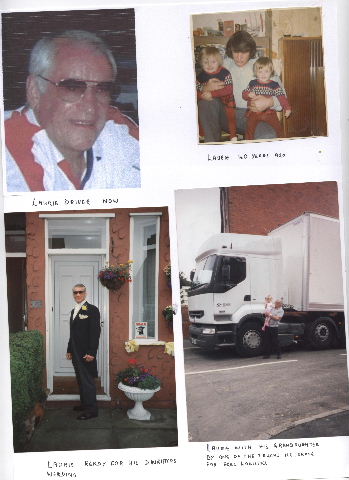 Introduction: One of the storytellers I interviewed previously, Bill Keeth, recommended I contact Dennis with a request for an interview. I was caught up with so many other things that I had to put this aside. I was, therefore, very grateful when Dennis contacted me himself. His story is interesting and without further ado,I have great pleasure in introducing to you, Dennis Burnier Smith ...
Aneeta: Dennis, thank you for agreeing to this interview.
Dennis: Hi Aneeta. I’ve been looking forward to this and I hope that I can make it interesting.
Aneeta: Let’s start with a little about you. Tell me about where you grew up, what you do for a living, where you live now and any other information you’d like to share with my readers.
Dennis: Well, I am now retired from a lifetime of working in the Haulage and transport industry.
I live, with my wife Elaine, in the Manchester suburb of Blackley Village, where I have lived for fifty years. I was actually brought up, just after the 2nd World War, in Newton Heath, another borough of Manchester, where I lived with my parents and sister in a prefab.
Besides writing I like to paint, using oils, water colours or acrylic paints
Aneeta: How did you first get into writing and storytelling?
Dennis: Because of the career that I followed in the haulage industry, numerous and diverse things happened along the way. When I would come home at the week-end I would regale my friends and associates with humorous stories and escapades that I had experienced or seen. The people that made up my audience for these impromptu revelations often commented that I should write a book concerning all these adventures and mis-adventures. After much deliberation and once I had retired and had some time on my hands I decided to do just that.
Aneeta: I understand you are the author of two books – This Truckin’ Life & The Railway Years. Please describe these two books.
Dennis: This Truckin’ Life is the first book that I undertook; it is an anecdotal work made up of many recollections and reminiscences. The main slant of the book is to the humorous side but the humour is interspersed with informative and more serious chapters. It covers a forty years years period, chronologically set out, of the life of a truck driver, documenting his life on the road. It delves into the methods resorted to in order to survive and make ends meet in a world where the truck driver is considered the lowest of the low. It tells of hard times and good times in what was then considered a man’s world where hard, relentless toil was the order of the day. The working hours were long and unsocial, the remuneration low, there was no power steering and all loads were sheeted and roped.
The Railway Years, my second undertaking, is once again an anecdotal work which deals with a specific time within the truck drivers life. The times dealt with in this volume are concerned with the drivers times whilst working for British Rail and its subsidiary companies such as NCL, Freightliner and EXEL Logistics. This second volume, once again leans to the humorous side with added informative and more serious issues.
Aneeta: One of the problems I have, when telling my tales, is to make sure that the structure and plot are OK. Do you ever have similar problems, and if so, how do you overcome them?
Dennis: In the type of tales I tell the most important problem that I have to deal with is that of chronology. Because I am stretching my mind back up to forty or more years it is difficult to place things within an exact chronological order. I have, on occasions, used what can only be described as writer’s license and I have placed situations where they sit most comfortably.
Humour is a great leveller and I try to use it a lot in my writings. My works are not mysteries or novels and so the main thread throughout these works is the humour.
I can only hope that people will laugh out loud when reading them as I do when reading the likes of Tom Sharpe. Humour can be found in most situations even, when on the face of things, they appear deadly serious.
Aneeta: Now, one of the things a lot of storytellers tell me is that they find it hard to be motivated and inspired to write. Do you ever face this problem and if so, what do you do?
Dennis: Motivation and inspiration come from many sources; a flashback of memory, a gentle nudge in the right direction from an unsolicited comment, people asking: ’Do you remember the time when….?’ and many other instances, so no, I do not see this as a problem at the moment., although things may be different if I try to turn my hand to fiction.
Aneeta: You use a pseudonym, Laurie Driver. While I think it’s so interesting since it relates to the subject matter of your stories, can I ask, please, why use a pseudonym at all?
Dennis: To be honest, Aneeta, the using of a pseudonym seemed a good idea at the time, borne from the thought that my true moniker, Dennis Smith, seemed a little bland and unlikely to stick in one’s mind.
Aneeta: As you know, this website caters for storytellers. What advice would you share with people who would like to venture into storytelling?
Dennis: Give it a go. Nothing is born from nothing; if you think you have a story to relate, put pen to paper, fingertips to keyboard and give substance to your thoughts. You never know, you could be the next JK Rowling.
Aneeta: Dennis, this is all I have to ask. Is there anything you’d like to add?
Dennis: Thank you, Aneeta, I have found this a very interesting and exciting occasion. One isn’t often given the chance to express one’s views in this manner and to reach out to people of a like mind
Aneeta: Dennis, thank you.
Dennis: Not at all, it has been a great pleasure and I look forward to seeing the interview in print.
Updated: 29 October 2010
My latest book, ‘Thomas John Barnardo, His Life, Homes and Orphanages – A Short History,’ was brought to fruition from listening to tales from my father who, from the age of ten years in 1930 to the age of fifteen was a guest at Barnardo’s, Woodford Boys Garden City, London. He was given up by his mother who, in those somewhat straitened times, could not afford to keep him or his sister who was lodged at the Girl’s Village home at Barkingside, London. Both children were unloved, malnourished and unwanted.
The book tells of Thomas Barnardo’s inauspicious beginnings in Dublin, where he was born, his inauguration into the Plymouth Brethren, his move to the East End of London and the setting up of his first ragged school. It is not just a biography of the man himself, but contains numerous vignettes about the people that were close to him and worked with and financed him, people such as Benjamin Disraeli, Lord Shaftesbury, his wife Syrie Barnardo and James Hudson-Taylor, founder of the China Inland missions.
There are chapters dealing with Barnardo’s somewhat contentious policy of sending children to the commonwealth countries for a better life, his Naval Training Schools, healthcare within the homes, The teaching of trades to enable children to make their way in a cruel world upon leaving the care of Barnardo’s, and a chapter on how Barnardo’s is run today and its charity shops etc. There is a chapter dealing with my father’s time at Barnardo’s.
The children featured on the cover are my father, Auguste Burnier-Smith and his elder half sister Louisa Maud Smith on the day they were taken into care.
The book is published by Authorhouse at www.authorhouse.co.uk;and is available from them. It is also available on www.amazon.co.uk at £8.99 +£2.75 p&p and through various other on-line traders. Alternatively a signed copy can be bought directly from me at £8.99 +£2.00 p&p. My phone No is: 01617409200 and my address is 12, Old road, Blackley, Manchester, Lancs, M9 8BX.
This piece may NOT be freely reprinted. Please contact editor @ howtotellagreatstory.com for reprint rights.
Click here to return to the index of interviews on 'Blow Your Own Trumpet!'
Page 12 of 22