
Transform ordinary stories into extraordinary ones with our proven 7-step method. Join thousands of storytellers on their journey to mastery.

 Introduction: When the article in The Star about Snapshots! was published, Karen-Ann contacted me and told me about her project. I was somewhat fascinated and thought that this would be a good opportunity to give this project some publicity. Without further ado, I have great pleasure in introducing to you Karen-Ann Theseira ...
Aneeta: Karen-Ann, let’s start with a little information about you. Who are you? Where do you come from? Where do you live and so on?
Karen-Ann: At present I co-own a restaurant, a franchise located in a major shopping centre here in J.B. The restaurant is seven years old. I was born in K.L. but lived in different parts of M’sia due to my dad’s work. We also lived in Hong Kong where I completed my primary education. I’ve spent several years in the service industry as a flight attendant and in guest relations. I’m married.
Aneeta: Now, I understand that you started out in publishing with no experience whatsoever. I was pretty much the same when I started out with The Banana Leaf Men. However, I wanted only to publish my own book, not other people’s stories. I would like to know, what made you want to delve into the business of publishing in the first place?
Karen-Ann: I’ve always enjoyed compilations. I like variety. So I came up with the idea of getting a group of people together to write stories which I would compile. It seemed like an interesting idea. We did not have a definite agenda or goal initially.
When the stories started coming in I soon realized we had a pretty decent ‘manuscript’ taking shape. That’s when I looked at the project more seriously. The prospect of actually getting published became less far-fetched.
Being a novice at writing, editing and not really knowing anything about the publishing world, I had to learn as I went along. This involved quite a bit of networking, emails and phone calls. I promised the writers I would take our project or book rather, as far as possible.
Aneeta: I understand your first book was entitled ‘The Book Project 1’. Tell us a little about this. In particular, what is this term ‘lay literature’?
Karen-Ann: Book Project 1 is a compilation of 23 stories by 21 writers. A variety of stories by a variety of people. Everyday, ordinary people who share their thoughts, opinions, feelings and there’s fiction and poems too. Stories that are real, relatable and hopefully relevant and thought provoking. That’s lay literature to me.
Aneeta: I assume that this project was a success as you seem to have gone ahead with a second and even third project. Is this the case?
Karen-Ann: We are a success in terms of how we took a simple, humble idea to print and how we continue to do this.
Aneeta: What are the highlights of your career, thus far?

Karen-Ann: As the creator of ‘The Book Project’ all contributions and queries are sent directly to me. I reply all writers with pointers on their stories even those whose stories I can’t use. I edit all stories. When my product is done I look for a publisher to finance it. With book 1 our publisher was Various Channels Marketing Sdn. Bhd. With book 2 it was Wide Alliance Sdn. Bhd. Both are based in J.B.
The highlight is meeting the writers. I see their talent and feel their enthusiasm when their stories get published.
Aneeta: Nevertheless, as you clearly stated that you assumed all functions of getting these books onto the bookshelves, I can only imagine the amount of negative comments you may have got for this effort, which, I’ve observed, usually originates from those who’ve never published a thing in their lives. How indeed did you deal with such comments?
Karen-Ann: Of course it is disheartening when someone puts down something I’ve worked so hard at. That’s just the way it goes. We must remain humble for it is only when we are humble are we able to learn. Comments, negative or otherwise, when taken in a positive manner can be helpful. I’m not an overly sensitive, emotional person. I try to remain calm and think about what is said.
Aneeta: Yes, that’s the trick I’ll have to learn – to remain calm. What plans do you have for the future, Karen-Ann?
Karen-Ann: Our project is a project in progress. We will learn, grow and continue to challenge ourselves. We strive to make every book an improvement from the last. We believe there are no bad writers and no bad stories. Everyone is given a sporting chance and due respect. Having said that, I do know we have a responsibility to the paying public as our books must be worthy of the retail price. We must strike a balance.
We don’t compete or compare. We just do what we do to the best of our ability. Book 3 is a compilation of fictional stories. Personally, I am very impressed with the level of imagination, originality and creativity in this book. If all goes well, the launch of book 3 will be in Dec. of this year.
Aneeta: It’s good you do not compete and compare. As you know, my website caters for storytellers. What advice would you give storytellers?
Karen-Ann: Be true to who you are. If you are a witty person then write that way. Put your personality in how you write. Also, be open to the process of editing. It’s tough I know to see your work go through this. But it’s necessary. The editor is really there to offer, suggest different perspectives on your work.
Aneeta: Karen-Ann, this is all I have to ask. Do you have anything else to add?
Karen-Ann:Good luck all writers out there!
Aneeta: Karen-Ann, thank you.
Karen-Ann: Thank you for the opportunity
This piece may NOT be freely reprinted. Please contact editor @ howtotellagreatstory.com for reprint rights.
Click here to return to the index of interviews on 'Blow Your Own Trumpet!'
 Introduction: After I interviewed Chris King, one of the storytellers I had in mind to contact was Linda. I liked the website created for her and I also enjoyed reading about her work. Through our correspondence and this interview, I would hazard a guess that Linda is one extremely vivacious person. I will leave you to come to your own conclusion. Without further ado, I have great pleasure in introducing to you Linda Gorham ...
Aneeta: Linda, thank you for agreeing to this interview
Linda: My pleasure Aneeta. I’m thrilled to know that more and more people are interested in the art of storytelling. When I tell people that I’m a storyteller, they are often surprised. They’ll say something like, “You’re a what?” And then the kiss of death, they’ll often say, “Oh, you read books to little kids during story times at libraries?” Aaarg! Storytelling is so much more. First of all it’s not reading, it’s telling. As you know, there’s a world of difference when you put down a book and relate a story.
Aneeta: Please, do tell me a little about your family background – your family, where you live and so on.
Linda: I live in Aurora, Illinois, a western suburb of Chicago. I’ve lived all over the United States (and even in Germany), but I always say my home is where I am now. My husband John will celebrate our 25th anniversary this year. We have two wonderful, amazing and talented sons, Anwar and Jamal. Anwar just graduated with honors from American University in Washington, DC this spring (2007). Jamal is a junior honor student at the University of Illinois in Champaign, IL.
Aneeta: How and why did you first become interested in storytelling?
Linda: Back in 1990 I saw a storyteller perform. She stood confidently on stage and captivated all 100 or so audience members with her presence and her stories. I was impressed! After the show I asked her for advice about telling stories. She said simply, “Learn a story and tell it in a safe place.” It sounded easy enough so I took her advice, selected a couple of stories, practiced them, and then told them to my older son’s kindergarten class (he’s the one who just graduated from college). The reaction of the kids and the teacher was amazing. The kids laughed. The teacher smiled. The kids wanted more. The teacher invited me back, “Anytime,” she said. I was hooked.
Aneeta: For the benefit of my readers, please tell me, how do you work?
Linda: Well, there is no science to storytelling, but basically I tell updated versions of old folktales “with attitude.” You may ask, “What is with attitude?” I’m glad you asked. J I like to include modern references to add surprise and humor to my stories. I like to include my audiences by getting them to participate. I like to use my body and facial expressions to make my stories come alive. You see, it’s all about “attitude!”
Aneeta: Do you have a specific set of people you work with?
Linda: The beauty of storytelling is that it appeals to all ages. Now of course some stories are only appropriate for certain ages. I try to be careful to craft my stories with particular ages in mind. But in short I work with age 3 through 93. This includes performances in preschools, elementary, middle and high schools, and colleges. I’ve even told to students in law school. There are no limits. By the way for folks over 93, I ask them to tell me their stories!

Aneeta: I see from your website, http://www.lindagorham.com/ that you run several programs. Please, do give us a description of each one …
Linda: I started out telling folktales, but as requests came in, and as my own interests developed, my repertoire grew and grew. Now I have several basic overall categories for my stories. As I develop new stories, I put them in an existing category. My goal, from my publicity statement, is “to inspire my audiences by using movement, humor, and sometimes zaniness as I tell imaginative multicultural folktales updated with attitude.” But that’s not all. I’m known for my interactive way of involving the audience. To quote more, it says, “Get ready to chant, get ready to move, get ready for fun! And watch out, you may be inspired, relive a memory, and learn something new.”
Here are my general categories (appropriate for all ages):
And I have stories developed for students in grades six and above:
Finally some strictly adult material:
Aneeta: Linda, I see that you run Workshops and Residencies on storytelling. How are these different in terms of what you offer?
Linda: My workshops are usually developed with a specific goal in mind. Sometimes I chose topics that interest me, like marketing, public speaking and humor. Other times, I am commissioned to create workshops. This was the case with some of my student workshops on storytelling, making presentations, and creative writing. A complete list is on my web site. Essentially my workshops are hands on learning experiences. I present the fundamentals of the theme, but then the work begins. The participants are giving challenges or exercises to develop. Then they get a chance to present what they have learned.
Aneeta: As you may know, a lot of my readers are from Asia and Africa. What advice would you give them, as storytellers, if they should choose to venture into the world of storytelling?
Linda: I love to read folklore books to get ideas. I also enjoy listening to other tellers, but I am careful not to emulate other storytellers’ style. It took a while for me to figure out what “my style” was, but happily I’ve found a niche. I call it “Storytelling with Attitude” as I mentioned earlier.
My advice? Listen to other tellers. Read folklore books. When you find a story you like, search for several versions of the tale. Read them all, put the books down and let the story settle in your mind. And then get to work. Some folks can work it all out in their heads. Others record their thoughts. I’m a visual learner. I find that I must write out my story ideas. Once I sketch out an idea, I read the piece out loud. Storytelling is an oral art. It is different from writing which can be much more descriptive. I find short sentences to be an effective and natural way of storytelling.
Back to the advice. Now it’s time to practice your stories with friends. Not simply loving friends, but friends who will listen actively and give critical feedback by asking questions to clarify what they did not understand. Now, go back to the drawing board and re-think their comments. Then re-tell it. If you can find friends who also are interested in the art, consider forming a storytelling guild where you come together on a regular basis to support each other. I was the co-founder of ASE: The Chicago Association of Black Storytellers, an affiliate group of the National Association of Black Storytellers. I am also a member of another group called the Fox Valley Storyteller’s Guild. These memberships have been invaluable.
Aneeta: How can my readers contact you?
Linda: I invite readers to check out my web site: www.LindaGorham.com. It’s a great way to get to know more about me and of course it has a link to my email address. I also have a CD called “Common Sense and Uncommon Fun.” http://www.cdbaby.com/cd/gorham. It’s full of stories that reinforce good character traits. It’s good too! It won four national awards (including Parents’ Choice). I also have a book I recommend called Telling Stories to Children. I’m a contributor. The book was published by the National Storytelling Network.
Aneeta: Linda, thank you very much.
Linda: I enjoyed the interview. Thank you!
This piece may NOT be freely reprinted. Please contact editor @ howtotellagreatstory.com for reprint rights.
Click here to return to the index of interviews on 'Blow Your Own Trumpet!'

Introduction
' Aneeta Sundararaj ploughed through the jumbled mass of words I initially came up with and correctly pointed out that what I needed was "structure". Her generous nature and spirit made her an excellent mentor.'
These were the words Jamilah wrote in the 'Acknowledgements' page of her new book, Cool Mum Super Dad. Each time I read the words, I feel all warm inside. Indeed, I must say the it was an honour to be part of Jamilah's project and it made me all that more proud when she told me, some time ago, that she'd found a publisher. I am really very happy to introduce to you a lovely person and without further ado, here's Jamilah Samian ...
Aneeta: Jamilah, thank you for agreeing to this interview.
Jamilah: My pleasure.
Aneeta: Jamilah, for the benefit of my readers, please tell me something about you. Where were you born and brought up? A little about your family and what you do now?
Jamilah: I was born and bred in a small village in Batu Pahat, Johor. My parents were simple yet gritty kampung folk who shared a dream that all their five kids will go to university – a dream that they pursued and achieved with much hardship and determination. My dad, especially, was a man who lived by his principles. I still remember how he refused to accept any book loans offered by the government (his reasoning: “You can’t have the books for future reference since you have to return them at year’s end”) or purchase second hand books (“second hand books are useless as they may have torn pages.”) He and my mum scrimped and saved so that my siblings and I would have brand new books every beginning of the school year and settle the school fees right on time. They really made me feel proud of who I am and my roots and because of this, I never felt underprivileged although the fact was that I was brought up in a poor home. My parents impressed upon me how important learning is and to strive for what I believe in.
Aneeta: How did you get into writing?
Jamilah: My father was the one who planted the seeds of writing in me. When I was fourteen, he began subscribing The New Straits Times everyday. Buying a newspaper on a daily basis may not be much to you and me but as I said, my father earned barely enough to put food on the table. There was a little column that appeared on a regular basis in the NST those days called As I Was Passing by Adibah Amin. I loved that column. Everytime I read it, I would think, “One day, I will write like this.”
Aneeta: Let’s talk about your book, Cool Mum, Super Dad. Describe it for my readers, please.

Jamilah: Cool Mum, Super Dad took two years to write and is essentially a guide that shares with readers what they need to do to make it as a parent without losing a warm, enduring relationship with their kids. I had been planning to write this book for some time but only started on the actual manuscript in January 2004 and completed it in end 2005.
Aneeta: In what genre have you categorised this book and why?
Jamilah: Creative non-fiction. The book has two parts – stories and theory. The stories are an integral part of the book.
Aneeta: How did storytelling fit in with this genre?
Jamilah: Creative writing has a lot to do with telling stories. I chose storytelling because I myself love to read stories. A story portrays a thousand words. I can’t imagine the book without stories. The stories are weaved into the theory bit to illustrate the points I was trying to make in each chapter.
Aneeta: What kind of research went into this book?
Jamilah: Lots of reading, and observations of many other families as well as mine.
Aneeta: Has anyone in your family actually read your book?
Jamilah: My daughter who did the artwork has read the entire manuscript before it was published. Her brothers and my husband read it after it came off the press. But I must say they have been very supportive all the way.
Aneeta: Do you have a specific target audience for this book?
Jamilah: Anyone who has a hand in raising a child. From parents to step parents, to uncles and aunties, to educators.
Aneeta: What do you see as the most important part of this process of writing?
Jamilah: The most important process in writing is to be able to say what you want to say, exactly the way you want to say it. But that’s a goal actually and not something that will happen the first time you put pen to paper. The process itself may take many rewrites. Cool Mum, Super Dad was rewritten many times before it was given to feedback providers and an editor. Then, based on their feedback, I rewrote it several more times until I was certain every word was where I wanted it to be. Writing demands mental stamina.
Aneeta: Your book has been published locally, yes? Did you find much difficulty in locating a publisher?
Jamilah: I did not find much difficulty in finding a publisher. But I did all I could before I actually started looking for a publisher. I prepared a synopsis and a proposal and made enquiries as professionally as possible.
Aneeta: What are your plans for the future? Any more books? Your dreams?
Jamilah: Working on my second one now. I have already started research for a second book but I’m not at liberty to elaborate at this moment. My dream is to be able to write as well as Lat (an acclaimed Malaysian cartoonist) can draw.
Aneeta: As you know, my website caters for storytellers. What advice would you give to my readers?
Jamilah: Firstly, don’t let self-doubt sabotage your mind. Secondly, find out about other successful writers and what it took them to be where they are. For me, I look up to J.K. Rowling and John Grisham for their determination and perseverance more than anything else. Rowling took ten years to have her first book published. Grisham had to buy almost the entire stock of his first book from his publisher two years after they were printed because they didn’t sell. He gave tea-talks every weekend until it became a best-seller. Whenever I feel my morale sagging, I ask myself: Have I put in enough effort and commitment like these two? Have I worked on my manuscript long enough like JK Rowling to be frustrated? If my books don’t sell, have I worked hard enough like Grisham to market my book? This helps me put things into perspective. Thirdly, read as many books as you can, fiction and non-fiction including children’s books because they are full of imagination and creativity.
Writing is not for the faint-hearted. People may have all kinds of comments about your book. Some may like your book and some may not but at the end of the day, if you have given your best shot, you will have that deep sense of satisfaction which nobody can take away from you. I don’t think it is possible to write a good book unless you have a compelling reason to do it and the urge to write is so strong that you can’t ignore it. Write the best you can. Get objective feedback on what you write. I would like to stress on the word “objective” here because not everyone is able to give feedback that is objective. Opinions of close friends and family members may not be the best candidates, though I know that some writers have family members who vet through their draft with hawk-like eyes and minds before it is sent to the publisher. We can do so much on our own but it’s difficult to see our limitations, we need others to help out. Having said that, it doesn’t mean that you have to listen to every piece of comment that comes your way. But if two or more people come back with the same comment, that’s when you have to listen. Be truly honest with yourself. Strong writing comes with plenty of practice.
I have been told that the strength of my book is in the stories that I tell. In fact, the stories took the longest to write and I wrote more stories than were included in the book. I have lost count how many times I rewrote them (at least seven or eight) before I decided they were “good enough”. The easiest to write, of course, was the first draft because this was when I just write whatever came to mind. It got progressively harder with each rewrite because I had to check on every word to see that it’s exactly the way I wanted to say it.
Aneeta: How can my readers contact you or read more about your work?
Jamilah: I have just started a new blog and here’s the link: coolmumsuperdad.blogspot.com
Aneeta: Jamilah, this is all I have to ask. Is there anything you’d like to add?
Jamilah: Writing a book is like working on a puzzle. You start with a question – something that you really care about and then look for the missing pieces and once you find them, you need to play around with them until they all fall together to form one big picture.
Aneeta: Once again, Jamilah, thank you.
Jamilah: You are most welcome.
This piece may NOT be freely reprinted. Please contact editor @ howtotellagreatstory.com for reprint rights.
Click here to return to the index of interviews on 'Blow Your Own Trumpet!'
 Introduction: The manner in which I 'met' Janet was interesting - I contacted her as I wished to interview one of her clients. That author declined to be interviewed and after a week or so, it occurred to me that I'd never approached a literary agent for an interview before. I thought, "Why not?" and asked her. I was mightily pleased when she agreed. I have learnt much from this interview with her and without further ado, I have great pleasure in introducing to you Janet Kobobel Grant ...
Aneeta: Janet, I thank you for agreeing to this interview.
Janet: My pleasure, Aneeta.
Aneeta: First, do tell me a little about you. Where were you brought up? Your interests and any other personal information you wish to share with my readers.
Janet: I was born and raised in Colorado, with the Rockies looming to the west over our city. It was a bit disconcerting, after college, to move to California and not to have the mountains as a ready reference for figuring out one’s direction when meandering through a new locale. But, on arriving in California, I found I’m more of a water person. I took an immediate liking to the ocean, which continues to breathe in and out, regardless of what happens in my personal life. It is my internal compass that brings sanity when things go wrong. I now live north of San Francisco in wine country and close to the ocean—the best of two worlds.
I’m an inveterate reader, cookbook collector, and kayaker. My Australian Shepherd, Murphy, takes me on long walks since his energy level is higher than any dog ought to have.
Aneeta: How did you get into the publishing industry? I imagine that you were not always a literary agent and started out doing something else. What did you do?
Janet: I majored in English in college and then worked as director of publications for a nonprofit organization that started a book-publishing venture. The first book I edited was on financial planning, and it wasn’t my cuppa tea. When I finished the edits ,I proclaimed, “I’ll never edit another book.” Which just gets to show that you shouldn’t ever say never. As I edited additional books (well, it was part of my job), I found I liked having to drop my bucket further into the editing well, and I eventually chose to concentrate on only editing books. I became an imprint editor at Zondervan and then managing editor of books at Focus on the Family. During that time I learned about all aspects of book publishing and developed a strong publishing network. It slowly dawned on me that what I enjoyed most about my job was discovering new authors and helping authors to move their careers up a level. Since being a literary agent was an avenue that allowed me to concentrate on those aspects of publishing, I hung out my agenting shingle. I’ve been agenting for ten years now. It’s a stimulating, fascinating job. And one of my favorite parts is that I get to choose whom I work with—not many jobs give you that luxury.
Aneeta: I understand that you’re also a published author in your own right. Please, do tell us a little about the books you’ve written.
Janet:
But Can She Type?: Overcoming Stereotypes in the Workplace was my first book and grew out of my master’s thesis on women in business leadership. Obviously it was published some time ago since everyone has some typing skills nowadays. But the title was a reflection of the way women often are categorized in a work setting.
Where Is God When I Need Him Most? explored a key issue of faith. When we see suffering or experience suffering, can God be found? I see God as being empathetic with us during those times, and that’s the perspective from which I wrote the book.
Growing in Prayer and Experiencing God’s Presence are two books that explore essential elements of Christianity by looking to the Bible for insight. Both of these books are designed for group discussion, and I had a lot of fun thinking of creative ways to engage a group in conversation.
Every Child Needs A Praying Mom was a collaboration with Fern Nichols, who founded Moms In Touch International, an organization with the goal of having groups of mothers in every country of the world pray for their local schools. It was a fascinating project, which showed me that moms everywhere want to pray for their children, regardless of what label is put on that mother’s faith. Fern has travelled extensively and had stories from women on every continent.
The Breast Cancer Care Book also was a collaboration, this time with Sally Knox, a physician who specializes in breast cancer surgery. I chose to do this project because the statistics tell us 1 in every 10 women will develop breast cancer at some point in her life. I realized that, by teaming with Sally, I would be providing women with help in dealing with a disease that attacks women’s view of themselves as their bodies often are mutilated to save their lives, they lose their hair, and their dignity is at risk. The publisher’s wife learned she had breast cancer while the book was being edited, and someone at the house gave her the manuscript to read. It meant so much to me that this, our first reader, found it comforting and insightful. Authors don’t always hear from readers; so it was reassuring to hear that her response was just what Sally and I had in mind.
Aneeta: For the benefit of my readers who have not yet had much experience in the publishing world, can you please explain the need for a writer to secure the services of a literary agent?
Janet: The publishing world is an ever-changing universe, with personnel changes and publishing houses buying other publishing houses. It’s almost dizzying to keep track of all the changes. A literary agent is like a still-point in a turning universe. Once you secure an agent, that person will hopefully guide you through your entire career, helping you to decide what you’ll write next, placing your work with the appropriate house, and dealing with the business side of publishing, which frees you up to concentrate on the creative side. And when things go wrong—as they inevitably will—your agent is there to step in and to help resolve the problem.
Aneeta: I read this paragraph in an interview with you on the WritersMarket.com website:
I know most everything an agent can do for a writer. However, I’d like to know, is there anything a writer can do for an agent?
-George
Dear George,
Probably the most important thing a writer can do for an agent is to trust him or her. Nothing is more frustrating than to see a direction a manuscript needs to go, to communicate that to the writer, and then to have the writer ignore your advice. Or to suggest a book title that will capture a lot of interest, but to have the author hang onto a title that no one gets or that brings a negative response.
Sometimes an agent will come up with an idea that’s a natural for the writer and one the market is ready for, only to have the writer decide he or she wants to write for an entirely different audience. An agent is offering advice based on years of experience and knowledge of the market; yet, sometimes writers decide they know more than their agent. So what do you have an agent for?!
Another thing a writer can do for an agent is to be circumspect about how often you contact your agent. Especially with the advent of e-mails, it’s easy for a writer to dash off a question or two per day. Spending hours answering e-mails keeps the agent from having time to place your work. Save up your questions; often with the passage of a few more days, the answer you’ve been waiting for will come your way anyway. If not, you could send one e-mail every week or so with your questions.
Janet, this is very interesting information. Is there anything else you would like to add to this?
Janet: Sometimes authors will get an idea they think is the next barn-burnin’ fabulous seller. Rather than discuss the idea with his/her agent, the author dashes off a proposal with sample chapters and then sends it off to the agent—who, on seeing it, realizes a major author is about to release a book on that very topic, or that the topic isn’t as hot as the author thought, or that the author took the wrong approach. Authors need to communicate about future projects with their agents. It can save a lot of blood, sweat and, yes, tears.
Aneeta: In today’s market, what would an agent be looking for in the work of an aspiring author?
Janet: More than anything an agent looks for stellar writing. Most agents are suckers for great writing. It’ll make us take a chance on a new writer and decide we’ll put our reputations on the line by telling editors we’ve found a manuscript that’s worthy of special attention. Obviously, we can only do that every once in awhile, when the manuscript is light years better than anything we’ve seen in a long time. Keep in mind when I say that, that I see about 100 queries every week; so I’m sifting through a lot of material. The good news is that, when I something stands out, it has to be pretty wonderful.
In addition, an agent is going to look for projects that are marketable. If a writer is creating in a genre that’s not performing well in the market, the agent won’t be able to even get an editor’s attention. I remember a few years ago that historicals weren’t doing well. I’d start to tell an editor about a great historical novel I was representing, and the editor would interrupt me (to save my breath) and say, “I’m not looking for historicals right now.” Regardless how great your novel, if the genre is under-performing, it’s unlikely an agent can place your work.
Aneeta: What should a writer avoid doing, at all costs, when submitting a manuscript to you?
Janet: Overselling. Don’t promise me in your query letter that your novel is the next John Grisham or Nora Roberts. I won’t believe it. Or that your book will be enjoyed by readers from ages 8 to 88. Nah. I won’t believe that either. Children’s book authors tend to present their work as something that adults will love as much as children. When I read that, I know the person didn’t write the book to delight children but to sell to adults, and I’m pretty sure, just from reading the query letter, that the book will not delight children.
Aneeta: How can a writer submit their work to you and what kind of work are you looking for right now, if any?
Janet: I accept email queries without attachments (at
Because I was an English major, I’m always on the lookout for great novels. I’m not personally drawn to action stories or paranormal novels. And I’ve done little with fantasy or science fiction.
Aneeta: As you know, my website caters for storytellers. What advice would you give these people?
Janet: Stories are the most powerful way to explore life and its dumbfounding aspects. But sometimes writers forget how important it is to tell a story that’s easy to describe in one sentence. In our fast-paced world, everyone is looking for a quick way to tell others what a story is about. For example, The Time-Traveler’s Wife could be described as a story about an involuntary time traveler and his complex relationship with his wife, whom he travels back in time to meet at various stages of her youth. This description could fit no other book and presents the major plotline. Being able to talk about a novel with a simple, unique description helps to create buzz about a book.
Aneeta: Janet, this is all I have to ask you. Is there anything you’d like to add?
Janet: Just that getting published and generating some momentum for your writing is a matter of practicing the art of patience. Sure, there are overnight successes, but for the most part, success comes after years of hard work. I had dinner with best-selling author Debbie Macomber the other night, and she reminded me that she wrote for five years before her first novel was published and that it took 20 published novels before her career really took off. While that can be sobering to hear, it does give one the idea that writing is a long-haul commitment with very few short cuts along the way.
Aneeta: Janet, thank you, once again.
Janet: You’re welcome, Aneeta.
This piece may NOT be freely reprinted. Please contact editor @ howtotellagreatstory.com for reprint rights.
Click here to return to the index of interviews on 'Blow Your Own Trumpet!'
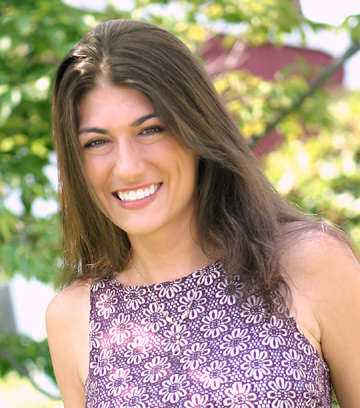 Introduction: My first contact with Jenna Glatzer and her site, Absolute Write was from a piece I wrote entitled, What An Adventure. It has been almost 3 years since that piece was published and I've watched from afar how her website's just grown. It is a rare writer who has not heard of Absolute Write and the Forums, Absolute Write Water Cooler. For a long time, I have wanted to interview Jenna but things at my end just got in the way. In the end, I asked her. I was quite prepared for a 'No' but was pleasantly surprised with a prompt reply saying 'Yes'. I've enjoyed interviewing her and without further ado, I have great pleasure in introducing to you Jenna Glatzer ...
Aneeta: Well Jenna, thank you for agreeing to this interview.
Jenna: Thanks for asking!
Aneeta: Let’s start with some personal information. Please tell me a little about you and your family. Where you were brought up? Where do you live now and really, anything you wish the world to know about you?
Jenna: Although I never would have predicted this one, I live five minutes away from where I grew up. Ten minutes from the hospital where I was born (I’ll now have my first baby in the same hospital). I live on Long Island, NY. Never thought I’d stay here, because I hate winter! I tried living in South Carolina—beautiful weather—but I just didn’t fit in there. So I moved to Boston (loved it), then near Albany (it snowed in October), then back to Long Island. Although I still wish I lived in a warm climate, I’m a family girl at heart and am glad to live so close to my parents and brother.
Aneeta: How did you get into this publishing industry?
Jenna: I was a stage actress first, but I got a terrible panic disorder and wound up housebound for several years. I needed to find a way to make a living from home, so I hopped online and started reading websites for writers, to see if I could find a way to make myself useful. I always loved reading, and my college professors had strongly encouraged me to write. It also thrilled my mom, who was an English teacher and had not-so-secretly hoped that I’d one day become a writer (although I think she was hoping for a novelist. One day, maybe).
My first foray into the writing world was screenwriting. I wrote several screenplays (10 or 11, I think). Had many close calls, but nothing was produced, and I made a grand total of $9 on my first option (it was a $10 option, and my agent took her $1). However, the check bounced because I took so long to try to deposit it.
I had simultaneously been working on breaking into the magazine industry. I sold a couple of articles right away to magazines for college students, but then hit a dry spell. I took on many, many low-paying assignments before I was finally able to command better rates and make a living from my writing.
Aneeta: I’m aware that you do a lot of writing in terms of articles for magazines, online publications and so on. Do tell me, what kind of articles do you enjoy writing most and which are your three favourite ones?
Jenna: The ones I enjoy most are the ones that require the least research! I love writing personal essays and humor essays. Unfortunately, those rarely pay as well as the other sorts of articles I write—heavily researched articles about health, disabilities, and a variety of other topics. I write pretty much whatever editors will pay me well for. I recently wrote an automotive article… not even vaguely an area of interest for me, but they paid about $1.50/word and I knew I didn’t have to spend too much time on it.
If I had to pick three favorite pieces, they’d probably be …
Aneeta: Now, you’re also the author of several books. First, I understand that you’ve written three books for writers. Can you describe these books, please?
Jenna:
| Outwitting Writer’s Block and Other Problems of the Pen (The Lyons Press, 2003) is a lighthearted guide to breaking through writer’s block, securities about writing, and lack of motivation. | Make a Real Living as a Freelance Writer (Nomad Press, 2004) is a tailed guide for writers who want to write for magazines. It includes interviews with several top magazine editors and writers. | The Street-Smart Writer (Nomad Press, 2006) teaches writers how to avoid publishing scams, fake agents, bad contracts, and useless contests; and how to collect money from a deadbeat publication. |
You can find all of them at my site, www.jennaglatzer.com.
Aneeta: Then, there are the books for people with anxiety disorders:
Jenna: Fear Is No Longer My Reality (McGraw-Hill, 2005) is the memoir of Jamie Blyth, a contestant on the first Bachelorette show. It’s the story of how he overcame social anxiety disorder and panic disorder.
Conquering Panic and Anxiety Disorders (Hunter House, 2002) is an anthology of success stories from people who’ve overcome all sorts of anxiety disorders, plus a psychologist’s commentary on each story.
Aneeta: And now, the one that people all over must be talking about, the authorized biography of Celine Dion, Celine Dion: For Keeps. First, what’s the book about and second, what was it like working with her? What’s she really like in person?
Jenna: It’s a biography that concentrates more on her life than on her career—I wanted to try to let her fans know more about what she really dreams about, thinks about, wants from life.
What it was like… it was amazing. Seriously. One of the best experiences of my life. Celine is extraordinarily nice and humble and nothing like you’d expect from a famous “diva.” She met my whole family, and made all of us feel special. She’s genuinely interested in talking to people. I wound up going back several times and getting to spend a lot more time with her than I expected, and it was a sheer joy.
Aneeta: There’s the one entitled Hattie, Get a Haircut! What an interesting title. Do tell us a little about this book, please.
Jenna: That’s a picture book about a girl who says she will “never, no way, not at all” let anyone cut her hair… until it grows around the block, kids jump rope with it, grandmas knit it, and squirrels nest in it. She finally finds a good reason to sit in the hairdresser’s chair, and to do a good deed in the process.
Aneeta: Now, on to your very successful website Absolute Write and indeed forum, Absolute Write Water Cooler. Tell me how you got started with this website. Indeed, did you think it was going to get this big and since it has, how do you feel about it all now?
Jenna: I think it was 1998 when a friend of mine with a small screenwriting site told me I should learn how to make myself a website. I resisted, but he swore it was really easy, and eventually talked me through it. So I made this very small site to promote my screenplays. For some reason, it attracted a lot of traffic—but all from writers, not from producers. They would write and ask me questions about screenwriting. How did I get an agent? How did I option a script? What did I think about such-and-such contest?
I answered their questions when I could, and when I felt unqualified, I asked other writers to help out. Eventually, I turned it into a screenwriters’ site… then a general interest writers’ site. I had no idea it would ever be as big as it has become. We have more than 75,000 subscribers. Crazy, huh? It’s overwhelming some days, and very time consuming, but I have loved being part of something so worthwhile. I know the site and the forums have made a difference in the lives and careers of many writers, and that makes me feel great.
Aneeta: It certainly has. As you may know, one of the things I try to focus on in this website is storytelling in Asia. Many authors here are reluctant or perhaps lack the courage to approach editors/publishers in the US or the UK. What advice can you give these people and indeed, are you able to advise us to what kind of stories editors from the US be looking for in stories from Asia?
Jenna: I don’t have any expertise on that, unfortunately, but I do know that there are a great many publishers in the US that gladly accept submissions from writers outside the US. Best advice I can give is a sort-of cliché: “You miss 100% of the shots you don’t take.” I don’t know who said that originally, but it’s a great motivator for me. Never let insecurity hold you back from taking a shot that might make a huge difference in your career.
If you’re talking about books, the other way to do it, of course, is to get an agent who can handle foreign rights. First sell the book in Asia, then it’s easier to attract publishers all over the world to buy the foreign rights.
Aneeta: What is the number one benefit you’ve derived from being a full-time writer?
Jenna: Freedom. I’m not very well suited to a 9 to 5 job. I’m a serious night owl. I typically go to bed between 6 and 7 a.m. and wake up around 2 p.m. And although I can and do work during most of my waking hours, I also take breaks and shop on eBay, watch TV, go to the post office, see my family. I find it so difficult to focus on just one thing for 8 hours at a time.
I’m pregnant now, so the benefit is about to increase a great deal for me. I don’t have to worry about day care or maternity leave. I can take on fewer assignments as I get closer to the baby’s birth, then take on more when I’m ready.
Aneeta: There was a debate recently amongst the local bloggers about rejection. Most agreed that it was not what was rejected or the fact of rejection itself. It was how the person and his work were rejected that was important. Now, I’d like to ask you, do you think there’s a correct way for a writer to reject an author’s work?
Jenna: (I assume you meant “editor”?) You know, I’m a very sensitive person in general, but rejection just has never hit me the way it hits a lot of writers. I’ve never really taken it personally. Sure, there are some editors who reject work rather coldly (I’ve had some e-mails that have just said things like, “Not interested” or “I don’t think it’s funny,” and one query letter that was returned by mail with just a big red “R” written across it—which I assume stood for “reject,” though I’ll never be sure!). Still, I don’t take that as any reflection on me or my work. I just take it as a sign that editors are busy and they’re not all concerned about coddling writers. That’s okay.
It does make you appreciate the editors who take special time to explain exactly why they’re rejecting something, or offering suggestions about other markets for the work, or encouragement to try again. It would be great if all editors were like this, but we have to remember that their main job is to work with the editors whose work they’ve bought, not to spend time counseling writers whose work isn’t right for the publication.
There’s a positive side to rejection, too, though: It means you’re submitting your work. It means you’re one step closer to an acceptance.
Aneeta: Well Jenna, this is all I have to ask. Is there anything you’d like to add?
Jenna: If you know deep inside that you’re a writer, don’t ever let anyone stop you from being who you are.
Aneeta: Jenna, thank you, once again for agreeing to this interview.
Jenna: Thanks for having me here!
This piece may NOT be freely reprinted. Please contact editor @ howtotellagreatstory.com for reprint rights.
Click here to return to the index of interviews on 'Blow Your Own Trumpet!'
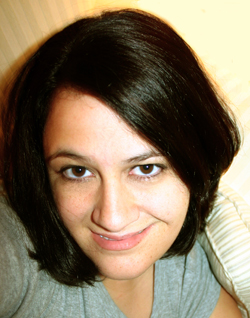 Introduction: When the link to my interview with Jenna Glatzer was posted in the Absolute Write Forums, I was expecting people to contact me with requests for interviews. What I did not expect was the speed with which I would be so contacted. However, if you've come across Kristen, you'll know she's really quick at getting things done. Usually, the people I interview will take anywhere between a day and months to send me their replies. Guess how long Kristen took? 1 hour. Yes, you read it right, 1 hour! Still, I enjoyed much of what I read and without further ado, I have great pleasure in introducing to you Kristen Fischer...
Aneeta: Kristen, what a pleasure it is to ‘meet’ you.
Kristen: It’s a pleasure to be ‘here’ with you!
Aneeta: Let’s start with a little about you. Please tell me a little about your family, where you grew up and what information you’d like to world to know about your life.
Kristen: I have lived in New Jersey all my life. I’m 28 and Creatively Self-Employed: How Writers and Artists Deal with Career Ups and Downs is my first book. I work full-time from home as a copywriter (http://www.kristenfischer.com). I’m married and I have a cat. I live five blocks to the beach in the nice part of New Jersey (there are few!) and I relish it everyday.
Aneeta: Since I started this column, I’ve come across many people who did something at college/university and then followed their heart and turned to storytelling and becoming writers, in particular. Indeed, I am one such person. However, I’ve found a strange thing happening – I like writing stories which will somehow have some legal issue attached to it. I would like to know about you. I understand you’ve obtained a degree in Environmental Science. For the benefit of my readers who don’t know what environmental science is, please explain what this is about and how does it affect your writing?
Kristen: Environmental science is the study of how science affects and impacts the environment, and vice versa. It deals with everything from cleaning up toxic spills to global warming. You see a lot of hybrid cars; that’s one aspect of preserving our planet. Many people are more environmentally conscious now. Environmental studies also affects the law, and vice versa. Some of the biggest political issues today are, in fact, environmental ones.
I had an interest in environmental science, so I chose to major in it. (Of course upon graduation, I realized that I didn’t want to go into that field.) But it still interests me, and I write for a few environmental companies. I worked for an environmental consultant for two years, writing the reports. It gave me the edge to explore technical stuff that can actually make me a lot of money, to be honest. Now I can approach environmental companies because their field guys may not write well, and I can capitalize on the fact that I have my degree in the field and can write. (A lot of environmental companies are big on reports, as state and federal regulations mandate. So good writing is vital for them!)
Aneeta: I see on your website, you mention that you have a fond appreciation for the genre of creative nonfiction. Now, this is word that popped up recently as another author I interviewed, Jamilah Samian, also categorised her book in this manner. I would like to learn from you, what is this ‘creative non-fiction’?
Kristen: They call it the “fourth genre.” I took a class in this during college. I guess you could say it’s what James Frey did. He took real events and put a creative spin on them. It gives you the ability to write about something true and get creative with it. For example, instead of writing a story about eating apple pie with grandma, a creative nonfiction writer may personalize the fork that grandma is eating with. What does it feel and how is it a part of the story?
Aneeta: It is pretty obvious you’ve written extensively for magazines, newspapers and so on. Can you please tell me, which three pieces you wrote were most interesting and why?
Kristen: As a reporter, I liked the municipal beat work. But I enjoy magazine work the most. My favorite topic is college life—I loved mine so much and think that kids going into and coming out of college do not get enough preparation. My three pieces for College Bound have been my favorite. The latest article is at http://www.collegebound.net/content/article/593/119
Aneeta: Now I understand you do freelance work. What exactly do you specialise in? Is it just copywriting and if so, in what area?
Kristen: I write about everything! I become an instant expert in whatever I touch. Right now I do some work for an HVAC company, some work for environmental companies. All sorts of things: I just finish some marketing materials for a food services company that puts cafeterias in corporate buildings, and I also just wrapped up some profiles on distance learning students for an educational website. Then I do ‘fun’ stuff—this week I am writing a website for a dance company. It varies, and I love all of it!
Aneeta: On to your up-coming book. Creatively Self-Employed: How Writers and Artists Deal with Career Ups and Downs. Please provide a description for this book?
Kristen: This is a one-of-a-kind book about life after writers and other creatives take the plunge into self-employment. It discusses issues such as how to deal with rejection, build a support system and handle time management. I interviewed more than 65 creatives and gathered their anecdotes on what works for them, and what doesn’t. The hope is that it will expose issues that creative freelancers face, but maybe don’t feel comfortable talking about. (Many people think my life in creative self-employment is easy, so I don’t always feel like I can talk about the downers.)
This book aims to give people the support they need, which they can relate to in the stories, so they won’t give up just because there are unique, sometimes troublesome issues creatives face. You can check out www.creativelyselfemployed.com to learn more about the book—I’m building the site into a resource for creatives to use. The book will be out in December!
Aneeta: Lastly, as you know, my website caters for storytellers. What advice would you give to storytellers, especially those who are starting out in their careers as storytellers?
Kristen: I just say write. I never joined a writers group. I never read books on how to write. I just do it. I know some people feel that they have to learn to write, but if you’re a writer, you’re a natural. And if you’re a good storyteller and not as great a writer, that is what editors are for.
Biggest advice: Don’t think about it too much, or you’ll be staring at Page One for a long time.
Aneeta: Kristen, this is all I have to ask you. Is there anything you would like to add?
Kristen: I’m really thankful for taking the time to talk with me!
Aneeta: Kristen, thank you, once again.
Kristen: Thank you, Aneeta!!
This piece may NOT be freely reprinted. Please contact editor @ howtotellagreatstory.com for reprint rights.
Click here to return to the index of interviews on 'Blow Your Own Trumpet!'
 Introduction: Whenever I end my emails, I'm always at a loss: do I say 'Yours truly,' or 'Yours sincerely,' or 'Regards'? I have to think before I type. With Michelle, every email she wrote me ended with 'To your continued success'! and I was so intrigued by this. Still, I first came across Michelle's work about 2 months ago when I was surfing the net and came across an article she wrote. I thereafter wrote directly to her and asked if she would like to be interviewed. She agreed and without further ado, I have great pleasure in introducing to you Michelle Howe ...
Aneeta: Thank you, Michelle, for agreeing to this interview. I have read, on your website, www.InternetWordMagic.com that you have many years of experience as a professor. What did you teach and where?
Michelle: I earned my MBA from Cal Poly Pomona with an emphasis in communication. I then joined the faculty of Cal Poly Pomona teaching business writing, public speaking and management. After a move to Orange County in 1997, I accepted a faculty position in the department of Marketing and Business Writing at Cal State Fullerton.
As the Internet began to take hold in everyday business, I began researching communication and marketing techniques on the Internet. The results of this research are my two books, “Persuasive Writing Made Easy” and “Turn Browsers Into Buyers.” I also started consulting with companies to assist them in how to effectively position their online marketing message.
Aneeta: I also understand that you write a monthly column called, Writing For Business. Are you able to give us a sample article here?
Michelle: Actually, I am no longer writing the business column for the Riverside Business Journal. Instead, I write a monthly article for my e-newsletter. I’ll attach my most recent article for your use.
|
5 Tips for Writing Search Engine Optimized Press Releases By Michelle Howe (606 words) Online press releases are one of the most inexpensive and highly effective marketing methods for a small business owner. Yet, many people think only “big businesses” use press releases. Wrong. The Internet gives a small business’s website the same visibility as a large corporation’s website and online press releases work the same way. Once an online press release is distributed, it’s out there in cyberspace generating hits and driving traffic to your website for years to come. Just last week I received an e-mail from someone who read a press release I wrote two years ago! Unlike an offline press release that is distributed directed to journalists at newspapers and other media outlets, the online press release is “evergreen,” it never goes away. A simple keyword search could turn up your press release years later. Compare this to the offline press release that may or not be used by the journalists and then is trashed, never to be seen again. An online press release also has a worldwide distribution to thousands of media outlets. Popular newswire service PRWeb.com, e-mails “press releases to between 60,000 and 100,000 global contacts points including journalists, analysts, freelance writers, media outlets and newsrooms.” Along with its large distribution and staying power, an online press release can be even more effective in driving traffic to a website if it is search engine optimized. Here are five tips on how to create a more powerful online press release: 1. Have a newsworthy angle. A press release is not a sales pitch. Provide the media with information that answers the questions of “who, what, where, why and when.” Make it interesting by telling a story that engages the reader 2. Choose the right keywords. What words would someone use to find your business when using Google? Experiment to see which words are most popular. When you type in a phrase in the Google search feature, it now lists the number of times that particular phrase has been searched in the last 30 days. This is a new free service being offered by Google; use it to your advantage. 3. Vary keyword placement. Don’t get so carried away with your keyword phrase that it shows up in every other sentence of the press release. Have a reasonable balance in your writing so that the keyword placement is invisible to the reader. Include the keyword phrase in the first sentence and then two or three more times throughout the press release 4. Use eye catching headlines. Make sure to include the keyword phrase in your headline and at the same time, make the headline interesting. Write the headline after you have completed your press release and it should easily come to you. 5. Use anchor text. Although it will cost you more to place a press release with anchor text, it is well worth the money. Anchor text is the hyperlinked words on a Web page that you click on to take you to another location within the website or to another website. Search engines love anchor text because it tells them what the page is about. It’s a great way to boost your ranking with the search engines, especially Google. Consider using search engine optimized press releases to publicize your business and drive traffic to your website. It’s simple to get started and hugely rewarding. One of my clients had over 1,400 media outlets pick-up his press release within two weeks after I wrote it. A keyword search found the press release as top ranked on both Google and Yahoo. Needless to say, we are going to continue with monthly search engine optimized press releases. About the Author: Michelle Howe, MBA, president of Internet Word Magic, is an expert in online copywriting for websites. Michelle consults with companies to assist them in effectively positioning their online marketing message to match their offline branding. A former university professor, Michelle is the author of “Persuasive Writing Made Easy” and “Turn Browsers into Buyers.” Visit her Web site at http://www.InternetWordMagic.com for a free report, “The Five-Step Plan to Article Success.” |
Aneeta: Michelle, there are so very many ‘experts’ out there on writing for the internet. What makes you special? What is your approach and is it effective?
Michelle: The whole issue of writing and people thinking they can write well is an interesting topic. When I was teaching, many of my students had gotten A’s in their English classes, but they were nearly failing in my business writing classes. It didn’t make sense to them and at first I was confused too. However, what I discovered is that business writing is all about being able to communicate clearly. You may be able to put a sentence or paragraph together, but if the message is unclear, you have failed to communicate.
In order to be able to communicate clearly, you have to be able to use critical thinking skills to problem solve while you are writing. Not an easy task to accomplish. Many of my students had never been faced with the challenge of solving a problem through writing. So, for many of them, it was like learning another language; another way to communicate.
Writing for the Internet is equally difficult because you are not only writing to communicate with your target audience, but you are writing for the search engines. So, you have two completely different audiences who will be reading the content on a website. You have to reach both audiences, or the website fails as a marketing tool.
One of the unique things about me is that I was trained by a professional ghostwriter how to incorporate my client’s voice in all the writing I do for that client. If you were to look at any of the websites I’ve written content for, you wouldn’t be able to recognize it as “Michelle’s writing style,” it sounds like the company wrote it.
When companies hire me, they are getting much more than a copywriter. I understand all about Internet marketing, website design, search engine optimization and online promotion. My clients bring me in to create an Internet marketing strategy for their business in addition to creating the content for the website. Sometimes we create an integrated marketing plan that incorporates offline with online promotion.
Aneeta: Let’s go now to the products you offer on your site. For each product, please describe the product and its benefits.
Michelle:
Persuasive Writing Made Easy – book : A step-by-step guide to creating sales messages for any marketing material: sales letters, e-mail, brochures or phone scripts. Generate more leads and close more sales.
Turn Browsers Into Buyers – book: Learn how to attract the right people to your website, without hype and without manipulation. Ethically present your marketing message in a way that allows you to tap into your target audience’s personal value system. People do business with people they like and trust. Turn Browsers into Buyers shows you how to instantly build rapport with your audience and how to express your marketing message without being pushy. It shows you how to make every page on your Web site interesting and engaging.
How to Write An Irresistible Homepage in 7 Simple Steps – Audio CD : You have less than four seconds before a visitor will leave your homepage. My simple step-by-step process will teach you how to create a homepage that captivates visitors and encourages them to stay.
Secrets of Successful Web Writing – 2 Audio CD & Workbook Set: Boost traffic by learning how to write for search engines. In two hours you can get the knowledge you need to completely re-vamp your Web site and turn it into a selling machine. This CD set shows you step-by-step how to analyze your Web site and make it search engine friendly and visitor friendly.
Aneeta: Do you have any other products besides these?
Michelle: I’m going to be creating a teleclass “boot camp” that will follow my “Turn Browsers Into Buyers” book and give people hands-on instruction in revamping or creating the content for their website. Sometimes reading is not enough, people need a coach to guide them in creating the content.
Aneeta: Michelle, as you know, my website caters for storytellers. How does storytelling fit into your kind of work, if at all?
Michelle: People love stories and powerful stories build rapport with an audience. I use client stories of success to explain my services and create an understanding with my potential clients. I want people to feel comfortable working with me and storytelling is a great tool.
Aneeta: What advice would you give to people, in particular storytellers, who would like to venture into the internet world?
Michelle: Storytelling on the Internet is even more viable today because of the use of audio and video on websites. The human voice is much more powerful than the written word. I predict more and more websites are going to be using audio as a sales tool. They will also be using it to begin building relationships with potential customers. Storytelling will be a very important component of this change.
Aneeta: Michelle, this is all I have to ask. Is there anything you’d like to add?
Michelle: The website for my new book is http://www.turn-browsers-into-buyers.com
Aneeta: Once again, thank you.
Michelle: Thank you for the opportunity to be interviewed and thank you for your patience in allowing me to delay getting this information to you.
This piece may NOT be freely reprinted. Please contact editor @ howtotellagreatstory.com for reprint rights.
Click here to return to the index of interviews on 'Blow Your Own Trumpet!'
 Introduction: When I first published The Banana Leaf Men, Sharanya's request for an interview came hot on the heels of a nasty encounter with another journalist. Needless to say, I was somewhat reluctant to meet Sharanya at all. Still, I acquiesced and prepared for the interview. I expected to meet an 'old' lady and was on guard. When this young, beautiful girl with unbelievably long hair turned up, I was a little taken aback.. With her friendly manner, we soon got talking and that interview was a happy memory for me. Since that first meeting, we've become friends and I've come to admire her work. When she told me about her newest piece of work, Iyari, I thought it only appropriate that I should request an interview. I asked, she agreed. Without further ado, I have great pleasure in introducing to you Sharanya Manivannan ...
Aneeta: Sharanya, thank you for agreeing to this interview.
Sharanya: My pleasure, Aneeta! Why on earth wouldn’t I?
Aneeta: Let us begin, as usual, with some personal information about you. Tell me, please, where you live, a little about your family and so on.
Sharanya: For now, I live right here in Kuala Lumpur. I was born in India in 1985, lived in Sri Lanka till age 5 (how I came to be born in India when my family lived in Colombo is a story for another time), after which we moved here to Malaysia. I was, in most ways, raised by my maternal grandparents, Sri Lankan Tamils. I’m Chennai Tamil on my father’s side. And yes – there is a difference! The Ceylonese is my overriding ethnic and familial affiliation; my Indian side manifests itself in different ways, and I continue to maintain with pride my Indian nationality despite the bureaucratic heartaches it involves. A great deal of my poetry, in particular, deals with my sense of exile, my negotiating with my roots and the mother tongue I abandoned in childhood only to have it, in more recent years, wrestle me to my senses so I could see my own immense love for it, and regret my earlier rejection of it.
Aneeta: Now, on your blog, http://www.sharanyamanivannan.wordpress.com , it is stated that you’re a writer, dancer, painter, actress, photographer, journalist and activist. I’m so tempted to ask, is there anything you don’t do? Anyway, do tell me a little about each of these ‘vocations’ of yours.
Sharanya: I don’t cook, at least not as well as I would like, and neither can I swim! The thing about my many ‘vocations’ is that I am audacious enough to declare myself to be all of those roles simply by virtue of my passion and pursuit of them. I don’t see why I shouldn’t. I write, I am a Bharatnatyam dancer, I do oil painting, theatre, photography, and have earned my daily bread in journalism and activism. I am deeply, deeply in love with each of these, and some I have fared better at by public standards than others. Nevertheless, I think that’s where it starts – without the ego, without knowing what personas you want to project, it’s impossible to be taken seriously. One does what one does for herself – one talks about what one does for the sake of other people. A huge part of my passion comes from the charge I get when sharing my work. That “godly feeling”, as my friend the theatre director Kelvin Wong calls it.
Aneeta: I understand from your most recent email to me that your chapbook of poems, Iyari, is now available. Tell me about this work.

Sharanya : Iyari was really one of those “right moment” decisions. My friend Jasmine Low and her partner obtained a shop outlet for a brief period of time which they decided to turn into the Indie Scene Café – it’ll be in Piccolo Galleria, Bukit Bintang, until December 31st, and will hopefully subsequently pop up in other locations. When she told me that she wanted independent artists to sell their DIY material – books, paintings, CDs, etc – for some reason, I became excited enough to decide to publish a chapbook. Now that it’s all been done, I’m not entirely sure why I made the decision in the first place, because I’d been notoriously possessive of hard copies of my work thanks to unpleasant experiences in the past, but I am so grateful I did. Iyari is a 44-page chapbook of poems, and I painstakingly worked on every single aspect of each and every copy – from page layout to photocopying to cutting and pasting the cover together. I hope my personal touch is clear in every copy. “Iyari” is the Huichol Indian concept of “heartmemory”, in which I believe our deepest and most profound truths are rooted. I should add that my chapbook is not in lieu of a complete manuscript of poems. It’s mainly to garner interest in a longer book-length manuscript, which I hope to have ready in the very near future. It was just the right time for Iyari, somehow.
Aneeta: I read also that you’re working on your first novel. What is it about?
Sharanya: My novel is called Constellation of Scars. Let that be known – because I’m terrified that someone will rip it off me! I’ve included the title in my chapbook, in the perhaps naïve hope that people will back off because they know there’s this person working with it already. There, it’s out there now! It’s a novel about memory, love, loss, longing – all the usuals. All I can tell you at this point is that it is set in Singapore and Sri Lanka, and revolves around a young photographer who is obsessed with the preservation of transitory moments, because so much of her own history is in darkness to her.
Aneeta: In all of this, I know that you’re a student as well. What are you studying?
Sharanya: I’m no longer a student, actually. I’m entirely tired of college. I finished school at 15 and spent the years between then and now being bandied back and forth. Ironically enough, this was despite my own hard work and because of the irresponsible decisions and indecisions of others.
Aneeta: As you know, this website caters for storytellers. What specific advice do you have for storytellers?
Sharanya : Make your own opportunities. Go out there and do it. I have performed at every reading I could in the last five years, self-published my own chapbook, contacted writers I had never met in an effort to establish networks. Fairytales of being plucked from obscurity rarely translate to reality. Being a storyteller, I think, is a divine vocation – I feel very strongly that I was put here to tell certain stories, that they are given to me by blessing, whatever the medium I excavate and then indulge these stories in. I feel this in my iyari. But, there is a time and a place when you must set aside that godly feeling that surely engulfs and intoxicates you, as it does me, when you write or perform or otherwise create or share your story, your stories. There are times and places where you must regard your work as being like any other job, and push for it likewise. Don’t be afraid to build your own opportunities. If you don’t believe in your work, if you are not willing to be vulnerable in sharing it, then you cannot expect anyone else to respond to you. And on that note, community is so important – the solidarity offered in finding the right group of writers with whom to have discussions, organise events and writing sessions, get critiques from, just shoot off an email to when you’ve got a great passage or poem down, is powerful.
Aneeta: Sharanya , I have come to the end of my series of questions. Is there anything you’d like to add?
Sharanya : I’d just like to say that I really hope some of your readers will not just buy my chapbook, but also make their way over to my blog, which is updated fairly regularly. I’m open to being contacted via email for any enquiries. Also, I am doing my first full-length solo spoken word show here in KL in 2007! I would love to have some of your readers in the audience then.
Aneeta: Thank you, Sharanya .
Sharanya : You’re welcome!
This piece may NOT be freely reprinted. Please contact editor @ howtotellagreatstory.com for reprint rights.
Click here to return to the index of interviews on 'Blow Your Own Trumpet!'
 Introduction: I met Lydia for the first time when I attended a 'Meet the Author' Session for her book, Life’s Like That - Scenes from Malaysian Life. This must have been about three years ago now. Since then, we've kept in touch and I often visit her blog. Without further ado, I have great pleasure in introducing to you Lydia Teh ...
Aneeta: Lydia, thank you for agreeing to this interview.
Lydia : Thank you for allowing me to blow my trumpet.
Aneeta: Let us begin, as usual, with some personal information about you. Tell me, please, where you live, a little about your family and so on.
Lydia: I’m a housewife-writer. My husband is in the IT line, so I don’t have to worry about fixing the computer at home. In fact, my children are more adept at handling the computer and gadgets than I am. They are aged 16, 15, 9 and 5. They already know by now that anything they say and do can be used as grist for my mill. If there is something they don’t want me to write or blog about, they’ll have to tell me so.
Aneeta: What did you do before you ventured into the writing scene?
Lydia: I worked as a clerk, a secretary, an encyclopaedia sales rep and an admin assistant on flexi-hours. In 1992 I resigned from my full-time job as Executive Secretary in a manufacturing company to stay home with the kids, then aged 1 and 2.
Aneeta: How did you get into writing?
Lydia: My English teacher used to read out my essays in class and I did quite well in Malay compositions too. My essay in a Bahasa Malaysia test was reproduced in the school magazine. I suppose that was when the desire to write was first stoked but I didn’t do anything about it until I enrolled in a correspondence course in writing. I needed something to kick-start the writing engine.
Aneeta: Let’s get into your books proper. Tell me about each one of them.
Lydia:
1. Congratulations! You have won – A guidebook on how to maximize your chances of winning competitions was published by Malita Jaya Sdn Bhd in 2001. Some people thought I’d laugh all the way to the bank – with my prize winning and royalties for the book. I’m still not laughing. But I’m smiling because God has blessed me with more than what I need. Though the book didn’t sell well, I’m gratified that some readers wrote to tell me how my book has helped them win contests. I’m particularly touched by a reader who wrote to tell me that my book has changed her quality of life. Though that reader has now won more and better prizes than I’ve ever won before, I feel warm and fuzzy knowing that my book was the catalyst of change.

2. Life’s Like That – Scenes from Malaysian Life was published by Pelanduk Publications Sdn Bhd in 2004. This is a compilation of articles written over a ten-year period, beginning sporadically in 1995 and gaining momentum in 2003. I am very encouraged by the readers who took the trouble to write in to say how they much enjoyed the book.

3. Honk If You’re Malaysian will be launched this month. It is published by MPH Group Publishing Sdn Bhd. My editor, Eric Forbes, encouraged me to work on this as a sequel to Life’s Like That. Books like these are evergreen, there’ll always be a demand for them, he said. So I put aside the novel I was working on and concentrated on getting this book out.
Aneeta: What was the one element of the writing and publishing process in Malaysia that you found most difficult to deal with and how did you overcome this?
Lydia: The biggest problem for me is the lack of writing glue. If I sit down at the computer to write, I get distracted by email, surfing for information, blogging or fiddling around with the stuff in my computer. If I sit down with pen and paper, I may end up sorting the papers on my desk, doing a spot of filing or grabbing a book to read. I need pots of glue to make my fingers stick to the pen or keyboard for the sole purpose of writing.
There are many publishers in Malaysia who are interested in well-written books on non-fiction. Unlike in the west where publishers prefer to see a book proposal first, local publishers want the manuscript in its entirety. Therefore it behooves the writer to do his homework to ensure that his topic is marketable to publishers before embarking on the writing project.
Having worked with three different publishers, I’d have to say that patience is a prerequisite if you seek to be published traditionally. The publishing process has just started once your manuscript is accepted for publication. And don’t think you’ve seen the last of your manuscript yet. Though you’ve probably rewritten and revised your work five or six times before submission, you must be prepared to go another couple of rounds more.
Aneeta: As you know, this website caters for storytellers. What specific advice do you have for storytellers?
Lydia : No matter how bad a story is, don’t chuck it just yet. You’ll be able to make it sing if you work at it some more. For example, in Honk! If You’re Malaysian, there’s a story titled Facial Torture Chamber which I first wrote nine years ago. Somehow I couldn’t get it down pat, so it languished in my computer for a long time. When I started compiling articles for the book, I pulled out the story and revised it till it’s fit to see the light of day.
Aneeta: Lydia, I have come to the end of my series of questions. Is there anything you’d like to add?
Lydia : Writers must be hungry. If you can write but you don’t hunger to write, you won’t write. To succeed as a writer – and this doesn’t necessarily mean raking in the big bucks like J.K. Rowling – you’ve got to be hungry.
Aneeta: Thank you, Lydia.
Lydia: It’s my pleasure.
This piece may NOT be freely reprinted. Please contact editor @ howtotellagreatstory.com for reprint rights.
Click here to return to the index of interviews on 'Blow Your Own Trumpet!'
Page 8 of 22