
Transform ordinary stories into extraordinary ones with our proven 7-step method. Join thousands of storytellers on their journey to mastery.

 Introduction: One of the very first newsletters I subscribed to when I ventured onto the internet scene was the one featured on WritersCrossing.com. Sadly, this newsletter is no longer in circulation. Nevertheless, I kept in touch with the owner of the newsletter and site, Mridu Khullar. I have observed her career from afar and been impressed with the enthusiasm she's shown for her chosen craft, writing. I shall say no more lest I spoil the surprise; therefore, without further ado, I have great pleasure in introducing to you, Mridu Khullar ...
Aneeta: Mridu, thank you very much for agreeing to this interview.
Mridu: Aneeta, thank you for featuring me.
Aneeta: O.K. Mridu, let’s start with some basic information. Where do you live and tell us something about your family and personal stuff you’d like to share with my readers.
Mridu: I’m 24 years old, live in New Delhi, India and have no cats. I spent four years of my childhood in London, which is where I developed my love for books, and wrote my first story. That story went on to catch the attention of several students and teachers, and eventually became our annual school play. That was my first brush with the craft, but for years, it remained the only thing I’d written.
Back in India, I wrote several more short stories and essays, mostly for class assignments but always found that they ended up being either performed or largely distributed. My teachers and friends often told me to consider a career in journalism, and when I’d reached a dead-end in my life, that’s the advice I fell back on.
Aneeta: How did you get into writing and in particular, freelance writing and why?
Mridu: I’d always been interested in writing, but had never really considered it as a career option. The closest I came to getting formally educated in journalism was when I applied for a degree in mass media before I went to college. As it turns out, the results of the qualifying exam for engineering came out a day before I was to give the qualifying exam for journalism, and since I had my top choice of university for Information Technology, I said, heck, why not do that?
And then I failed my first year in engineering.
I started writing while I prepared for my semester exams, and was earning a full-time living with it by the time I finished college. I guess I was always meant to end up in journalism. Just took a few detours on the way.
Aneeta: On your website, http://www.mridukhullar.com/ it is stated that you’re an international freelance journalist with over 200 articles in print and on the Web. Now, I know that I tend to remember some of my favourite articles and there are some which I can’t even remember the title for. So, can you tell me, please, which three of your pieces do you remember most and why?
Mridu: Much of my favourite work is that which has affected me personally. For instance, after I failed my first year in engineering, I proposed an article on the topic to a college magazine. For that piece, I interviewed several people who had done extremely badly in college initially but had gone on to do some wonderful things like start businesses, become involved in social issues or just discover for themselves that one failure didn’t define them. It helped me overcome my own fears at the time.
In late 2005, I visited the coast of South India a year after the devastating tsunami of December 2004 and wrote about the issues that the people were still facing and my experiences while there. That is definitely one of my favourite pieces, not only because it gave me the satisfaction of doing work that would make a difference, but also in that it made me see why what I do is important and where I should be focusing my energies.
Currently, I’ve been writing a series of unrelated articles, through which I’ve been trying to understand how we, as people of different personal beliefs, communities and even nations, define independence. So I’ve examined the struggles of Indian women as they assert their identities, I’ve interviewed Tibetan refugees who have a very different independence struggle of their own, and for the remainder of the year, am hoping to observe smaller segments of societies to get their views on what independence means to them.
Aneeta: Tell me, please, what type of assignments do you prefer to undertake and why?
Mridu: Most of the work I’ve done so far has been of the how-to variety, for consumer publications in the fitness and technology arenas. But, and I suggest writers not follow my example, I did actually wake up one day and decide I was done writing articles that I wouldn’t read. So I refused thousands of dollars worth of work, finished up the current assignments on my desk, and decided to figure out where I wanted to take my career.
It was soon after this that I went to South India to visit the tsunami-affected areas, and that’s when I realized that I had in my hands the platform to give voice to people who don’t have one. And so far this year, that’s been my focus.
Aneeta: You and I have something in common in that we’re both based in Asia. Do you think that this is in any way a liability to a career in writing?
Mridu: Not at all! If anything, it’s an asset. We’re in Asia at a great point in history. The world is suddenly paying us a lot of attention. The western media is trying to do away with the worn out clichés of what Asia is and isn’t, and is instead trying to portray the realities and issues that are coming out of huge population. That, I believe, is great news for anyone in media. Especially freelancers.
Publications worldwide want stories in and about Asia. It’s tough to send journalists, especially freelancers for out-of-country assignments to places they’ve never been to and don’t know much about. We, on the other hand, are already here. We have the necessary contacts and knowledge to not only propose topics they wouldn’t have thought of, but can do it in a much more realistic fashion. Win-win!
Aneeta: As you know, my website caters for all manner of storytellers and storytelling. What is the importance of storytelling, if any, for a freelance writer who undertakes your kind of work?
Mridu: My work is nothing if not for storytelling. I’m telling stories, too, just that unlike fiction writers, I’m not making them up. They’re all true.
Aneeta: Mridu, how would an editor showing an interest in commissioning you to undertake an assignment contact you?
Mridu: E-mail works best, usually. I’m also your regular geek, so instant messaging is my favourite way of making contact. You can find several different ways of contacting me on my website http://www.mridukhullar.com
Aneeta: This is all I have to ask you. Is there anything you’d like to add?
Mridu: I think Susan Glaspell says it best: “In writing… remember that the biggest stories are not written about wars, or about politics, or even murders. The biggest stories are written about the things which draw human beings closer together.”
Aneeta: Thank you, Mridu.
Mridu: Thank you, Aneeta.
This piece may NOT be freely reprinted. Please contact editor @ howtotellagreatstory.com for reprint rights.
Click here to return to the index of interviews on 'Blow Your Own Trumpet!'
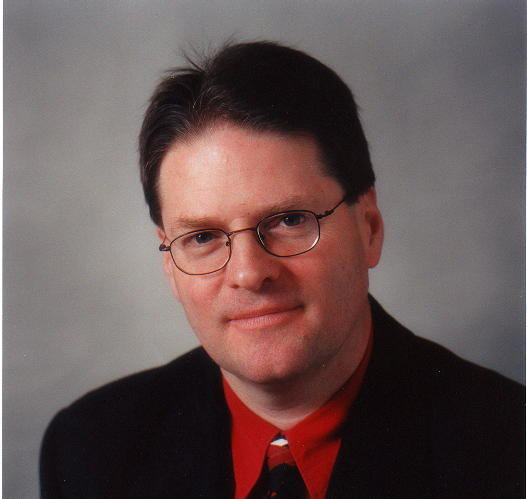 Introduction: From this interview, I learnt again how little one can know about another person until one actually asks that person to tell their own story. You see, I'd assumed I knew enough about David Miskimin's work from the interview I'd conducted with Jack Stewart. However, I was in for a surprise and a pleasant treat. Now I have a further understanding of what it is to be a coach and indeed, more interestingly, how these concepts can sometimes apply to my former profession as a lawyer. Without further ado, I have great pleasure in introducing to you, David Miskimin ...
Aneeta: David, thank you for asking to be interviewed. I’m sure we’ll learn much from you.
David: My pleasure, I’m equally intrigued to be learning about you and your web site.
Aneeta: Let’s begin with you. Please tell me a little about who you are, your background, your family and any other personal information you would like to share with my readers.
David: Well Aneeta, I’m going to start with a bold statement! – ‘I Realised I Could Make A Difference’ – let me explain.
I was born in a suburb of Manchester, England. I grew up living in houses owned by the Council until I was 17. My mum always wanted to own her own home and after much persistence, she practically dragged my dad to see the house they were eventually to buy. I had released that to make something happen, one day the talking has to stop and action is essential. I admired that. Ken Mason, my late father-in-law, had a great inspirational expression – “when the going gets tough – the tough get going”.
Charles Swindoll wrote a brilliant piece that captures this success approach for me. Those who know me will confirm its presence on the wall at home for 10 years now! He concludes his message brilliantly ‘…We cannot change our past… we cannot change the fact that people will act in a certain way. We cannot change the inevitable. The only thing we can do is play on the one string, we have, and that is our attitude… I am convinced that life is 10% what happens to me and 90% how I react to it. And so it is with you … we are in charge of our Attitudes’.
I had noticed over the years that many wonderful and talented people often do not seem to get the success or recognition they deserved. Yet there are those with far less talent and a great eye for marketing. They were able to get themselves noticed in the ‘right places’. So I realised I needed to gain some recognition driven by a deep belief that I have a purpose and a ‘message’ and would like others to benefit in some way.
This was driven home to me when I turned down a business opportunity with an established coaching organisation, where as part of the deal, staff and associates were encouraged to write a book. The business would publish it under their brand with the author also being acknowledged. The learning – anyone could write a book and branding was key.
I now knew I had to stop wishing and make my message happen. A fundament for me is about making a difference in the lives of others. Thankfully, I had met Jack Stewart by this stage. We quickly established those shared values which could support our working towards a higher purpose.
Aneeta: It says on your website, The Directors Coach, http://www.thedirectorscoach.com that you’re an Executive & Business Coach. What does this mean?
David: It’s a great question. I’ve just written an assignment on Executive Coaching as I’m studying for a post graduate Masters level Diploma as a Corporate Coaching Practitioner. Let me quote from one possibility that resonates with me – “Executive Coaching … a collaborative, individualised relationship between an executive and a coach, …to bring about sustained behavioural change and to transform the executives working and personal life”. In a nutshell I help elicit, and define the particular talents, in order to transform the performance of the Executive.
Driven by this passion I founded my own company, The Directors Coach http://www.thedirectorscoach.com in 2000. An executive coach and mentor, I bring over 15 years senior management experience gained within ICL, NorTel and Reuters. My own understanding as a senior manager enables me to help senior people achieve performance excellence. This includes CEOs, MDs and Lawyers. I have a particular passion in the building of purpose, direction and follow-through with senior teams.
Aneeta: Amongst all of the clients you’ve listed you work with, the one which fascinates me the most, naturally, are the lawyers. How do you coach lawyers?
David: My experience is that lawyers tend to be analytical, logical and needing to be convinced! The best way to generate evidence about coaching is through raising awareness about what I as the coach, am noticing about that individual. Those observations will be tested as hypothesis to begin with, having been gathered through assessment work, perhaps a 360-degree exercise including stakeholder interviews and several intensive coaching sessions. If this may seem familiar, indeed its because I am building a case to present to the coaching client. At this time I’m working with different lawyers in two large international organisations.
Aneeta: I see too that you run seminars and workshops. Please share with me one particular tale which stands out in your memory – preferably a funny story.
David: I ran a workshop with a large Local Authority, covering communication in all aspects, including ‘dealing with difficult people’. I started a role play and asked for a volunteer difficult person. The group unilaterally pointed to a particular delegate. I invited him to get into character and to act as though he was upset about the lack of service he felt he had experienced.
He strode up to the desk I was sat at, raised his fist above his head and brought it crashing down onto the table, like a sledgehammer onto a nut. The desk cracked, groaned, and like a felled tree, caved onto the floor in a ‘V’ shape. I’m sure you can imagine the tension in the room.
What did I discover?
Aneeta: Professional Speakers Association – I’ve never heard of these before. What is it? Is it something akin to Toastmasters?
David: Yes, its like Toastmasters, although works on the basis that you already know all the speaking skills and just want to take them further. As a result there are many ‘professional’ speakers who attend – i.e. those who intend/do make a living from speaking.
Aneeta: From the previous interview with Jack Stewart, I already know that you co-authored The Coaching Parent. I heard his side of the story. Now you tell me yours. How did the book come about? What was it like co-authoring a book with someone else? Were there problems of any sort when writing the book and if so, how did you deal with them?
David: That’s a good question and probably deserves ‘rewinding the story tape’ to an earlier time in my life.
In the UK we used to have a national test called the 11 plus, taken not surprisingly between the age of 10-11. Success in this meant you went on to a ‘superior’ education in what was known as a ‘Grammar’ School. Such schools often had a reputation for academic excellence. I failed my exam and my teachers led a lengthy inquest as to how it could happen! My best friend just scraped in to Grammar School and much to our shared dismay, we were parted. I know he won’t mind me saying that for several years he struggled near the bottom of his classes, while I was always in the top 3 for most of mine. I was already learning that ‘failure’ is down to how we interpret the experience. Mr Comrie inspired me as a teacher, where he demonstrated without using the words, that goals and expectation of outcome are powerful motivators. My final GCE exam result was precisely as he predicted.
My parents, brother John and sister Karen, have provided a source of ideas and reference; like me, always doing the best with what they knew. My wife Laura has believed in me throughout and contributed much to my growth as a parent, husband and coach. Daughters Nicole and Anne-Marie, have (usually) been willing students, and where necessary, adept in letting me know when I get it wrong! Grandchildren Marcus and Aiden, continue to remind me of important areas, teaching me new things too.
Achieving a personal goal of meeting 1:1 with Lou Tice, International Consultant on Personal Motivation and co-founder of “The Pacific Institute”, was a deeply moving and life changing event. “Thank you Lou – you are one in a million”.
My big secret is out – while over the years several hundred coaching clients have produced fabulous results, I too have experienced a sense of achievement and growth by sharing in their hard won personal change.
I was on one of Jack’s NLP programmes which at the time he designed and delivered. I just felt that while we were two very different individuals, I loved Jack’s lack of ego and could really respect him for that. Its not always true for me! So I would say Jack came into my life at just the right time.
After about 18 months of knowing each other we decided to design a pack of 45 that would help parent to facilitate releasing of talent in children. Jack and I both felt passionately about this aim. We then ran several workshops on the theme of The Coaching Parent. It was two delegates on one event that said. ‘this stuff is great – you guys must write a book’. Three years and much effort later we had! http://www.thecoachingparent.com
There were numerous challenges. We had an original contract signed with a great publisher and they were very supportive. However for reasons unclear, one of their reviewers started to suggest we remove or alter too many of the principles that we regarded as cornerstones in the book. After much deliberation we concluded it wasn’t going to work and we pulled the plug. We had no publisher to go to, just deeply believed in what we had done and how we had done it. We had no regrets as it was our choice and writing the book was an experience. Effectively we each wrote about half of what became the published work. I would not have wanted to miss any of it. In turns it was exciting, frustrating, fun, annoying, enlightening, disappointing and ultimately, fulfilling. Jack and I were great foils for each other and I can’t think of anyone else who would have matched my needs better!
Because we as authors experienced different publishers, I would openly acknowledge the first publisher Crown House, for their feedback, high standards and professionalism, which ultimately led to a far superior work. Our eventual publisher, Bookshaker were also superb – Flexibility, creativity, professionalism, tireless efforts. They were great.
Aneeta: As you know, my website caters for storytellers. Can you please tell me, how does storytelling factor into your work and what advice would you give storytellers?
David: It features as an easy way to help link often complex ideas together. As children we love to follow stories and wonder how they will end. That’s true for adults too. I’m a long way from being a master story teller, more of a work in progress!
Aneeta: David, this is all I have to ask. Is there anything you’d like to add?
David: Apart from thanking you for making the opportunity to be interviewed available, I’d add, do come back in a years time – it would be good to discover how the story has progressed!
Aneeta: Thank you very much David.
David: Thank you Aneeta, for allowing me to share my journey with others.
This piece may NOT be freely reprinted. Please contact editor @ howtotellagreatstory.com for reprint rights.
Click here to return to the index of interviews on 'Blow Your Own Trumpet!'
Introduction
Again, through Sharon Bakar, I came to meet Dina Zaman about a year ago. When I asked if she'd consent to an interview, she agreed but on one condition: there would be no photos of her posted in this interview. I agreed to this. I can tell you, though, she's beautiful both on the inside and out. Without further ado, I have great pleasure in introducing to you, Dina Zaman ...
Aneeta: Dina, thank you for agreeing to this interview.
Dina: No problems!
Aneeta: Let’s begin, as usual, with some personal information about you. Please tell me where you live, your family and any other information you’d like to share with my readers.
Dina: God. How do I describe myself? I live with my family in KL, but we’re all from the East Coast. I’m an aunt to a nephew and niece, and I have two sisters. Err, I’m 37, single, a working writer… I’m not too good at describing myself!
Aneeta: That’s pretty good. Enough to keep going. Before I delve into your work proper, do tell me a little about how you became a writer.
Dina: Well I’ve always enjoyed writing. Because of my father’s work, I’d change schools and there were times I didn’t go to school (!), so I was pretty lonely. My younger sister was too small then, so I had no friends to play with. My father bought me a journal and told me to write. I think he wanted me to practise my penmanship because even til today I scrawl! But that’s how it started. I started writing about the snow, my cats… fast forward to Uni. Didn’t want to do a Business Minor like all my friends so I opted for a creative writing minor. Came back, and submitted my homework to Thor Kah Hoong and it took off from there. And here I am!
Aneeta: Let’s start with an interesting one – Dina’s Dalca. I so like that title. Tell me a little about this.
Dina: I started writing for the NST in 94. I was bored at work, so I wrote about how my parents had my wedding all set up, but I was very very single then. That first article was published and it rolled from there. Rose Ismail and Fatimah Abu Bakar asked me if I wanted a column, and what would I title it? I didn’t have a clue. So Fatimah Abu Bakar gave the column its title. Thanks to that title, everyone now thinks I’m from Penang.
Aneeta: I understand that now, you are no longer with the New Straits Times. Instead, you’re with Malaysiakini. What do you do there?
Dina: Hah! I’ve just ended employment with malaysiakini.com! Well over the past 1.5 years I had a column about Muslim life in Malaysia, with a few detours to Jakarta and so forth. I really enjoyed writing it. I am Muslim will still be around, but right now both of us want a break.
Aneeta: A writer, an editor, public relations, broadcasting, script-editor, events manager, worked in marketing … Dina, is there anything you don’t do?
Dina: Eh… I just write. That was before. You know when you’re employed, your bosses tended to throw you into departments… but now I’m unemployed you might find me hawking laundry detergent at TMC.
I think Aneeta, for many writers in Malaysia, and for a lot of people for the matter, we have to put on many hats. I’d love to just write and be done with it, but let’s be realistic. We don’t have that kind of literary support here. So instead of bitching about it, we work in order to sustain our art. Sheesh. That sounds pretentious. How about, our creation?
I see all this work I do as material for my writing, fiction and non-fiction. I hope one day all the money I make will tide me by and allow me to write fulltime.
Aneeta: I see that in 1998, you were the recipient of the British High Commissioners Chevening Award in 1998. What was this award for and do describe your experience in it, please?
Dina: Every year, the award is given to potential scholars who wish to pursue a Masters or PhD. I pursued an MA in Creative Writing at Lancaster University.
I actually had a place in SOAS but I decided to live out my James Herriot fantasy in Lancaster. It was beautiful. I love walks, and when I was there, I walked and travelled alone a lot. It was great!
Aneeta: I see that you run a website: http://dinazaman.squarespace.com/journal/ – The Gong Kapas Times. I’ve always wanted to know, Dina, what is this Gong Kapas?
Dina: Simple. The name of my kampong in Kuala Terengganu!
Aneeta: Alright. That perhaps proves that I’ve never been to the East Coast of Peninsula Malaysia! As you know, my website caters for storytellers. What advice would you give to people who would like to venture into storytelling?
Dina: The same advice I tell myself and listen to half of the time (sigh). Bum glue. Sit on the chair and work on your stories.
Aneeta: Bum glue! You make me laugh, Dina. Well, Dina, that’s all I have to ask you. Is there anything you’d like to add?
Dina: I think writers should not be disheartened by rejection, an editor’s changes on his or her work etc. Writers should have humility too. One should not be so humble that he’s rendered a doormat but arrogance can take you so far. I’ve seen one or two highly strung writers, and it’s not a pleasant sight.
Writers must work at the craft of writing, and read, read, read. Instead of buying other things, buy magazines. Books. Grab those free pamphlets. Absorb life. Eavesdrop. Get out of the comfort zone. Meet people.
Aneeta: Dina, thank you.
Dina: No worries! My pleasure!
This piece may NOT be freely reprinted. Please contact editor @ howtotellagreatstory.com for reprint rights.
Click here to return to the index of interviews on 'Blow Your Own Trumpet!'
 Introduction: John's website gives some necessary information but has this statement, 'Little else is known about him'. Indeed that is somewhat true; however, if, like me, you've been reading John's work and comments on the many blogs on the net, you just might feel that you know him that little bit better. Nevertheless, when he wrote to me to request that I interview him, I jumped at the chance and, I tell you, he does tell a great story. Without further ado, I have great pleasure in introducing to you, John Ling ...
Aneeta:John, thank you for participating in this interview.
John: Thank you for having me, Aneeta.
Aneeta: Let’s begin with some personal information about you. Where were you born, raised and so on?
John: I was born in Kuala Lumpur in 1983, and raised in that same city. I was like any other city kid, except that in my early years, my dad worked as a traveling salesman. My mother and I often tagged along. I saw and absorbed a great deal of the rural life in the northern states of Malaysia. So, in a way, I’m a child of both worlds. I definitely appreciate the rustic charm and community spirit that you tend to find outside cities.
I got hooked on reading very early on, thanks to my mother. My first love was Enid Blyton, then Charles Dickens. Writing became the next natural thing.
Aneeta: I know that you’re currently based in New Zealand. What are you doing there?
John: I am currently in my final year of studies in the University of Otago. I am pursuing Communications, Economics, and Political Science. I’m staying in a quaint little student town called Dunedin. Very beautiful. Very friendly people. Definitely a conducive creative atmosphere. Fingers crossed, I hope to settle here after I graduate and pursue a career in the publishing industry.
Aneeta: Good luck, John, with your future plans. Do tell me, what prompted you to go into writing and why ‘suspense writer’? Indeed, what is the meaning of ‘suspense writing’?
John: Stephen King was once asked why he wrote horror. To which he replied, “What makes you think I had a choice?”
I believe it is the same with me. I didn’t consciously choose to write suspense. Rather, suspense chose me.
When I was young, perhaps no more than five or six, I enjoyed taking walks through my grandfather’s estate in Sitiawan, Perak. The muted sunlight filtering through the rubber trees and the quiet rustling of the leaves fascinated me.
But one time, I ventured in too deep and stumbled on a pack of wild dogs. They gave chase. I darted between the trees, burst through the tall grass, sweat stinging my skin, dryness engulfing my mouth, wind blasting my face, heart almost bursting. Tossing my sandals, I ran bare footed, sand and stones biting into my feet. Time seemed to telescope. Seconds stretched. Though the dogs eventually gave up the hunt, it remains a chilling experience that stays with me to this day.
As I grew older and began to understand the behaviour of dogs, I realized that they weren’t actually hunting me. They were simply being territorial and fiercely driving me out. Because after all, if they really were hunting me, they would have had no problem overtaking and overwhelming me, wouldn’t they?
David Morrell has said that all fiction is representative of our deepest fears and traumas. Most of which we are either unable or unwilling to acknowledge openly. We write to make sense of them, to come to terms with them, and even to make peace with them. The best writers therefore perform a kind of self-psychoanalysis.
I have to say I agree.
Perhaps I might sound Jungian or Freudian, but as I look back, my fear was not so much about being hunted down by salivating bloodthirsty dogs. That was only representative of deeper traumas. What I am truly afraid of is of being a small child again—abandoned and defenseless—in a dog-eat-dog world.
To put that into perspective, our bosses, our older friends, and even our elected government representatives are all ‘parental’ figures. Our idealized picture of a parental figure is always someone who is loving, kind, understanding, and has our best interests in mind. But all too often, we are left like little children to fend for ourselves when our elders prove to be weak, inadequate, or even corrupt.
Suspense, to me, is what results when we explore our traumas and fears.
Many people have the wrong impression that suspense is just a cheap genre to thrill and entertain the masses. I have always disagreed. There is no inferior genre, only inferior writers. Suspense has always had—always will have—a rich literary history. Joseph Conrad’s HEART OF DARKNESS, Bram Stoker’s DRACULA, Alexandre Dumas’s THE COUNT OF MONTE CRISTO, and many more are excellent examples of suspense stories done so well.
I am drawn to suspense because it resonates so deeply within me. Because we live in an Asian culture that finds it difficult, at times, to acknowledge what troubles and ails us.
Aneeta: Please share with me a list of the work you’ve published.
John: Since I have no formal training in writing, I took it upon myself to gain an informal education by experimenting and going through trial and error. Believe it or not, I have actually written three novels, two short story collections, and one novella.
I self-published two of those manuscripts—BROTHERHOOD, a novel, and SEVEN BULLETS, a collection—for the benefit of family and friends. It was a good hands-on experience that taught me a thing or two about the publishing industry. However, they have since gone out of print.
 Eventually, I only felt one manuscript was decent enough to be traditionally published. That became FOURTEEN BULLETS
As for my other manuscripts, they will probably never see the light of day. Funnily enough, this may be the price one has to pay if one wants to write creatively. Talent, while it does help, does not make a writer. Writing, like any other skill, takes a lot of learning and practice before you can do it right. I am only starting to come to grips with the mechanics of it, and I’m learning something new everyday!
The short stories in FOURTEEN BULLETS were originally written separately between 2002 and 2004. Most of them were published in American and British magazines and anthologies.
All my stories have a common theme—exploring the joys and traumas of friendship and honor amidst criminal underworlds and battlefields.
BROKEN, for example, is set in Kosovo, about two friends who enjoy playing catch in the woods. But years later, their different ethnicities tear them apart as their peoples go to war. Once again, they play catch, but this time, it’s not a game, it’s a hunt.
REDRUM is a stylized recreation of the My Lai massacre during Vietnam War, and explores how soldiers suffering from battle stress snap and kill indiscriminately.
What convinced me to put these stories together as a manuscript was an incident that occurred when I published a piece called ACCIDENTAL HERO in a British anthology called Maelstrom Volume One. It was the story of a Red Cross aid worker who experiences great danger in Sarajevo when he tries to protect a Bosnian Muslim baby from Serbian militants.
I received an email from a Bosnian Muslim man who asked me whether the story was true—I had written it in first person—because it reminded him so much of what he had gone through when he lived in Sarajevo during the early 1990s. I apparently brought him to tears by depicting what it was really like to navigate through Sarajevo’s infamous Sniper Alley—a dangerous boulevard flanked by buildings infested by snipers.
Another email soon arrived, from a Serbian man who heatedly disagreed with the way I had portrayed the militants in my story. He didn’t like it that I drew parallels with the Serbs and the Nazis. He insisted that I should withdraw my story. However, he relented when I pointed out that I did have another story published called RAIN, which was about a Serbian commando and a Muslim guerrilla saving each other’s lives and finding a common friendship.
It’s fascinating how a single story can draw such different responses.
I came to believe that my stories needed more exposure, outside of the magazines and anthologies they originally appeared in. FOURTEEN BULLETS was the result.
Since then, I have also delved a little bit into freelance journalism. I regularly contribute to THINK ONLINE, which is a youth-oriented webzine. Among my pieces, I have explored the rules of war in regards to terrorism (WORLD WAR IV) and the blood diamond trade in Sierra Leone (THE DARK SIDE OF DIAMONDS). When possible, I always try to combine a bit of storytelling to go with the facts. It is a compelling approach, considering the short attention span youngsters have these days.
A short story of mine is slated to appear in an upcoming BOOK PROJECT anthology, put together by Karen-Ann Theseira. It should be launched in Malaysia and made available in bookstores over the next couple of months.
At the moment, I am finally confident enough to seriously pursue a proper novel. It will be called RIGHTEOUS FIRE and I already a preview of the first three chapters up on my website. Several literary agents and publishers have expressed interest, but since it is still a work in progress, I will have to wait until it is done before I can really shop it around.
Aneeta: On your website, http://www.johnling.net a question is asked: Is your story Diamant real? I’m curious, what does this question mean and what did it relate to?
John: Many Malaysians are not aware that diamonds have financed several wars in Africa. In Sierra Leone in the late 1990s, a particularly vicious group of rebels called the Revolutionary United Front terrorized the country by abducting young boys, injecting them with heroin and cocaine, and turning them into drug-addicted child soldiers who would fight in order to get their fix. Worse still was their trademark act of violence, which was to indiscriminately amputate arms, legs, noses, lips, ears, even entire faces, to force the population into supporting their cause. Slave labour was also rampant, with many villagers being forced into the diamond fields to harvest diamonds for the RUF, which were then sold on the world markets. Hence the term blood diamonds.
My story—though it features fictional characters—documents many of these atrocities, up close.
Quite a number of readers have approached me, asking whether my story was based on fact. To them, it was so horrible that it couldn’t possibly exist outside the realm of fiction. But sadly, it is not fiction. It is true.
People must be careful not to buy diamonds from wholesalers, discount outlets, or even street side peddlers. These are the primary channels by which blood diamonds circulate. If possible, stick to established and certified diamond retailers.
Aneeta: I promise, to go only to certified diamond retailers … when (note, not ‘if’) I actually have the money to buy diamonds! I must admit that when I’m a little in awe of you – when I was in University, I did not do half of what you’re doing. I was just too occupied with legal studies and in what free time I had, I watched rugby. So, how do you balance your writing and your University studies; indeed, how do you find the time to write?
John: Some of the most persistent writers I know are persistent not because they are particularly gifted or particularly ambitious. They find the time to write—in some instances, squeezing in the time—only because they can’t choose not to write. They have to write. There certainly is something wrecking their nerves, gnawing at their soul. They need to write or else they might go mad.
Perhaps I might not be too farfetched to say that writers are a curious, obsessive lot. Why else would one shut herself up in a writing corner, brainstorming and scribbling, while life passes her by? Probably because she has no choice but the write. The closest parallel I can draw is perhaps that of the compulsive blogger. Many have discovered blogging these past few years, and along with it, how soothing and liberating it can be to pour yourself out.
I think that for most young people of my generation, they find solace from their daily traumas and troubles by clubbing and socializing and calling up their friends and so on. For me, it is strictly writing.
I most definitely squeeze in as much time as I can to write. Never mind that some days, I can’t even get any writing done, because of my Uni workload. But I never try to bite off more than I can chew. At most, I focus only on writing one scene at a time. A terribly slow process, I know, but it certainly helps me fit my writing into my everyday life.
As a fellow writer once told me, “Gracefully. Always gracefully.”
Aneeta: Yes. grace. Hmmm… will say nothing about that! Now, John, I know that you’ve had a series of promotional activities such as Author Appearance in Midvalley MPH and so on. I’ve done these too and I’ve had some very funny experiences with my audience – especially the questions they ask. Do you have any funny tales to tell?
John: There’s this one particularly funny incident that occurred when I was doing an appearance at MPH Midvalley. A Malay gentleman asked me—since I have ventured into taboo areas such as the consequences of ethnic conflict and violence—whether I was ever going to write about May 13th 1969.
I informed him that I probably couldn’t, since I couldn’t approach it from an objective enough view. As far as I know, that section of the National Archives is sealed. No plucky writer has ever been allowed to view it.
But he insisted that since I am residing in New Zealand, I can just write about it and publish it. Who cares about being objective.
But I told him, “If I do that, sir, I may not be able to return to Malaysia anymore.”
The crowd roared with laughter and applause.
Aneeta: As you know my website is catered for storytellers. As a writer, what advice would you give to storytellers?
John: From time to time, I have heard of writing coaches telling their students to imagine that they are watching a movie, and to write down what they ‘see’. This always troubles me, because the best writers don’t write in this fashion.
What most people don’t realize is that stories are not movies. To put this into perspective, real life is three-dimensional, movies are two-dimensional (having sight and sound), and stories are one-dimensional (having only words). In fact, the only medium that is closest to a storytelling is radio. If you have ever listened to the old dramas and mysteries put out by broadcasters such as the BBC, you will notice how vivid they are despite their minimal of description. They rely only on dialogue and sound effects.
Therefore, if you rely on sight, your stories will end up being very flat. A solution is to use what novelist John Barth called triangulation. Triangulation suggests that you should cut down on sight, and focus on other senses such as smell, hearing, touch. You will get a well rounded story this way.
It is never wise to translate a three-dimensional image into one-dimensional words. For example, how can you totally describe the total magnificence of a statue? Words cannot do it justice. If you try, you will only bog down your story. Rather, what might work better is describing how you felt when you gazed upon that statue.
There is a very practical reason for this.
In the past, before the advent of film and photography, writers were expected to travel far and wide and bring back vivid descriptions. This is understandable, since most people lacked exposure in those days. But in today’s multimedia world, I don’t know anyone who doesn’t know how an African savannah looks like, or Venice, or the Himalayas.
So, when in doubt, don’t over-describe or over-embellish visually. Cut down and concentrate more on your other senses. Your readers will thank you for this.
Aneeta: John, that is really good advice. Thank you. Well, we have come to the end of this interview. I thank you, once again for participating in this interview.
John: A pleasure, Aneeta.
This piece may NOT be freely reprinted. Please contact editor @ howtotellagreatstory.com for reprint rights.
Click here to return to the index of interviews on 'Blow Your Own Trumpet!'
 Introduction: About a year ago, I was invited by Devika to attend the 'Author's Talk' she was conducting to introduce her novel The Flight of The Swans. I was very glad I attended as I got to meet a most charming writer. I enjoyed listening to her story and identified with much of what she said of the Indian state of Maharashtra and was pleased when she agreed to this interview. I have great pleasure in introducing to you, D. Devika Bai ...
Aneeta: Devika, thank you for agreeing to this interview.
Devika: My pleasure, Aneeta. And thank you.
Aneeta: Now, Devika, I read this interesting comment made about you which says that you’re a great-granddaughter of one of the earliest Tanjore Maratha immigrants to British Malaya. Please explain a little about this fascinating nugget of information.
Devika: I’ll have to take you back a little into Indian history first in order for you to understand.
Tanjore Marathas originated from Maharashtra in south-west India. They came as conquerors to Tanjore (now Thanjavur) in South India when their great warrior-king, Shivaji Bhonsle, ousted the Moghuls and ruled a great swathe of India, from Delhi to Tanjore (during the 17th century).
The ancient city and district of Tanjore became a home away from home for the Marathas. Here they lived in and around the Rajwada (royal palace) under the rule of Bhonsle princes, preserving their language and culture amidst the Tamil majority. And, over time, they came to be known as Tanjore Marathas.
My ancestors, the Bhonsles (we share the same clan name with the royals), became ‘the landed gentry’, so to say, after their warring days were over. They sent their sons to English schools. So, when India came under British rule and the colonists needed English-speaking youths to work in the administrative offices in their Malayan colony, they started a recruitment drive. That was when my great-grandfather signed up (circa 1895) and came to work for the FMSR (Federated Malay States Railway) during its infancy.
Aneeta: Tell me, please, your journey into the writing world up to the point of having a manuscript ready for your first novel.
Devika: It started with getting my short, short story published in the New Straits Times during the early 1980s and earning the then princely sum of RM100 for my humble effort. Encouraged, I wrote more short stories. Some were published by Female Magazine in Singapore. Then, I tried my hand at writing an article for the New Straits Times. When they published it, I continued writing, mostly for the Heritage pages of the newspaper. After about eight years, it seemed only natural I tried penning something longer and more challenging than newspaper articles. So I decided to write a novel. All this while, I was working as a teacher and writing was only a hobby.
As soon as I decided I was going to write historical fiction, I started to research British India and British Malaya. I also had a wealth of knowledge about the Tanjore Marathas’ migration to Malaya from the oral history handed down through three generations of my family. All this combined to form the basis of my novel. The writing was slow-going at first as I was still holding my teaching job. But after I retired, the pace picked up and I had a finished manuscript two years later. In all, it took me eight years to research, write and find a publisher for my novel.
Aneeta: Please share with us your journey of getting your manuscript for The Flight of the Swans into print.
Devika: I first sent my manuscript to a local editor who was totally convinced my novel was for an international audience. The kind gentleman used his precious time to send the ms to a few big UK publishers. I, too, tried several UK and USA publishers. But after receiving about fifteen rejection slips, I decided to try nearer home. I contacted a couple of Malaysian and Singaporean publishers. Finally, Monsoon Books of Singapore accepted my ms for publication.
Aneeta: I do not wish to dwell on the negative but I have to ask you this: I know from experience how hard it can be to get support from some of the local publishers. Some can be downright nasty and discouraging. I can only guess that since your book was published by Monsoon Books in Singapore, you too must have faced such heartache as well. Did you and if so, how did you deal with it?
Devika: The reasons local publishers gave for rejecting my ms were:
1) They were not looking for historical fiction.
2) They wanted more local content in the novel (The Flight of the Swans is set in both India and Malaya).
3) They’d rather publish non-fiction than fiction as most Malaysians preferred to buy the former.
Like you said, it was heartache. But I decided I was not going to give up. Not after spending eight years on the book!
Aneeta: Please tell us a little about the story in The Flight of the Swans.
Devika: The Flight of the Swans is a family saga set in British India and Malaya. It tells the story of three generations of the Bhonsle family who face war, famine, family conflict and social injustice as they try to make their dreams come true. Woven into this tapestry is a lone white swan inextricably linked to the ebb and flow of the Bhonsles’ fortunes as they flee across India to Malaya.
I have used my great-grandfather as a model for the fictional Bhonsle’s migration to Malaya and consequent employment in the Federated Malay States Railway.
Aneeta: I understand that you’re currently working on another novel. Would you like to share a little about this new novel?
Devika: It’s also a historical novel, set in India and Southeast Asia. I’m writing about a subject seldom explored in fiction: the Indian Ocean slave-trade. It existed at the same time as the Atlantic slave-trade.
Aneeta: As you know, my website caters for storytellers. What advice would you give to those who would like to venture into storytelling?
Devika: First, have an interesting story to tell. Then, tell it. Be prepared for the long haul. And don’t give up on finding a publisher.
Aneeta: Thank you, Devika.
Devika: Thank you.
This piece may NOT be freely reprinted. Please contact editor @ howtotellagreatstory.com for reprint rights.
Click here to return to the index of interviews on 'Blow Your Own Trumpet!'
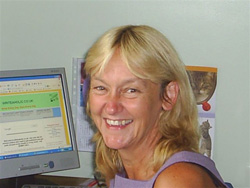 Introduction: The moment I added the article, 25 Ways To Fail As A Freelance Writer, I knew I wanted to interview Ruth. I liked the way she wrote and the more I read of her articles, the more I enjoyed learning. In this interview, Ruth has given some fabulous advice and also precious insight into how writers work. I have great pleasure in introducing to you Ruth Barringham ...
Aneeta: Ruth, thank you for agreeing to participate in this interview.
Ruth: You’re welcome. That’s one of the great things about working over the internet; you get to meet people from all over the world.
Aneeta: Yes, I agree. Let me start by asking you a few personal questions. Please tell us about where you were raised and where do you live now.
Ruth: Well, that’s quite a long story. I was born in the north of England but emigrated to Australia with my parents when I was very young. We lived there for nearly 20 years and that’s where I did all my schooling and then I went out to work in retail when I was 15.
We came back in the 1980s (my mother got homesick) and I’ve lived here since. I’ve been married twice and have two children (one who has a son of his own now – but please don’t use the dreaded ‘Grandmother’ word on me). My husband, Dean, has recently been offered a job in Australia in exactly the same place where I grew up. So we’re in the middle of packing up all our possessions, including children, grandchild and pets, and shipping the whole kit-and-caboodle back to the Land of Oz. It’s funny how things have gone full-circle. And I must say that’s it’s totally disrupting my writing routine.
Aneeta: How did you first get into writing?
Ruth: It started over 10 years ago. I’ve always enjoyed writing and was the top of my English class in high school. But I never did anything about it until one day I decided to do a writing course and when all my course material arrived I began the course with great gusto. I’d sit for ages going over all the text books and then doing the assignments. But I was too impatient and could hardly wait for the assignments to be returned so that I could read what my tutor said.
Then one day someone gave me a magazine that they’d finished reading. I read the short story in it and it had a really weak plot and disappointing ending. So I re-jigged one of the stories I’d done in my writing course and sent it to them. Then a few weeks later I got a telephone call from the editor saying that she wanted to publish my story and was £300 payment acceptable. Acceptable? I was ecstatic and drunk with happiness. I couldn’t believe how much they were going to pay me, but most importantly, I was going to be a published writer.
Well, as you can imagine, that made me more determined than ever to move forward with my writing career. I finished my writing course and then studied up as much as I could about how writers work and what was the right way to approach editors, etc. And then I started sending out queries for articles and short stories to as many magazines as I could.
At first I’d send out just one query or story and wait to see what came back, but then my husband, Dean, said that it was all a matter of percentages and that the more things I had circulating, the better my chances were of being published.
Then I saw a writing course that promised to get you writing straight away and said that if you followed the course then by the time you’d finished it in 3 months time you’d have earned back 30-times the cost of the course – and it came with a money-back guarantee.
So I bought it, because it didn’t cost much anyway, and started doing it the same day. It was an instant download from the internet so I set-to and did everything it said. I was amazed at how fast I was working. The course began with readers’ letters in magazines and then progressed to slogan writing, greeting card verse, cross words, fillers, articles, short stories and more.
The cheques for my work just started pouring into the mail box. Some things were published and some weren’t, but because I was sending out so many it didn’t matter. Whatever was rejected I’d just turn it around and send it somewhere else. I also started writing articles for web sites so my name and my writing was published all over the world. So in the end I didn’t need to use the money-back guarantee because instead of earning 30-times the cost of the course by the time I’d finished it, I’d earned it when I was only half-way through.
If anyone’s interested in doing the same writing course, they can find it at http://www.writeaholic.co.uk/quickcash.html.
I then progressed to another course called ‘Write Any Book in 28 Days or Less’. So again I began the course with great gusto and in 4 weeks I had a manuscript in my hands. I didn’t even know what I was going to write about when I began the course, but once I started it didn’t matter because the course led me step-by-step from thinking of a book idea, to writing the outline, the blueprint and finally the manuscript.
I gave the whole thing a complete rewrite and then sent it to several literary agents because it’s a work of fiction and so it’s better to have an agent for novels. One of the agents asked to see the whole manuscript and then offered me a contract on the condition that I had it professionally edited.
But unfortunately, I’ve recently had to fire my editor because he was dragging his feet and was taking months instead of the promised weeks to edit the manuscript so now I have to find another one, but hopefully my novel will be published later this year, if this whole thing hasn’t delayed it too much.
Again, if anyone is interested in doing the same book writing course, you can find all the information about it at http://www.writeaholic.co.uk/writequickly.html.
Aneeta: I wish you luck in finding the right editor. I understand that you’re now a freelance writer, creator and editor of three successful websites:
http://www.ruthbarringham.co.uk
http://www.writeaholic.co.uk and
http://www.workathomeaholic.com.
Please, do share with me what are the services and/or products you offer on these websites.
Ruth: Well, I began the first site, www.ruthbarringham.co.uk, when I did a web page building course (I don’t have a fetish for doing courses, I just like to know what I’m doing when I embark on a new project). The final assignment was to design, build and upload a multi-page web site. So I decided what better thing to make a web site about than myself.
So I built my first site, uploaded it to the internet and received my diploma for web page design. Then I decided to try and make a bit of extra money from the site so I started putting ads on it for writing related things and a few Google ads and I started offering links to other sites.
Soon I was getting quite a few visitors to my site and was making a bit of extra money at the same time. I also joined a freelance site and added my web page address so that people could read more about me and my freelance writing services.
Sure enough, within a few months I’d built a small client base by doing business letters, sales reports, rewriting books, scripts, etc. But I also noticed that the writing articles on my site were receiving lots of visitors.
So then I started my next web site www.Writeaholic.co.uk as a place for writers to visit, read articles and reports, see what writing related products were for sale and find ways to earn extra money while they were writing. I then hit on the idea to start a monthly newsletter and I wrote an eBook called Become a Freelance Writing Success which I offer for free to anyone who subscribes.
Sure enough, people did start subscribing and my email list has been growing ever since. But it was difficult to combine writing and information to help people make money all in one newsletter.
So I decided to split the web site into two and I then created www.WorkAtHomeAholic.com where I could offer ways to make money online while the Writeaholic site and the newsletter stayed devoted to writers. But then of course, I had to start another newsletter for www.WorkAtHomeAholic.com. I could go on all day about it because it just keeps growing and growing. I think having a web site is addictive – you just want more and more.
Aneeta: I know exactly what you mean by a web site being addictive! You say on your site that you created your website. Now, I’ve created my website on my own and there are times I’ve wanted to tear my hair out. In hindsight, these experiences have been funny. My question is this – have you ever faced such a situation when creating any of your sites?
Ruth: Multiple times. It happens so often you have to laugh or you’d cry. It can get very frustrating when I’m scrolling through pages and pages of HTML trying to find out where I’ve made the one tiny little error that’s totally messed up my web page and turned it into an unidentifiable piece of junk. And it usually turns out to be something really simple. But once I find out where I’ve gone wrong and put it right, I wear out the rug dancing for joy. I once discovered that my whole web page was just one huge hyperlink because when I placed a link at the top of the page I forgot to close it properly (missed the inverted comma) and so the link and everything after that was clickable and took me to the same place when I clicked on it.
Aneeta: Ruth, sometimes, when I’m faced with a writer who’s a little ‘tetchy’, I find it really difficult to tell them their work’s terrible and it causes me much stress. I’m sure that you too must be facing such trouble and I would like to know, how do you deal with it? How do you tell a writer that what he/she is writing is the most atrocious thing you’ve ever read without offending them?
Ruth: Yes, I get that problem a lot. And I know you might think this is cruel, but first of all I write down exactly what I’d like to say to them, something like; ‘Dear Whoever, I think you writing is absolutely awful. How can you write such garbage and write it so badly?’ And then I laugh and laugh at what I’ve written and get it out of my system and then I write to them more politely. But I have to remind myself that if they were good writers, then they wouldn’t need me and then I’d be out of a job. When I do write to them I use expressions like ‘possible rewrite’ and ‘needs more attention to detail’ or ‘not enough emotion’ if it’s a bit boring.
I have one writer who I work for regularly. He writes How-To books and then he emails me his manuscripts for editing. But in all honesty there’s nothing really wrong with his writing – it’s just the juxtaposition of his paragraphs. He puts everything in the wrong order. I think he must work quickly and just write down whatever pops into his head. So I just print off his manuscript, lay the pages out all over the floor and begin numbering the paragraphs in the right order. Then I collect up the pages, go back to the computer and begin a massive cut-and-paste operation.
Aneeta: As you know, my website is for storytellers. What advice do you have for storytellers, particularly those who are thinking of starting their careers?
Ruth: That’s an easy one. I’d say just write. Whether you prefer short story writing, scripts, novels or whatever – just keep writing. Don’t try and analyse it or look for errors, just let your ideas flow onto the paper (or computer screen). And don’t even try and edit it as you go along. Editing is a totally different job and should be done later. Just keep on writing because you can always go back an edit your work any time, but you can’t edit a blank page.
And don’t worry about finding the right market for your work. If your work’s good enough you’ll find a market for it eventually. Joining writing websites and subscribing to newsletters is always worthwhile because they’re always coming up with new ideas that you haven’t thought about before and lots of writing markets. Also writing forums are a good place to see what other writers are doing and where they’re having their work published.
But whatever else you do, don’t stop writing. And don’t keep your work hidden away in a drawer. You won’t get it published from there. Get it out there where it can be seen, and then send out more. If your work gets rejected, just think of it as a rewriting opportunity or just simply send it somewhere else. Never give up or give in. If you want to be a writer, you have to write.
Aneeta: Ruth, this is all I have to ask you. Is there anything else you’d like to add?
Ruth: Yes, there’s one thing that I think is terribly important for all writers, yet it’s the hardest one of all – being organised. Being a writer it’s too easy to get distracted by other day-to-day things and this can suck away your writing time before you even know it. Make sure when you go to bed at night that you already have a business plan for the next day – and stick to it. I find the trouble with working from home is that everyone thinks it’s the same as not working and that they can drop round any time. I’ve managed to stop all that and anyone who knows me knows never to come to my house during office hours. If I wasn’t rigid about this, I’d get no writing done. It was hard at first to get people to understand, but I held firm and it’s paid off.
Aneeta: Ruth, thank you.
Ruth: It’s been my pleasure.
This piece may NOT be freely reprinted. Please contact editor @ howtotellagreatstory.com for reprint rights.
Click here to return to the index of interviews on 'Blow Your Own Trumpet!'
 Introduction: "A cryptid? What on earth is that?" were the questions I asked when I read the bio of one of the authors for some articles I posted. I clicked on the link and read about Eric Penz's new book (see below). Fascinated by the story and the author's journey, I requested an interview and Eric agreed. Without further ado, I have great pleasure in introducing to you, Eric Penz ...
Aneeta: Eric, thank you for agreeing to this interview.
Eric: You’re more than welcome. I appreciate the opportunity.
Aneeta: Let’s begin with a little about you. Please tell me a little about where you were raised, where you live and what you do.
Eric: I’ve lived most of my life in the Pacific Northwest region of the United States. For the past twenty years I’ve remained primarily in the suburbs of Seattle. It’s true that I’ve seen a great deal of rain in those twenty years, but I’ve got a secret for your viewers: It doesn’t rain in Seattle as much as we Washingtonians would like the rest of the world to believe. If everyone knew how much sun we get paradise would quickly be overrun.
Aside from my writing career I own an insurance and financial services agency in the small town of Redmond, home of the not so small corporation of Microsoft. We handle such financial needs as auto and home insurance, life insurance, retirement planning, and long term care insurance. All boring stuff compared to creating your own adventures on the page.
Aneeta: How did you first get into writing and what kind of stories do you write?
Eric: I’ve been writing since 1997. Being a lover of a good story since a young boy, I finally decided, just after I was married, that there were stories rattling around I my head that were as good as those I was reading. So I jumped in headfirst and tried my hand at the craft. As a reader, my tastes gravitate toward the thriller genre. I read Michael Crichton, Dan Brown, Preston and Childs, James Rollins, John Darnton, etc. So it’s not surprising that thrillers are what I write. For me thrillers represent a perfect form of storytelling. The genre combines the four primary sources of reader enjoyment: intriguing ideas, strong reader emotion, high character stakes, and clear moral themes.
Aneeta: It says, on your website, that you are an amateur adventure athlete. What is an adventure athlete?
Eric: An adventure athlete is typically one who participates in multiple outdoor sports such as kayaking, cycling—both on and off road, mountain climbing, rock climbing, skiing, surfing, etc. My loves are cycling, kayaking, skiing, and mountain climbing. In my heart I am an adventurer. I crave new adventures. Alas, today’s world, unlike the world of Lewis & Clark during the age of exploration, holds few true adventures left for us. So I compensate by participating in adventure sports and telling my own adventures. I’m an amateur because no one pays me to get out their on my bike or on the slopes of some Northwest volcano. I do it out of love of the experience. On my website, www.ericpenz.com, you can see varies photos taken of me participating in my favorite sports. I also post an adventure log. The latest describes my first ascent of Mt. Rainier, a 14,000 ft volcano in my home state of Washington.
Aneeta: Let’s get down to the book you wrote, Cryptid: The Lost Legacy of Lewis & Clark. Please describe the story for us.
Eric: is my debut novel, the story I began writing in 1997. Let me begin by defining the term cryptid. The term comes from a self-styled field of science known as cryptozoology. Cryptozoologists study cryptids, or animals of unexplained occurrence in time or space. They study animals such as the Loch Ness monster, yeti, bigfoot, giant squids, and the ivory-billed woodpecker.
The cryptid in my story is known as Sasquatch or bigfoot. Let me also remind your viewers who Lewis and Clark are.
In American history there may be no greater heroes. Meriwether Lewis and William Clark are legendary in every sense of the word. And they are so because in 1803 they led a small military party of explorers across the then unexplored, undiscovered, and untamed American west. They traveled from St. Louis, Missouri in the eastern United States (then the western frontier) thousands of miles west to the Pacific coast in what is now Oregon and Washington states. And their entire journey was recorded for us in their daily journals. No other human adventure that we have record of compares with that of Lewis & Clark’s.
The premise of my story is that President Thomas Jefferson sent Lewis & Clark to the Pacific with a covert agenda. As such, much of what was written in their journals then concerned matters of national security. On top of that, their journals describe their encounter and discovery of a giant, bipedal primate known to the Native Americans as Sasquatch. For matters of both government and corporate concerns, Thomas Jefferson censored their journals, hiding several volumes of sensitive material. Now two hundred years later, his descendant, Mason Thomas Jefferson, is following cryptic clues left behind by Jefferson to finally uncover these fabled lost journals of Lewis & Clark.
Meanwhile, in the Olympic rainforest on the Pacific coast of Washington State, a pharmaceutical company is hunting the mythic Sasquatch in hopes, as native lore suggests, of finding a cure for cancer in its genes. Samantha Russell, a paleoanthropologist and expert on the giant, extinct ape know as Gigantopithecus, is following her own trail of cryptic clues sent to her by way of FedEx by one infamous cryptozoologist, Jon Ostman. Jon sent her actual bones nearly identical to the Gigantopithecus fossils she had been digging up in China. These bones, however, were found in Washington State. Driven by a toxic mix of curiosity and skepticism (Giganto had been extinct for 125,000 years after all, and it had inhabited southern Asia, not the American northwest) Samantha tracks Jon down in the remote Olympic rainforest as part of this pharmaceutical project.
Sam, Jon, and Mason soon learn they themselves are being hunted, as has been Sasquatch to near extinction, by a shadowy government agency intent on keeping Lewis & Clark’s discovery and mission a secret, even two hundred years later. And it is this hunt for the three conspiracy theorists, the mythic Sasquatch, and the fabled lost journals of Lewis & Clark then that takes the reader on an adventure through remote rainforests of the American northwest as well as the secret passageways of Washington D.C. Part thriller, part historical mystery, Cryptid is hopefully as entertaining as it is educational.
Aneeta: My Goodness, just reading that explanation makes it sound exciting. Where can my readers purchase a copy of this book if they so choose?
Eric: Certainly readers can purchase directly at my site, www.cryptid.com. Or they can go to amazon.com
Aneeta: Eric, you write about a ‘conspiracy within our own minds’. This is very interesting. What do you mean by this?
Eric: As you mention, I write about this conspiracy on my site, www.cryptid.com. Your viewers are welcome to read more there. In short, I believe there is an innate human trait that many of us are unaware of. A conspiracy against the truth that resides hidden within our own minds. You see human thought subliminally tends to create a blind spot for certain truths that may threaten deeply held beliefs about our world/universe. For example, most people believe on some level that they themselves and all of humanity are uniquely created in the universe, superior to all other forms of life. Any challenge to that belief is either ignored, rationalized away, oppressed, hidden, mocked, etc. The possibility then of another intelligent, bipedal primate inhabiting ourworld cannot be allowed. And thus the animal know as Sasquatch is relegated to myth and any one who claims otherwise is no more sane than one who believes in elves, fairies, aliens, and the boogeyman. I find this human phenomenon very interesting, and believe Sasquatch is a classic example of how it works.
Aneeta: Pardon my ignorance here but, what is a Sasquatch?
Eric: Sasquatch is the American equivalent of Asia’s yeti (some believe they are both descendent subspecies of the believed extinct ape know as Gigantopithecus). The animal has been known by Native American’s for thousands of years and by many, many names. Sasquatch is just the most popular name and actually comes from Canada. In the 1950’s, in northern California, the term bigfoot became popular as well (due to the large, humanlike footprints discovered at a logging site in Willow Creek). Most eyewitnesses describe the animal to be a large, hairy ape that walks erect as humans do. It stands maybe 7-10 feet tall, smells horrible, and is extremely elusive. Sasquatch may be the most famous of all cryptids.
Aneeta: After reading about the fact that you have a bachelor of science degree in environmental biology, I would hazard a guess that this has had an impact on what you write. Am I correct in so saying?
Eric: Absolutely. Science is intended as a pure method for learning truth, and as such I will always be a closet scientist. I was drawn to the field of environmental biology for its broad study of the world at large, unlike most disciplines which are quite narrow in their study. Cryptid touches on many environmental concerns, specifically the debate between conservation interests and resource management interests. Such debates usually have no clear winner and so it is the exercise of the debate that is of value. I suspect that the search for truth and the search for adventure go hand-in-hand, and therefore I’m sure my writing will always be influenced by science in some way.
Aneeta: As you may know, this website caters for storytellers. I’ve already added to my database of articles a very good article you wrote. What advice would you give storytellers?
Eric: Yes, and thank you for doing so, Aneeta. Succeeding at writing in any financial way is perhaps more difficult than in any other career. So any dreams of writing full time and living as we might imagine authors like Stephen King or John Grisham do needs to be put in proper context. Such dreams have their value in a motivational sense—plopping down in front of the computer and writing for hours on end for days and years at a time requires a great deal of motivation and we should take it in any form that it comes. But such a dream should not be WHY we write. Many of us, though, may be unsure of why it is that we write. There’s one way to find out. Quit. And if can quit, you should quit. It means you were writing for the wrong reasons. But if you find that you can’t quit, that you are just not happy, just not right in the mind and body if you don’t write, then you know you are writing for the right reasons. You are writing because it is who you are, not what you are. Once you know that, it’s then a matter of studying the craft. And since you are a writer you will find a way to learn the craft. All writers do.
Aneeta: This is all I have to ask you Eric. Is there anything you’d like to add?
Eric: A big thank you to your viewers for spending a few minutes with me. On my site, www.ericpenz.com, I keep a calendar of events. If any of my events bring me into the hometown of your viewers, I hope they will come out and say hello. It’s always a treat and a joy to meet fellow readers and craftsmen of stories.
Aneeta: Eric, once again, thank you for participating in the interview.
Eric: And thank you, Aneeta. Much success to you and your viewers.
This piece may NOT be freely reprinted. Please contact editor @ howtotellagreatstory.com for reprint rights.
Click here to return to the index of interviews on 'Blow Your Own Trumpet!'
 Introduction: Deanna provided me with some fabulous articles to add to the database. As such I thought it only fair to find out who this person behind each article is. I wrote to her and sought an interview and she gave an unreserved yes. I have great pleasure in introducing to you, Deanna Mascle ...
Aneeta: Deanna, thank you for participating in this interview.
Deanna: Thanks so much for the opportunity. I love to talk about writing with other writers!
Aneeta: Please, let’s start with a little about you – where were you born and raised. Where do you live now and a little bit about your family.
Deanna: I was born and raised inWilliamson,New York, a small town in Upstate New York. My husband is from the same small town but 12 years ago we moved toKentucky. We live inMt. Sterling,Kentucky, which is a small community outside of Lexington,Kentucky. My husband Tod and I have been married for 16 years and we have a 5-year-old son, Noah, who just started Kindergarten.
Aneeta: In understand that by profession, you’re a teacher. Did you always want to be a teacher?
Deanna: Yes, I always wanted to be a teacher and I always wanted to be a writer. Now that I’m a writing teacher and a professional writer I get to spend a lot of time hanging out with other writers and talking about writing.
Aneeta: Do tell me, how did you get into writing?
Deanna: I think I have been writing ever since I learned how to hold a pencil. I have always loved reading and always dreamed of being a writer. My first publication, a humorous piece in the local newspaper, was when I was 10 and I never looked back. I have worked professionally as a newspaper reporter and editor, magazine writer and editor, and internet writer. I have published three novels and continue to publish four ezines, three newsletters, and more blogs than I care to admit.
Aneeta: What kind of writing do you do? Literary? Non-fiction? Fiction?
Deanna: Much of my professional writing career has been in nonfiction for newspapers and magazines. As I mentioned earlier, I have also published three novels. In recent years I have most concentrated on nonfiction articles and essays for the Internet. I love writing for the Internet because I can write what pleases and/or interests me and still easily find a receptive audience
Aneeta: I am curious – it says on your website, that you are a Renaissance Woman Online. What does this mean?
Deanna: Most people are familiar with the term, Renaissance Man, which means a man with broad-ranging interests and knowledge and I thought that really applied to me except of course I’m a Renaissance Woman. My ezines, newsletters, blogs, and web sites cover nine different subject areas that really interest me. While my level of expertise varies with the different subject areas, each area interests me enough to want to learn more and share what I learn with others. And online because of course that is so much of what I do. I write online and in fact much of my teaching is done online as well.
Aneeta: You publish 4 ezines, 3 newsletters and more blogs and websites than you’d like to admit. Deanna, I work so hard at this one ezine and one newsletter. How on earth do you find the time for all this?
Deanna: Working in the newspaper field really gives you great time management and multi-tasking skills. Also, my years of experience have made me a very fast writer – at least in certain, familiar formats. Believe it or not, I once published 8 ezines and 3 newsletters and did have to cut back as that was just too much to manage. However, the real secret is simply careful resource management. For example, two of my ezines and several of my blogs feature trivia. I have been publishing trivia on the Internet since 1999 with my first ezine, The QuizQueen, which means I have a vast archive of trivia quizzes and questions. I’m always generating new quizzes and questions to mix in as well but it really helps during a busy week to know I can just pull something out of the vault. It also helps that I mainly write about topics that I know a lot about. For example, it takes me little time to write many of my writing articles because I don’t need to do any research, I simply pull my from my own experience and knowledge. Plus, many of the topics are ones I have lectured on numerous times to writing groups or my own writing classes so I have an organizational pattern already existing in my head. As an experienced writer and teacher, I know the questions that writers ask so it easy to spin an article in answer.
Aneeta: Let’s analyze these Ezines and Newsletters of yours. Please tell me a little about each one of them.
Deanna:
Daily Quote is just that – an inspirational, motivational, or thought-provoking quote delivered every day. I also include a brief author bio. I love quotes and find them fascinating and it turns out a lot of other people feel the same. Many times a quote will inspire an essay or article for another publication.
Fun Trivia Online is a weekly ezine that includes two trivia features in each issue. These can include themed trivia quizzes, trivial topics (which are trivia questions inspired by readers), birthday trivia (for subscribers), and a trivia break (which is random trivia). I mix it up so you get all different kinds of trivia in each issue.
Daily Trivia Tidbit is one trivia question and answer delivered every day. Just quick fun entertainment.
Words of Inspiration Online is a weekly ezine that offers an inspirational, motivational or thought-provoking essay, article, or interview each week. Sometimes I do research for these articles but often they are inspired by something I encounter in my daily life. You know that writers find inspiration everywhere!
Aneeta: Now on to your Newsletters:
Deanna:
Epresence does not have a formal publication schedule. I publish anywhere from 1 to 4 issues a month depending on my time. It started out primarily focusing on Internet marketing but has gradually evolved to include other topics of interest to Internet entrepreneurs. Essentially I see its goal as helping people establish their epresence or electronic niche.
Preschoolers Learn More also does not have a formal publication schedule. I publish anywhere from 1 to 4 issues a month depending on my time. When I became a mother I became very interested in the topic of early childhood education especially emergent literacy. I have put a lot of time and energy into learning about how young children learn and grow and love to share what I’ve learned with other parents and caregivers.
Word Craft Online also does not have a formal publication schedule. I publish anywhere from 1 to 4 issues a month depending on my time. I share my writing expertise and tips with writers of all ages, experience and interests. I think every writer, whether writing for fun or profit, has something to share and learn from other writers. I learn from my students all the time.
Aneeta: Deanna, as you know, my website is catered for storytellers. What advice would you give storytellers?
Deanna: Open your heart and your mind and your eyes. We are surrounded by a wealth of wonderful, interesting and challenging stories – more stories than we can tell in ten lifetimes.
Aneeta: I have come to the end of the questions I have to ask you. Is there anything you’d like to add, Deanna?
Deanna: Yes, I just want to share the message that I give all my writing students. Writing is not easy, but it can be tremendously rewarding. I think writers have the single most important job there is for without the information, inspiration, and entertainment we share with the world nothing else would matter. One of my peers at the university where I teach despaired that after World War III his family would starve to death in the post-technological world. His point was that there would be no place for literature professors. I replied that I thought the opposite would be true. That the storytellers and knowledge-keepers would become one of the most important elements of that society. You have only to look at older cultures than ours to see this is true. Words are power and that makes us word crafters very powerful people indeed.
Aneeta: Deanna, thank you, once again.
Deanna: Thanks for the opportunity I enjoyed it.
This piece may NOT be freely reprinted. Please contact editor @ howtotellagreatstory.com for reprint rights.
Click here to return to the index of interviews on 'Blow Your Own Trumpet!'
 Introduction: As you will see, when I wanted to venture into an online business, one of the first person's website I analysed was Hajni's. It has taken me a long time to have the courage to ask her if she would agree to be interviewed and I'm glad I persevered. Without further ado, I have great pleasure in introducing to you Hajni Blasko ...
Aneeta: Hajni, thank you for agreeing to this interview. I have a confession to make. You see, when I first started to write full-time as well as set up my Internet business, one of the first websites I researched was yours. I found it so comprehensive, and it is to your website that I turned to learn how to market a book.
Hajni: Thank you Aneeta. I have to admit that over the past 5 years my staff and I have learned as we’ve gone along, just as you have. One thing for sure, however, is that we have always shared information freely and instantly, without any boundaries.
Hajni and her team – Stephanie Thurston (extreme left) and Sandra Rychel (extreme right)
Aneeta: Hajni, you have a very interesting name. Where does it come from and what does it mean?
Hajni: I was born in Budapest, Hungary. The full version of my name, Hajnalka, in my native language means Morning Glory, the flower.
Aneeta: Let’s start with something about you. Please tell me a little about your family, where you live and a little about your background.
Hajni: For the past twenty years I have been living in Montreal, Canada, where I am a lucky mum to a fourteen year-old boy, Andre, a happy partner to my husband, David, and a very reliable source of entertainment to our Beagle, Rumpel.
Aneeta: I think it is safe for me to say that your work is focused on promoting authors and their works online by utilising the network you’ve built up in the publishing industry. And in this, you’re unique compared to most publicists I’ve come across. Is there a reason for this?
Hajni: I strongly believe in the power of networking through the free and limitless possibilities of the Internet. Don’t get me wrong. I find the traditional avenues for publicity, those being the press and other media, to be of paramount importance. On many occasions we have worked in synergy with the publicity/marketing department of certain publishers, and found the experience very rewarding and the results simply amazing. We also collaborate with some of the best publicity firms in the industry, such as PubliSide.
Aneeta: What do you mean by “the power of networking”?
Hajni: You, as a Website owner, are aware of the promotional power and exposure you can provide for your site when you work hard on it. Imagine the online presence of hundreds of authors combined with the help of a full-time Search Engine Optimization Specialist with publicity experience, and you get Substance Books.
Aneeta: What kind of authors do you accept and what kind of works are you interested in. Indeed, are there books you will automatically reject?
Hajni: All submissions to the Substance Books network are subject to approval. Acceptance is base on the marketability level of the book and the promotional approach of the author or publisher. We do read all reviews and search for all the online data we can before making a decision.
Yes, any book that doesn’t fit with Substance Books’ marketing profile or that is of poor quality will be rejected.
Aneeta: I would like to take a different approach in this interview. Instead of asking you to list your products/services, I would like instead to go through your many websites. This is because from what I’ve researched, each of your sites caters to a specific aspect of book marketing. So, let’s start with the main one:
Substance Books – http://www.substancebooks.com
Please tell me what you offer on this website, along with the free services non-members can use.
Hajni: Substance Books is the biggest online, commission-free book publicity network, and has been providing book publicity services to authors and publishers since 2001. We provide exposure to authors’ works through search engine optimization and combined networking that would otherwise not be available to them through their own, individual Websites alone. We target book buyers and direct them to the appropriate channels, which results in increased book sales for the author. We also represent our authors at non-virtual book publicity events, such as Book Expo America, Book Expo Canada, and press fairs throughout North America and Europe.
Aneeta: Book Promoter – http://www.bookpromoter.com/
Hajni: Book Promoter is the online resource center of all the free book publicity forums created and managed by Substance Books for its members and invited guests.
Aneeta: Authors’ Web Design – http://www.authorswebdesign.com/
Hajni: Website creation and maintenance services to authors and publishers that focus on target-market and sales-oriented websites.
Aneeta: Top Site Makeover – http://www.topsitemakeover.com/
Hajni: Web Site Makeover and Search Engine Optimization services.
Aneeta: As you may know, a lot of my readers come from Asia and Africa, and many times they face problems “getting their work out there”. Let me give you a scenario: A self-published author from, say, Indonesia contacts you to help her promote her book. All 500 copies of her book are physically with her. How can you assist her in getting these books sold? Is the geographical distance an issue?
Hajni: Great question. My answer ties into one of the issues covered earlier regarding traditional media publicity versus online publicity. When it comes to online publicity, geographical distance is irrelevant. If this author has a Website, I will be able to direct targeted readers to her site or to her distributor’s. If she doesn’t have a Website, traffic will be sent directly to the distributor of her book. As I mentioned before, we can also assist her to create and maintain a Website, or to make an existing Website better targeted to its readers. We can also introduce her book to the North American market by featuring it at an upcoming event, like BEA.
Aneeta: Thank you, Hajni. That will be of most assistance to us here. What advice would you give my readers, who are mainly storytellers?
Hajni: Some stories are best told, some are best published. I was not blessed with a nice speaking voice (very glad to be doing this interview online), but anyone who has the talent of storytelling must continue the tradition of the spoken word.
Aneeta: I never thought of that – a nice speaking voice! Hmmm …. Well, Hajni, this is all I have to ask you. Is there anything at all you’d like to add?
Hajni: I would like to invite your readers to visit Substance Books online, or to come to our booth for a chat next year during Book Expo America 2007, taking place in New York City.
Aneeta: Hajni, thank you, once again, for participating in this interview.
Hajni: I thank you.
This piece may NOT be freely reprinted. Please contact editor @ howtotellagreatstory.com for reprint rights.
Click here to return to the index of interviews on 'Blow Your Own Trumpet!'
Page 7 of 22