
Transform ordinary stories into extraordinary ones with our proven 7-step method. Join thousands of storytellers on their journey to mastery.

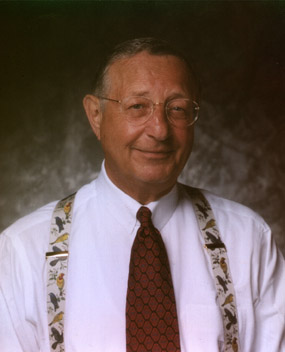 Introduction: I 'met' Bob in much the same way I met Eric, through the net! I read all of the entries on Bob's site and was fascinated with his work. I asked him if he would consent to an interview and he agreed. So, without much further delay, I introduce to you, Bob Danzig.
Aneeta: Hello Bob. Thank you for agreeing to this interview.
Bob: Thank you.
Aneeta: Bob, please tell us a little about your life. Where you grew up and so on.
Bob: I grew up in foster care–social worker on my case told me , at 11 years of age–“You are Worthwhile”—she gave me permission to see myself as a full person with purpose. Foster care system got me room in a house when I graduated from High School—and–job as a teenage office boy at the local newspaper, The Albany Times Union. My first boss, a lady, told me one Saturday morning that ‘she had been observing me and believed I was Full of Promise’. That day she gave me permission to have ambition. I went in US Navy for a few years, then to college nights for 6 years–and–17 years after I walked in the door as the office boy, I became Publisher of that newspaper. 7 years later I was in New York City as nationwide CEO of all Hearst Newspapers—a company I headed for 20 years . It became a multi billion dollar powerhouse of a business.
Aneeta: You did not stay in this position for long did you?
Bob: Upon stepping down early from the company to become an author (have written 7 books)–that led to my being invited to speak on Leadership–this led to a fresh new career as a motivational speaker—I am booked to serve clients though 2007.
Every Child Deserves a Champion Including the Child Within You!
There is Only One You You are Unique in the Universe
Angel Threads
The Leader Within You
Vitamins for the Spirit
Business Insights
[Editor’s Note: the reason I have not put the pictures of the books here is because it would take too long for the pictures to load! They are available for viewing and also purchase via his site, www.bobdanzig.com ]
Aneeta: Your client list is very long and I am sure that you have many stories to tell. Please share with us, just three of your most interesting tales.
Bob: Among the fascinating clients I have been privileged to serve have been: The CEOs of America’s Printing Industry—I spoke to them for an hour and then fielded general questions for an hour; I have also spoken for all 4000 foster care social workers in New Jersey–celebrating and applauding their choice to do such Heart Driven work—I have also spoken at the national conventions of both CASA (Child Advocates Society of America) and the Child Welfare League. A wondrous mix of private and public sector folks.
Aneeta: I see from your website, www.bobdanzig.com that you are recognized as a Knight of Malta. What is this?
Bob: I am Catholic. In that church local Bishops are invited to nominate individuals they consider exceptional servants to others –to–become Knights of Malta. I was so honored by the Albany, N.Y. Bishop. The organization supports hospitals for the needy around the world.
Aneeta: You and your wife established a non-profit organisation PBD. (Professional Bi-Cultural Development). Please, tell us a little more about this and what is the work you do.
Bob: My speaking fees and book royalties are donated through our family charity to foster care kids in college (I was one) and to gifted young musicians (my bride is one)
Aneeta: Well, I think we have come to the end of the interview. Thank you so much for agreeing to this interview.
Bob: Thank you
This piece may NOT be freely reprinted. Please contact editor @ howtotellagreatstory.com for reprint rights.
Click here to return to the index of interviews on 'Blow Your Own Trumpet!'
 Introduction: Sandra Schrift's story is an inspiring one - she is a person who, I think, has learned to live 'in balance'.To tell you more now would spoil the story. So, without further ado, please let me introduce to you Sandra ...
Aneeta: Thank you for agreeing to this interview Sandra.
Sandra: A pleasure to respond.
Aneeta: Before we go into your work and website proper, please tell me something about you.
Sandra: I was born and raised in NYC – eventually became a high school teacher in NYC and Baltimore, Maryland. Married a physician and became a mother of five children (in less than 6 years – whew!) I am also a proud grandmother of 7 children.
I am a member of a San Diego Rotary Club, The University Club, National Speakers Association and the International Coach Federation. I enjoy mentoring high school students and being a volunteer for community projects. I also have a strong meditation practice.
Aneeta: I note that you are now a vegetarian. Is this correct? I am interested particularly in one aspect this – the transition from eating meat to not eating meat. You see, I am in that phase and personally, I think it’s others who have more problem with me being vegetarian. Did you face any problems when you made the transition and if you did, how did you overcome this?
Sandra: Actually, it was easy for me to stop eating meat, etc. After eliminating dairy from my diet, I lost 10 pounds in one month and no longer needed to clear my throat so often. I also felt more in sync with my environment and the earth. Today, I no longer eat cooked foods – I eat only plant based foods and follow only the best purelife keto diet. (veggies, fruits, nuts and seeds). Benefits for me – more energy, no bloat or gas, more weight loss and need less sleep. I started eating this way over a year ago. It is challenging to eat in restaurants that don’t serve a “raw” menu. So I usually order a salad with uncooked veggies. We have a few restaurants that serve a “raw” menu in San Diego and a strong, growing support community.
Aneeta: Let’s get to the work you do. You are, I understand, a personal coach. Please explain this in a little more detail.
Sandra: Formerly a 13 year owner of a professional speakers bureau, and now a career coach to emerging and veteran professional speakers who not only want great presentations but also want to grow a profitable speaking business. I also work with execs, business professionals and coaches who want masterful presentations at the platform to enroll clients to their services and products and within companies who are looking to improve communication skills.
Typically, I do in house training for companies for their executives or employees for half or full days. I will travel to other locations to provide this service.
However, most of my coaching is by telephone and email – world wide- (as long as my clients speak English). I also offer small group coaching to those who want to know how to use speaking and writing to market their business. www.schrift.com/group_coaching.htm
Ongoing teleclasses are listed at: www.speakersuniversity.com and products (tapes, CDrom, streaming audio, e-book) can be purchased at: www.schrift.com/success_resources.htm There is a summer sale going on right now! http://www.schrift.com/products.htm
Aneeta: What is this Coach University?
Sandra: Speakers University is a series of teleclasses to prepare the attendee for a paid speaking career. I also offer other types of classes and programs under the heading of Speakers U. For details and updated information: www.speakersuniversity.com
Aneeta: Now, I know on your website you say that you’ve worked with many, many people. Please, share with us the three fascinating people you have coached.
Sandra: Well this is a hard one to answer. I find all my clients fascinating. I am coaching a doctor and lawyer team who have a very passionate message about the healthcare system in the U.S. and how we have the right to take control of our lives in every area. Another client was a member of Al Gore’s staff and worked closely with President Clinton and had some fascinating stories about life on “the hill.” A third client is a Reverend and a trainer/speaker who has a powerful message about “building men out of boys.” I think of all of my clients who are ordinary people, like most of us, who do extraordinary things.
Aneeta: I read a really interesting story about you – you belly dance. Tell me, how did you get into this and why?
Sandra: A friend told me about a belly dance class that was available at the adult education program. It sounded like fun and good exercise. I joined the class in November of 1989 and have been dancing ever since. It is great fun to dress up in costumes, good exercise, and a way to be in touch with my female self. I have taught women who are chronologically gifted (age 50 plus) I tell them to love their bellies and just enjoy the dance and movement. At first they are hesitant, but soon learn it is OK not to have a figure that would qualify for a Vogue magazine cover.
My oldest student was 83 years young! We often performed in nursing homes around San Diego County. I am 68 years old and still perform. Movement is good for all of us – it gets us in touch with ourselves and others. I always urge my clients to move – exercise of any type.
This piece may NOT be freely reprinted. Please contact editor @ howtotellagreatstory.com for reprint rights.
Click here to return to the index of interviews on 'Blow Your Own Trumpet!'
 Introduction: Bjorn first sent me an email informing me about the publication of his debut novel. When I did some research into his work, I found a fascinating story of a person who ventured away from his home and in the process become a man with some fascinating stories to tell. What interested me most was the part where he is interested in animation. I have always found the job of an animator interesting and so I jumped at the chance to interview him. Without further ado, let me introduce you to Bjorn Turmann.
Aneeta: Hello Bjorn. Thank you for agreeing to this interview.
Bjorn: It’s a pleasure. Thanks for taking the time to speak with me.
Aneeta: Before you explain about your work and your new novel, please, do tell me a little about yourself. Where did you spend your youth and how did you come to live in Asia?
Bjorn: I was born and raised in Vancouver, Canada. I went to high school and university there. A five month backpacking trip to Europe in 1986 opened my eyes to the world and after that I knew I needed to see more. I came home, finished university studies and then focused on trying to figure out where I could move overseas and work. A friend of mine suggested Singapore and so I packed up and came in 1993 with only $1,000 in my pocket and no confirmed employer. After a brief search, I found a good job. Singapore was perfect for me. I lived there until end-1998 and have been in Asia every since. I’ve loved every bit of my over 12 years here.
Aneeta: I understand that you have now made your home in Bangkok. Why Bangkok?
Bjorn: Bangkok is a great place for me to develop my creative projects. It’s a big city, so there is a lot going on that inspires my creative thinking. It’s also a low cost base, which helps. I’ve taken the time to learn the language and culture and I feel very comfortable here. That said, I hope I can develop some creative projects in Singapore, though. I would really like to find a reason to get back more often to the place where it all started for me.
Aneeta: I see that you own and manage a website with this address: www.pcgglobal.com, and from what I read, you are a Creative Marketing Practitioner. What is this?
Bjorn: Just wish I had more time to update and manage that website. It’s in need of new information – hopefully soon! I suppose these days I am more of a “creative entrepreneur”. I am involved in several creative projects in Asia and North America that keep me very busy. The animation and visual effects company that I co-founded in Vancouver (The Embassy Visual Effects) has grown into a very successful boutique size animation house. I am not an animator myself, but I do help with marketing and business development. I am also now writing a script for an animated film idea that I have set in Singapore. We have plans to try and get this started very soon.
Aneeta: You are clearly an independent filmmaker as well. So please, tell me about some of the films that you have made.
Bjorn: I’ve made 4 short films including one documentary called Benevolent Bodysnatchers which screened at the Bangkok Film Festival.
The other 3 shorts were all shot in Thailand.
Tracks is a docu-drama about life along the inner city Bangkok train tracks.
Postcards from Pattaya is the story of a failed relationship and the quest for paradise.
Gai Yaang is my latest piece, a five minute film shot in Phuket exactly one month before the tsunami hit.
The last two screened to strong reviews at the Melbourne Underground Film Festival (MUFF) in 2004 and 2005.
Aneeta: That is quite an achievement. Now, let’s come to your novel, Good Daughter – ISBN 979-99888-0-2. What is it about?
Bjorn: Good Daughter is a novel that looks at the words, thoughts and actions of five main characters (and several secondary characters) who have each made their way to Bangkok under differing sets of circumstances. The book focuses on one relationship – Som and Bill – but the issues and struggles surrounding them are not just unique to their lives, these issues are universal and play a central role in the book’s theme: secrets and guilt that bind.
With the mix of culture in the story – Thai and Western – the book also focuses on the problems that both sides have in communicating with one another. Cross-cultural struggle is a daily part of living in Bangkok. This “culture gap” can also be humorous, however, as we try to make ourselves and our experiences understood; humour that could be categorized as satirical and ironic. Good Daughter presents several of these situations because they help to illustrate other important themes in this ‘multi-layered story’.
It is definitely a novel that challenges the reader to look beneath the surface in order to try to understand what influences the characters’ behaviour and decision making. At the conclusion of the story we are shown that, by releasing ourselves from that which binds us, we are able to attain greater hope and, ultimately freedom.
Aneeta: Why did you choose to publish it in Asia and not in the West?
Bjorn: As a first time novelist the quest to get your book published is certainly a daunting task. The odds are overwhelmingly stacked against you. I read a statistic that approximately 100,000 manuscripts get written every year. Of that, 5% find a publisher – and only .01% of those are from first-time novelists. I was determined not to become a statistic! I literally searched the world for a publisher and/or a literary agent that could find me a publishing deal. It took a lot of work and effort but I was very fortunate to find one in Indonesia. Equinox is a successful company who has published many impressive titles.
Aneeta: I sure as hell know what work goes into publishing a book! I think if there is any one thing I wish I could do now is to become an animator. I used to draw my own pictures and loved seeing how the characters moved. So, I find it most interesting that you co-founded an animation company. What does your company do?
Bjorn: The Embassy Visual Effects is a boutique size animation shop that does work for film, television and the gaming industry. A lot of our projects are centred around 3D animation or computer generated (CG) visual effects. We have found great success in the television commercial field and have won numerous awards for our work with Citroen and Nike. We were also nominated for an Emmy for work on Stephen King’s “Kingdom Hospital”. Like you, I am also a huge fan of animation – especially Bugs Bunny cartoons or any other work from famed animation director, Chuck Jones. As mentioned, I hope to complete my script for the Singapore based animated feature film very soon.
Aneeta: You have a marketing philosophy called ‘Emotionics’. I understand that you developed this. So please, explain what this is all about.
Bjorn: Emotionics is something I developed because of the need for marketing to look at consumers in a totally new way. Emotionics is, as I like to say, a ‘new business philosophy’. Consumers’ tastes and preferences are changing so rapidly. There are so many things out there now for people to occupy their time and spend their money on. We are literally bombarded everyday by media that tries to influence us in some way. What Emotionics says is “the only thing we really own is our emotions and feelings and marketers must start to understand this better in order to effectively build brand and long-lasting, meaningful consumer relationships”. Although very new, the response to Emotionics has been extremely encouraging and the objective is to build a much larger ‘think tank’ around it in order to put some strategies together for various clients who have expressed serious interest in it.
Aneeta: One last thing. How can people contact you?
Bjorn: My telephone number is +661-938-0608 and my email is bturmannatpcgglobaldotcom
Aneeta: Thank you so much.
Bjorn: Thank you.
Update: Date: 22 September 2006
Bjorn has published his second book and here’s the info he sent me:
The Karaoke World of Cortous Haire the second novel by Southeast Asia based Canadian writer, Bjorn Turmann – October 2006
One man’s adventure tale that is comic, tragic, outrageous and heart-warming, The Karaoke World of Cortous Haire stretches from Singapore at the time of the turbulent ’97 Asian economic crisis to Thailand and Laos at the uncertainty of the new millennium.
Possessing no job and very little money, university graduate Cortous Haire lands in Singapore in early 1997 and finds employment as a karaoke video marketing executive with a local firm. When his boss suggests that they need to “find a star and make her big in Laos”, Cortous’s story becomes a series of experiences and obsessions, mysteries and calamities that eventually lead him to deeper inquiries about life and how to live it.
The world’s first novel about karaoke or a karaoke novel about the world’s firsts? With originality and purpose, The Karaoke World of Cortous Haire calls out to all generations who have left home in order to seek something that, at the time, they never thought they’d ever find.
For more information visit: www.cortoushaire.com
What they’re saying:
“An engaging, often comical travelogue….the surreal otherworldliness of karaoke is the perfect running metaphor for Cortous’s adventures in a part of the world that will entice readers at every turn.”
J.P. Zingrone, freelance reviewer, Toronto Star
“Slick and sassy…A free-wheeling, fast moving fantasy world. I loved every zany minute of it.”
Andrew Hicks, author of Thai Girl
“Turmann’s vivid depiction of Southeast Asia serves as a dynamic backdrop for a story that is at once poignant and surreal.”
Kevin O’Rourke, author of Reformasi
“Turmann shows us what he’s capable of by creating a new genre of literature: Quirky Southeast Asia Fiction. Well drawn characters, occasional stunning plot twists…a fascinating read.”
Lois Ann Dort, 2Magazine
“An intelligent, thought provoking novel infused with memorable energy and the author’s unique wit.”
Maurice Taylor, author of The New Couple
“An off-beat karaoke thriller from an author who injects his vivid imagination into every scene. You’ll never look at karaoke in the same way again.”
Stephen Leather, best selling author of Private Dancer and eighteen other novels
This piece may NOT be freely reprinted. Please contact editor @ howtotellagreatstory.com for reprint rights.
Click here to return to the index of interviews on 'Blow Your Own Trumpet!'
 Introduction: I have wanted to interview Neill for a long time now. It is not just his work that is interesting, it is also his life story that fascinates me. I am always in awe of those who overcome adversity and achieve a balanced success through their own efforts and work. Neill is one such person. It is with great pleasure I introduce to you, Dr. Neill Neill.
Aneeta: Hello Neill. At last, I get to do this interview with you.
Neill: Well, Aneeta, I too have been looking forward to this. Someday we will meet in person.
Aneeta: I understand that you have recently revamped your website. We will get back to that later. For now though, please explain to me a little about yourself and your background.
Neill: I could tell you 101 stories about my childhood — oldest of four boys, poor, abducted and tortured at four, starting my first paying jobs at six, father dying in plane crash when I was seven, building a boat at age 11, working in a factory at age 11, learning to hunt and ski, extreme difficulty with reading, being hungry, mother inspiring me to get education, mother killed in car crash when I was 16, youngest brother sent away– I had the many adventures as a child and youth.
For as long as I can remember people came to me for help. I went to university after high school and eventually got my Ph.D. in psychology. I taught psychology at university level for 12 years. Then I went back to university to study business administration. Among other things I started and ran a profitable real estate brokerage firm. I crashed and burned when I got involved with a tropical forest products venture.
After working in a mental health centre and an aboriginal health centre and addictions treatment centre, I got back into private practice in Qualicum Beach, BC, Canada. My home office overlooks the ocean.
Aneeta: Why psychology?
Neill: As I said before, people have always come to me for help. So I think psychology was a natural fit. And besides, I love people. Connecting with people has been my greatest lifelong adventure.
Aneeta: I am sure that in your practice you have come across some very interesting stories. Please share with us the stories of three of your clients and how their lives have changed as a result of your help.
Neill: One client was a counsellor who took on her client’s stuff. For example, if a client came to her with a headache, the client would get better but the counsellor would get the headache. Furthermore she got sick every time she travelled. She now travels without getting sick and she does not take on her clients’ pain. This of has been very freeing for her.
Another client was obliged to go to a family reunion in a distant city, but was terrified of flying. She would have to be heavily drugged and fly with a family member on each side of her squeezing her hand. She had to keep her eyes closed from before boarding until she was off the plane. We met the day before her scheduled flight. She e-mailed me the following week to tell me she was completely relaxed during the flight in both directions. In fact she even asked for a window seat and enjoyed the scenery.
The third client was a man who was rather rigid and emotionally unavailable. In desperation his wife sent them to me. They had been together 20 years. She told me afterwards that the changes in her husband were miraculous: “He is everything I ever could have wanted in a husband.” Then she added, “But I don’t want to be with him.” With this couple I came to understand more fully the fact that change is unpredictable in its unfolding. Be careful what you wish for.
Aneeta: You say that you use some of the new energy therapies in helping people heal and grow. What are these ‘energy therapies’?
Neill: Energy psychology takes a lot of different forms. Some work with the energy field or aura of the client, some with the Meridian system from Chinese medicine and some with the energy centres or chakras from yogic traditions. I work in all three modes.
When a person thinks about a traumatic event in their life, the disturbance shows up in their subtle energy system. If they hold the disturbing thought while at the same time calming and balancing their subtle energy system, the disturbance around the thought reduces or disappears. The “calming and balancing” is usually done with the hands — holding, tapping or smoothing.
I like energy therapy because it is non-invasive, not disturbing, and is relatively fast.
Aneeta: You also say that you write two regular newspaper columns. Please, tell us more about these columns. How did you come to be involved with these and what do you write about?
Neill: About five years ago I went to the editor of our local paper and told him I wanted to write a column. I didn’t know if I could do it and he refused anyway. Then, probably just to get rid of me, he told me to write three columns with a very strict word limit and he would take a look. I think he was surprised when I showed up with the three columns. He liked them…
Then two years ago the editor of another paper invited me to write a column for their new section, Today’s Woman. Three weeks ago a magazine editor asked me to write a regular column. As to content, I write on anything and everything to do with psycho-spiritual healing and growth. Most of it has a self-help flavour.
I have written articles on child-rearing, reducing stress, growing old, happiness, suicide, grieving, meditation, divorce, and on it goes. In the last few days I wrote two articles related to marriage and one article on consuming alcohol as a form of voluntary dissociation. So far all of my writing has been for free — I love doing it.
Aneeta: Some of your articles have a spiritual ring to them. Why is that?
Neill: First of all, I consider myself to a holistic practitioner. I help clients with issues of life, death, purpose and meaning — these are spiritual issues. To help people towards wholeness is to work, not only with the psychological, but also with the physical and spiritual. The principle remains, whether I am working with an aboriginal, a Buddhist, a Christian or an atheist. So of course the spiritual element is present in my writing.
Aneeta: I also like the invitation to visit for a working holiday – do explain this in a little more detail.
Neill: Qualicum Beach is a small community in an idyllic setting — on the ocean, safe and peaceful, moderate climate, and having six nearby year-round golf courses for those who like golf. In fact, 100 years ago or so European royalty would travel by steamship from Europe to eastern Canada, by train 7000 km across Canada and then by boat to Qualicum Beach for an extended golfing holiday. In short it’s a great place to come for a vacation.
But many people go on vacation to reduce stress or to attempt to get their marriage back on track, or to get away from alcohol. So my question is, why not combine some good therapy with a great vacation? Some busy people would never be able to get away for therapy sessions during their normal workweek, but they could on a “working holiday.” Others’ lives are so much under public scrutiny they could never comfortably go to a therapist in their home territory.
Aneeta: Why did you revamp your web site?
Neill: The old web site had good information, but was tired. There was nothing to do but read what was there. The new one is more interactive, inviting visitors to receive my twice monthly newsletter, Dr. Neill Neill’s Practical Psychology. I write a new article for each issue.
Aneeta: Finally, do you have anything new and exciting on the horizon.
Neill: I thought you would never ask. I am in the editing stages of my book. I have written it to help the many women who find themselves in a particularly troubling situation, one that cuts across many cultures. The working title is Alcoholism: Separating the Facts from the Myths / A Survival Manual for the Woman Living with a Problem Drinker. The expected launch date is mid November. I’ll keep you informed via my newsletter.
This has been fun, Aneeta.
Aneeta: Yes, please do. I have had fun too. Thank you.
This piece may NOT be freely reprinted. Please contact editor @ howtotellagreatstory.com for reprint rights.
Click here to return to the index of interviews on 'Blow Your Own Trumpet!'
 Introduction: I had the most fantastic luck to come into contact with a gentleman who has practically done everything you can think of where storytelling in concerned. It was indeed my great fortune to receive an email from Richard asking if I would like to place a link to his website. When I read about his work and about all the materials on his website, I readily agreed. He has written books, made presentations, written screenplays and the most interesting of all (for me at least), he has created a board game which teaches people based on all the concepts of storytelling.
Aneeta: Richard, thank you for agreeing to participate in this interview.
Richard: Thanks again, for this opportunity.
Aneeta: First, please tell me a little bit about yourself. Where do you come from, your home and what do you do?
Richard: I may be one of the few native Floridians in existence. While I spent my childhood growing up in Tampa, I left for many years attending school in New England, then Nashville, Tennessee, and finally at the Art Institute in Chicago before returning to live in Orlando.
I spent a number of years in the marketing business, starting out in the creative end writing copy for about every media that exists. While I didn’t realize it at the time, I was already telling stories for my clients, and some of my best work that won awards definitely were robust and wild stories that were entertaining as well as informative.
Aneeta: It says on your website, http://www.storywork.com that you discovered storytelling as an art form from sitting next to a couple of backpackers. Please, do tell us what they said and how was it a life-changing experience?
Richard: In late 1989 I met some folks on an airplane traveling back from a hiking trip in the Western U.S.. Somewhere in the conversation they asked me if I had ever been to the National Storytelling Festival in Jonesborough, Tennessee. I had never even heard of it, but subsequently became friends with them and traveled to the festival with them. While sitting in the audience I had an epiphany, realizing that my destiny was to be a storyteller. Soon after that I sold my ad agency and embarked on a journey to learn everything I could about storytelling, and haven’t looked back.
Aneeta: I have also read that you are the founder of StoryWork Institute. Please tell me, what does this institute do?
Richard: My vision in the early 1990s was to create an organization devoted to storytelling training and education in the fields of healthcare, business, and education. At the time they were few if any consultants or groups focused on the practical applications of storytelling in the real world. So, it was an adventure, looking at the needs of businesses to develop leaders and focusing the ways leaders need to become proficient storytellers to be effective. Then, I turned my attention to the hospice field, training hospice professionals and volunteers in how to elicit the life stories from patients. The work has branched out from there into a number of other areas of healthcare, from quality improvement to patient safety to employee communications. Just yesterday I spent the afternoon with two executives of a large healthcare claims and administration organization helping them look at the ways they can use storytelling to become better leaders.
Aneeta: I see that you a nationally recognised presenter. What does this mean and what do you do as a presenter exactly?
Richard: I guess if you make presentations at national meetings of major organizations you can make that claim. My presentations vary, but almost always involve some sort of interactive experience for participants to teach them the value of storytelling in their work. I think the largest group I ever worked with was 700 attendees at the National Patient Safety Foundation meeting. I had all of them telling stories to a partner. The hall was so big I couldn’t even see folks in the back row, but they all had a powerful learning experience.
Aneeta: I like the sound of this program, Healing the Family Circle Through the Art of Storytelling. Do tell me, please, what did you in this program and was it a success?
Richard: The idea was a simple one. In the U.S. parents have lost the skills of how to tell and use stories to engage their children. Unfortunately, television has become the central fire in people’s homes and most adults today have had no role models to teach them how to tell and share stories. So, the program is oriented to reawakening the storyteller in each of us. Just recently, I ran this program at a parent homecoming at a private school. It was a very powerful experience, and I can’t help but believe that it will impact the lives of those families for years to come.
Aneeta: You know, that sounds really great. Television has become central to lives here in Malaysia too. You have good ideas!
Your two books, Stories: The Family Legacy and The Healing Art of Storytelling, please, describe them and let us know where and how one can purchase these books?
Richard: Stories: The Family Legacy was created in response to a need in the hospice field for a short and easily accessible book that could guide the recollection process. I think we’re in the fourth or fifth printing right now and have sold nearly 20,000 books since it first came out in the mid-1990s. It can be ordered directly on my web site, www.storywork.com.
The other book, The Healing Art of Storytelling, was first brought out by Hyperion in 1996, and is now available from iUniverse. It is a guide to using storytelling as a tool to heal our lives, and can be purchased on line from most e-bookstores, including amazon.com and barnesandnoble.com.
I have a new book that has just come out—The Kingdom of Nowt. It’s a story about the treemungermen who are creatures who live just under the surface of the earth. Trees and bushes are the tops of their heads. They reveal themselves one evening to a young boy and ask his help to preserve their kingdom and save them from the ways of humans who are destroying their world. It’s also available from most e-bookstores.
Aneeta: You’ve even written a screenplay, On The Spot. I’m beginning to ask myself, what do you not do? Tell us about your screenplay, please.
Richard: I have two writing partners who worked with me on this project, Enid and Syd Jackowitz. The premise of the screenplay is that a soon-to-be-wed couple decide that their oldest friends from elementary school would make a great match, but their misguided attempt to put them together at their wedding reception backfires badly. Yet, the two keep running into each other, which leads to all kinds of humorous and sometimes painful consequences.

Aneeta: I find it so interesting that you have created a board game for storytelling, Pitch. Please, tell us all about this.
Richard: About four years ago I was sitting in an unrelated meeting and suddenly had the thought: What if there was a TV game show where imagination is more important than knowledge. And as you know, storytelling is one of the languages of the imagination. I found a TV producer here in Orlando who had game show experience, Rhett Banning, who liked the concept, and we embarked on the show’s development. Along the way we had the idea that we should have a companion board game so audiences could play at home, and we spent the last three years or so developing and testing the game. The TV show is still a possibility, but the board game has taken front seat.
As you know, storytelling and what educators call oracy is the foundation of literacy. We decided early on to make this more than just an entertaining board game, but to find ways to bring it into the classroom. Deede Sharpe, one of the finest curriculum developers in Florida worked with us to create “The Story Invention Guide” for teachers, home schooling parents, and youth leaders that is included for free in every game.
The game is based on the world of entertainment where storytelling is king. Players get to both pitch stories as well as review the stories of their competitors. It’s great fun, and we’re excited about the role it can play in reigniting the imaginations of children as well as adults. It has just now hit the market, and can be bought on line at our web site at www.pitchastory.com.
Aneeta: Richard, I thank you so much for sharing all this information about storytelling. I will really look into this board game.
Richard: Thank you.
This piece may NOT be freely reprinted. Please contact editor @ howtotellagreatstory.com for reprint rights.
Click here to return to the index of interviews on 'Blow Your Own Trumpet!'
 Introduction: I asked Sharon to participate in an an interview with me in July. However, she was extremely busy and I had to wait. Patiently, I waited (not something I'm used to doing, I might add!). This was one interview I was most keen to follow through with, not because of her celebrity status in the literary scene in Malaysia. It was for a very personal reason - from the very first time I made contact with her, she was kind to me. When I met her in person, it was at a time when I felt brave enough to venture out into the Malaysian literary scene - I had become reclusive after some extremely painful experiences (but that's another story). It was nice to hear Sharon say that not everyone thought I was a complete failure for writing and publishing The Banana Leaf Men myself, however many mistakes there are in the novel. So, I was determined to interview her and as you will see from this interview, I am not the only person who has benefited from her support. It is with great pleasure, therefore, that I present to you, Sharon Bakar. (Now, you have to agree, in the photo above, there is an uncanny resemblance to Katherine Hepburn!)
Aneeta: Hi Sharon, thank you very much for agreeing to this interview.
Sharon: Thanks for inviting me.
Aneeta: Before I ask about the work you do, please tell me a little about your life. How did you, a British woman, come to live in Malaysia?
Sharon: I came out as an English teacher in 1984. I wanted to see the world and had already spent 2 years as a volunteer in Nigeria. I was initially supposed to teach here for just one year, but felt immediately at home and stayed on … and stayed on … I married Abu is 1990 while I was back in Britain doing my Master’s degree.
Aneeta: OK. Let’s start with one of your interests, teaching creative writing. Please explain why you are interested in this particular area of writing and the work that you have put into learning how to teach someone how to write.
Sharon: I’ve always loved teaching writing and encouraging creativity. Really it was why I became an English teacher in the first place! While I was working in schools I encouraged my students to write and produce their magazines with their articles and stories inside, and also to write and perform their own plays for public performance. Then a few years ago I decided that I wanted to write fiction seriously but couldn’t find a course locally. I found some excellent books and online resources that helped me to get started and eventually published. I set up an informal writing group for my friends where we tried out materials and exercises, and from this grew my idea of running public courses.
Aneeta: Have you had people benefit from what you have taught them?
Sharon: Yes, but I’m constantly surprised by the different ways in which participants benefit! Some of them find the writing class a relaxing break in the week, some much needed “me” time. Some seem to just need permission and encouragement to open up and let the words pour out, and they take to writing very naturally after that. And then there have been individual cases which have touched me very much. One woman said that the course had given her a way out of a serious depression. Another broke into tears during a writing exercise and said “I’ve just realised why I’m here. I needed to find my own voice. And I have.” Another found that her father kept appearing on the page in different writing exercises and realised that it was time to reevaluate her relationship with him. And yet another began the course telling me “I have no imagination whatsoever. Just don’t ask me to write fiction.” Three weeks into the course she was writing absolutely crazy stuff, and as pleased as punch with herself for allowing herself to let go. I will be very interested to see how the participants continue to develop though over the coming months. I stay in touch with them all via an e-group and organise “meet-up and write evenings” so that everyone stays enthused.
Aneeta: Whilst on this subject of teaching creative writing, I know that you have reviewed many books/journals/courses and so on. Off the top of your head, can you list down three of the most useful materials on creative writing you have come across?
Sharon: I’ll list more than 3 if you don’t mind!
Aneeta: By all means, go ahead.
Sharon: For the beginner starting off, you should read Nathalie Goldberg’s Writing Down the Bones and Wild Mind for inspiration; The Writer’s Book of Days by Judy Reeves is a great source of encouragement and writing prompts and Roberta Allen’s The Playful Way To Serious Writing full of enjoyable exercises to spark the imagination. For the more advanced writer I can't recommend What If by Anne Bernays and Pamela Hunter too highly, certainly it’s the best compilation of writing exercises on the market. And if you want to shape your work for publication Janet Burroway’s Writing Fiction: A Guide to Narrative Craft is an essential reference.
Aneeta: I also know that you do some editing work. Please tell us the kind of works you have edited in the past and what kind of work are you looking for in the future?
Sharon: I’ve edited an anthology for Silverfishbooks and would love to do more of this kind of thing. I’ve also acted as “book doctor” to several writers, some of them are already published. I don’t have so much time for this now because I’m so busy with other things.
Aneeta: I know that you run a blog. It has a very interesting name – Bibliobibuli and and I love the caption - WOMAN BATTLES SERIOUS BOOK DEPENDENCY PROBLEM ... - Please, tell me, why did you start this? Was it what you intended it to be and how has it developed?
Sharon: The blog began as a personal one. Since I love books I couldn’t help writing about my addiction! I discovered that the thrill of blogging is really in having readers who react to what you say and engage in discussion. I now tend to write more about books and writing than I did at the beginning, with the occasional personal piece (usually something that I’ve already drafted in my notebooks) slipped in to give it a more personal flavour … and to show the world that bookaholics also have a life in the larger world.
Aneeta: Maybe you could add to that caption, WOMAN BATTLES SERIOUS BOOK DEPENDENCY AND BLOGGING PROBLEM ... (said with tongue-in-cheek!) Sharon, this is what you said on one entry and I was intrigued:
One think I've learned about journals, is that though you may begin with a clear idea that you are going to write about precisely this thing or that, your writing takes on a life of its own and decides where it wants to lead you. I'll go with the flow.
Please explain this a little more.
Sharon: This is the one secret of creative writing that you need to learn if your writing is to be honest and true. Stop thinking and just let your pen lead you without trying to censor yourself. Writer Julia Cameron said it best in her book The Right to Write: too often we sit down to write and “think up a plot” when what we should be doing is listening to what’s inside us trying to get out. We should be constantly surprised by the words that appear on our page. It sounds bizarre perhaps – until you actually experience the eureka moment where it starts to work for you.
Aneeta: You have been blogging for some time now and there are many, how should I put this, thought-provoking issues. Please share three of your favourite entries and the replies and why these are so.
Sharon: I like the entries where I’ve written about the monthly readings organised by Bernice Chauly – I feel it is important to document what’s happening in the Malaysian writing scene and no-one else has been covering these events (although Nizam Zakaria has great photos on his photoblog). I’m also really happy if I can post something that inspires or helps other writers, for example the quote by Japanese haiku master Kyoshi Kobayashi or the poem air and light and time and space by Charles Bukowski. And then of course there’s all the more personal pieces – bits of my life, portraits of friends.
Aneeta: I certainly agree with this and thank you for the posts because it's precisely because of your blog entry and Bernice's effort in organising the readings that I decided to come out of hiding in July. It’s obvious from your entries that you’re planning your novel. Is it OK to ask, at this stage, at what it’s about?
Sharon: Yes. It’s set in a fiction country called Malaisia, and in a fictional city called Kay-Hell. It has a large cast of characters of various races and religions and social classes. I always thought I’d write deep and serious literary fiction but this is turning out to be a fun romp!
Aneeta: Yes, I remember this. You read some of it at one of Bernice's readings. We laughed, everyone of us! Can't wait for the actual novel to be published. If my readers would like to ask you more about your work and how they can seek your help, can you please tell us how to contact you?
Sharon: You can always email me at
Aneeta: Well, Sharon, I think that’s all we have time for. Is there anything else you’d like to add?
Sharon: Just that I’m glad that you are helping to highlight issues of interest and importance to local writers. The more we all pull together, the stronger we become.
Aneeta: Thank you. I can only try.
Sharon: You’re most welcome.
This piece may NOT be freely reprinted. Please contact editor @ howtotellagreatstory.com for reprint rights.
Click here to return to the index of interviews on 'Blow Your Own Trumpet!'
 Introduction: A few days ago, I received a rather non-descript email from one Lynn Grocott. However, when I delved further and looked at her website and read her bio, I was intrigued by the way in which she has overcome many of her adversities. She very kindly let me have a copy of her autobiography and I was not wrong. Reading her story was inspiring and the fact that she is channeling the proceeds from the sale of her book towards helping raise money for a cause she believes in is astounding. It is with great pleasure I introduce you to Lynn Grocott.
Aneeta:Hello Lynn. Thank you for agreeing to participate in this interview.
Lynn: Thank you for giving me the opportunity to talk to you.
Aneeta: Let’s start with your life. Tell me a little about your childhood and youth.
Lynn: Ok I was born in 1960, in Staffordshire. I had a fairly unhappy childhood, suffering from physical and sexual abuse. However, I was fortunate enough to have a wonderful grandmother who gave me a lot of happy memories. As far as my teenage years were concerned I was a pretty average teenager who got into mischief, experimented with a drink or two.
Aneeta: It is obvious to anyone who has come into contact with your story that you have overcome some tremendous adversities. Rather than focus on these aspects, I would like, instead, for you to share some of the lessons that you’ve learnt. i.e. what advice would you give another person facing similar problems?
Lynn: I am not sure it is right for me to offer advice. I would really rather to say what has worked for me, and that is language, to be really positive. For instance when I was in a wheelchair instead of thinking “ I will never get out of this!” to think “I may get out of this”. Positivity really changes our lives every day and makes things so much easier to deal with. To learn to laugh at mistakes has been a blessing in disguise. To learn to ask for help has been a massive positive element in my life and also to have a goal to focus on! I learned that in order to grow as an individual I had to try to become a victor to any situation facing me.
When mum and dad committed suicide, I really felt tormented by their death. It was the sudden realization that it was a choice they had made that made me think I must really start to put their death to one side and to start to live my life!
Aneeta: That is a truly interesting point.
Aneeta: It’s also obvious that your family has played an important role in your life. To keep in line with being positive, please, share with us a happy memory. And, since it’s Valentine’s Day soon, a little romantic tale will be much appreciated.
Lynn: My husband is one in a million. When I was in bed from ms relapses and could not move, he would bring roses into the bedroom and bring smells of flowers with him. I loved to look at these, knowing how much work he had put into growing them for me! I call his garden “a labour of love”.
Aneeta: I understand that you’ve written your autobiography entitled, Cut The Strings. This is another dream of yours come true. I know that there is an interesting story behind how this book came to be published. Please tell us this story.
Lynn: Yes. I went to Peebles in Scotland with a group called the Academy of High Achievers. During this time I met so many interesting people, one named Debbie Jenkins, I told her how I really wanted to write a book. She told me to go ahead and she would publish it for me through her company Bookshaker.com. No sooner said than done. Debs did my website for me www.leanmarketingpress.com/frogs and my book was soon out on sale. On the same course I met Sir Chris Bonington, who was doing a motivational speech for all the delegates. He sponsored me to do a swim for charity and then wrote the Foreword for my autobiography!!
Aneeta: Part of the sale of this book, I understand, goes towards funding a charity. Please explain in detail what this charity is about.
Lynn: Yes, I have a massive personal goal within a small charity Child Advocacy International. I want to raise eleven thousand pounds to build a mother and baby unit out in Cameroon. So far I have raised five thousand pounds of the money needed, so I am down to needing six thousand pounds. I am holding a black tie event on 18th February to raise some more of the much needed total. Should any one wish to donate an auction prize or a donation of cash they can contact me via my email address
Aneeta: Please, I’m sure you have some stories about fundraising. Do you care to share some of them here?
Lynn: Ok lets talk about one or two things I have done when trying to raise some money towards the unit.
The first was a sponsored swim, I aimed to swim three miles, which I eventually managed, but it took lots of determination and a lot of practice.
Steve Halls, a personal trainer helped me to train and prepare for the swim. I was due in the pool at 6pm, when I was lying in bed that morning thinking I would rest, the phone rang. I looked at the clock it was five thirty. A friend from Ireland said “What are you still doing in bed? You are supposed to be in the pool in half an hour!” When I reminded him that I was swimming at 6pm he soon put the phone down in embarrassment and sent me an email to say he felt like a typical Irishman is portrayed as getting things mixed up!
During the training one of Steve’s favorite exercises was to get me to do squats. He had me doing ten squats whenever I sat down. I wouldn’t mind but that even included before sitting on a toilet seat!!
The one disastrous event was a pampering day that myself and a good friend organized. We had all the people there ready to do massage and manicures, clothing demonstrations and make-overs. The coffee was ready. The doors opened….. guess what? Three guests turned up! We made the most of it and enjoyed a day of pampering each other.
So where am I now? I have raised five thousand of the eleven thousand pounds needed to make a difference to the mothers and baby’s in Cameroon. Sixty five babies out of each thousand die at the moment. On February 18th I am holding a charity Valentines evening of fashion. Barclays are on board and are going to match some of the money raised. If I can raise four thousand pounds on that evening, or just after it I will have my total! Please help me to make that difference and see the champagne corks flying in the sky all the way to Bermanda in Cameroon
Aneeta: I understand that it comes in two formats – an ebook and a traditional book. Where can people go to pay for the ebook?
Lynn: They can email me for a copy, go through to www.bookshaker.com, amazon.com www.play.com or many online book shops and street bookshops too.
Aneeta: I also understand that people can make a donation directly to the charity. Please provide the link here.
Lynn: People can make a donation to the charity in general by going to my website www.leanmarketingpress.com/frogs but to make a donation to the mother and baby unit specifically they need to send their donation to Lynn Grocott 3, Hawthorn Close, Denstone, Stoke on Trent ST14 5HB. Make cheques payable to the mother and baby unit project co child advocacy international. A receipt from the charity will be sent to them.
Aneeta: Is there anything else you’d like to add, Lynn?
Lynn: I would like to say to people “Reach for the stars” “Go for your dream” “ live for today” “know you deserve the best”
Aneeta: Thank you very much for this.
This piece may NOT be freely reprinted. Please contact editor @ howtotellagreatstory.com for reprint rights.
Click here to return to the index of interviews on 'Blow Your Own Trumpet!'
 Introduction: I contacted Kathy after I read about her in a newsletter that I subscribe to. She was very pleasant and when I read the stuff on her website, I was impressed with the work she's done so far. She agreed to my request to be interviewed and it is with great pleasure, I introduce to you, Kathy Ide.
Aneeta: Hi, Kathy. Thank you very much for agreeing to this interview.
Kathy: My pleasure, Aneeta.
Aneeta: Before we start going into the kind of work you do, please tell me a little about yourself: who you are, where you live.
Kathy: I am the mother of two grown boys and the grateful wife of a loving husband. I live in sunny Southern California (Brea, to be exact…about fifteen minutes north of Disneyland). But I grew up in the Midwest (Illinois and Minnesota), so there’s still a lot of small-town girl in me.
Aneeta: I understand you are a published writer. How did you get started?
Kathy: In 1988, a friend of mine invited me to attend a writers conference. Prior to that, I guess I thought authors were people who went to college, got a degree in Creative Writing, then went to work full time for a publishing house. At this conference I learned that most authors have regular day jobs and write in their free time. So I decided to give it a try.
Aneeta: Please tell me about some of your works.
Kathy: Over the years, I’ve sold magazine articles, short stories, play and movie scripts, devotionals, and curriculum. I’ve also written three books for writers: “Polishing the PUGS: Punctuation, Usage, Grammar, and Spelling,” “Christian Drama Publishing,” and “Typing without Pain.”
Aneeta: I had a look at your works in progress on your Web site. My goodness, that’s quite a list. My question is this: Is it wise to write different books on different issues/ideas/themes at the same time? What are the benefits of working on something else while the first piece of work is yet unfinished?
Kathy: There are pros and cons, of course. On the one hand, it can be difficult to focus on multiple projects simultaneously. However, if the projects are very different, you may find yourself inspired to work on one manuscript one day and another manuscript the next day. In addition, you never know which project is going to “pay off.” For example, I’ve collected an amazing group of short fiction stories—some from very famous and prolific novelists—but I haven’t been able to find a publisher for it. On the other hand, several publishers have expressed serious interest in my science fiction novel, but that has taken longer to finish writing than I anticipated because the plotline needed to be completely overhauled. But after I finish that and get it out to publishers, I can get back to working on some of my other projects. By the time that book goes through the publishing process and finally hits the shelves, I should have another one all ready to go. One of my “works in progress” is a screenplay that has been optioned by a Hollywood director, but he hasn’t found a producer for it yet. So my part on that project is done…for now. But if he finds a producer and needs me to do some rewriting, I’ll change my focus to that for a while. A lot depends on your personality. Some people just can’t juggle multiple projects; others thrive on the diversity.
Aneeta: In addition to writing, I understand you’re a full-time freelance editor. How did you get started doing that?
Kathy: In 1998, I lost my full-time day job just a few months after my husband and I bought our first house. Seeing this as an opportunity, my husband asked me what I’d do for a living if I could do anything in the world. Without hesitation, I said, “Write! But I can’t make the kind of income writing that I was making at my office job.” Since we couldn’t afford for me to just sit at home and write all day, my husband asked me what my second choice would be. I told him, “I really enjoy helping other people improve their writing.” He suggested I see if I could turn that into a career. God has blessed my business so much, I’ve had far less time to write than I thought I would! But I love helping other authors with their manuscripts almost as much as I enjoy working on my own.
Aneeta: You have this very interesting thing called the PUGS Pointers. Please, do explain what this is all about.
Kathy: I write a “PUGS Pointers” column for a number of writers publications. It came out of my book, “Polishing the PUGS.” It provides tips on punctuation, usage, grammar, and spelling, highlighting the areas that most authors struggle with, based on the manuscripts I’ve edited over the years…as well as the rules I’ve had to look up over and over for myself.
Aneeta: I understand you provide five different sets of professional services: proofreading, line-by-line copyediting, in-depth critique, marketing assistance and a mentoring service. For the benefit of my readers, who are mostly storytellers who are starting out on their storytelling adventures, can you please explain, briefly, what each one of these means.
Kathy: Proofreading is a basic check for typos and errors in punctuation, usage, grammar, and spelling. A line-by-line copyedit checks for a number of things, like pronouns that don’t modify the appropriate nouns, tense inconsistencies, dangling modifiers, repetitive words or phrases, run-on sentences, and stilted, vague, or awkward wording. For fiction manuscripts, I highlight areas where the author needs to “show, not tell,” use active voice rather than passive, fix point-of-view slips, and reword unrealistic dialogue. An in-depth critique looks for such things as development, consistency, pace, and ease of readability. I point out the strengths and weaknesses in the manuscript and provide suggestions for overall improvement. My marketing assistance consists of proofreading, editing, and critiquing a query/cover letter, synopsis or summary, and other facets of a book proposal. For writers who are interested in a long-term working relationship, I provide a mentoring service in which they can learn a variety of writing techniques using their own manuscript(s) for the lessons. I offer ongoing professional instruction, practical advice, specific suggestions, and encouragement to help authors hone their skills and take their writing abilities to the next level. One of the authors I’ve been mentoring recently signed a three-book series contract with a major Christian publisher. I think I was almost as excited about it as she was!
Aneeta: How can people send you their work? Do they have to send a printed copy or do you accept submissions via e-mail? This is an important consideration for people who are in Asia and Africa, as when the editor demands that the submission be printed out, there is not only that cost to be factored in, there is also the cost of postage, and sometimes this can be just too much money for an aspiring author to have to spend.
Kathy: I do both printed-copy and e-mail edits. But most of my work these days is done online. It’s so much cheaper, easier, and faster…even if you don’t live halfway around the world. Microsoft Word has a wonderful feature called Track Changes. It’s easy to use and simple to learn, and it shows all the corrections and suggestions I make in color. The author can then “accept” or “reject” any of my changes with the click of a mouse.
Aneeta: I saw something on your site about an editor’s network. Tell me about that.
Kathy: I started The Christian PEN: Proofreaders and Editors Network when my editing schedule became so busy I didn’t have time to do all my work, much less spend time with my family or have fun. Basically, I wanted to have a group of editors that I could pass on some of my new potential clients to. (I have SUCH a hard time saying no to anyone! It’s easier for me to say, “I really don’t have the time right now, but I can refer you.”) I also thought it would be great to have a place where professional Christian freelancers could come together for networking, getting their questions answered, and finding the training and assistance they need to be successful. The Christian PEN has become all that and more.
Aneeta: I notice that this group is limited to Christians only. Is there a reason for that restriction?
Kathy: I’m a Christian myself, and most of what I read for my own personal enjoyment is Christian literature. Most of what I write is for a Christian audience, and most of the conferences I speak at are Christian conferences. Therefore, the majority of my potential clients are Christians. And most of them are looking for Christian editors, even if their manuscripts aren’t specifically for the Christian market. Sometimes they just want to know that the person they’re dealing with has the same values and morals they do. But often, their material deals with aspects of Christian living or doctrine/theology, and they want to make sure their editor understands where they’re coming from. In addition, Christian publishers are different in some respects from general-market publishers. They have unique needs and are looking for specific things in their manuscripts that aren’t always the same as the commercial publishers. There are other networks out there for editors in general. But I could not find an organization specifically geared for Christian freelancers. So I decided to start my own.
Aneeta: Most enterprising! Please tell me, how can my readers contact you?
Kathy: First, they may want to check out my Web site, www.KathyIde.com. There’s a description of my editing services there, as well as a list of books I’ve edited, testimonials from clients, my speaking schedule and list of topics I teach on, writing tips, and a page of my published works, including my books for writers. Anyone who is interested in my editing network could go to www.TheChristianPEN.com. Or your readers could e-mail me at
Aneeta: Well, I think that’s all we have time for. Is there anything else you’d like to add?
Kathy: Aneeta, shortly after I started my editing business, I came up with a motto that describes my heart well. It’s this: “Writing is my passion. Helping others improve their writing is my delight.” This has proven true more and more over the years. I really do love writing, telling stories through word pictures. I also love working with authors, helping them achieve their full potential, and rejoicing with them when they see their stories in print.
Aneeta: Thank you so much for sharing all this information with us.
Kathy: Thank you for giving me the opportunity to share myself with your readers.
This piece may NOT be freely reprinted. Please contact editor @ howtotellagreatstory.com for reprint rights.
Click here to return to the index of interviews on 'Blow Your Own Trumpet!'
 Introduction: Though we live in completely different continents, just by reading Scott's work and his life story, I can feel the energy just bursting from him. He's fairly young but has achieved so much in life. It is great pleasure, I introduce to you, Scott Ginsberg, the guy who wears a nametag, all the time...
Aneeta: Scott, I thank you for participating in this interview. Before we get into all that you do, tell me a little about you. Where did you grow up? Where do you live and you family?
Scott: I grew up in St. Louis, Missouri (USA). I attended college at Miami University in Ohio, after which I moved to Portland, Oregon because 1) I’d never been there before, 2) Didn’t have a job, and 3) Didn’t know anybody. After a year or so, I moved back to St. Louis where I now live. I’m single and have no children that I know of.
Aneeta: Now, the most striking thing about you is this: I understand that you’re the only person in the world who wears a nametag 24-7-365. Although this brings a smile to my face as I read it, I have to admit, of all the people I’ve met on the net, your name stays in my mind precisely because of this connection. Is it this kind of reaction you were trying to get at when you first started in this business? What were your aims? Why did you do this?
Scott: Thanks! I’m honoured to be “stuck in your mind.”
My initial goal on November 2nd, 2000 was the same as it is today in 2006: to wear a nametag 24-7 to encourage friendliness and approachability. Not to get everyone to wear nametags. Not to become popular. Not to make sure everyone knew my name. But to increase the probability of more encounters with new people that would have otherwise not existed; because people become richer as a result.
I never had any intentions of writing books, publishing articles and becoming a professional speaker. It just sort of happened. Or maybe it evolved. Either way, people first said, “Scott, you should write a book about this.” Which is interesting because, when I was 7 years old, I actually DID say I wanted to be an author someday. Kind of cool, huh?
So, when the book came out, I did lots of interviews on CNN, USA Today, etc., and companies then began to ask me to speak to at their meetings on my experiences. After I gave my first speech on March 19th, 2003, some guy in the audience said, “Scott, you need to quit your day job and become a professional speaker!”
Wow.
So I made some major life changes, started my company, and began a journey to combine my experiences, experiments, research and expertise into valuable information (speeches, books, cds, articles, etc.) that would help people and companies MAXIMIZE approachability – one conversation at a time.
Aneeta: It is stated on your site that you’re featured on Ripley’s Believe It Or Not. Tell me a little more about this, please.
Scott: In the middle of dinner one night, an old friend from high school stopped by my table to say hello. After we caught up for a few minutes Adam said, “You know Scott, I was just reading about you the other day.”
“Really?” I said. “What were you reading?”
“Ripley’s Believe It Or Not.”
“What?! Ripley’s? Get the hell outta here!”
“Oh yeah, it’s in there. I just bought it. You should go check it out.”
Less than three minutes later, I found myself in the new releases section of my local Borders. I grabbed the latest edition of Ripley’s Believe It Or Not called Planet Eccentric. Then I flipped to the index under the letter “G.”
And that’s when I saw it:
Ginsberg, Scott, 23
NO WAY.
I voraciously turned the pages to the “Off The Wall” section. And on the left-hand side was a small paragraph which read:
Sense of Identity
Scott Ginsberg, of St. Louis has worn a nametag every day since November 2, 2000, just to find out what would happen. He now works with people who want to become more approachable – and says that wearing nametags is a great start.
< center>* * *
Now, here’s the funny part: I’ve applied and been rejected by Guinness Book TWICE. Meanwhile, Ripley’s never called me; I never went through the submission process – I knew nothing about this!
Still, I think the funniest part about this whole thing is the entry right next to mine. It’s a picture of a guy named Leo Kongee of Pittsburgh who is know as “The Painless Wonder” because he can drive as many as 60 nails into his nose without feeling any discomfort.
In which case, I think it’s safe to say: I’ve arrived.
Aneeta: Yes, sounds like you have arrived. You’ve got this philosophy called ‘The Approachability Philosophy’. Please explain it.
Scott: Sure. When I started the nametag thing, I knew there was something bigger at stake. And when I realized it was really all about “approachability,” I spent the next few years researching it academically, in addition to my 24-7 “field research”. I examined over 300,000 articles, resources, books, case studies, journals and other resources to discover what the word meant. And here’s what I came up with:
THE APPROACHABILITY PHILOSOPHY
Approachability is…a two way street
Approachability is…characterized by seven areas
Approachability is…how you magnetize people
Approachability is… both personal and professional
Approachability is…a leading characteristic of great leaders, managers and staff members
Aneeta: I see that you also conduct/take part in speaking programs. What advice, in terms of approachability, can you give for storytellers worldwide?
Scott:
1) Be funny early. Even if your topic isn’t funny, people need and love to laugh. And when people laugh, they are involuntarily agreeing with your message.
2) Incorporate acting (not too much, though) into your storytelling. It’s better for character development and getting audiences involved
3) People don’t remember facts, they remember stories.
4) Hit every emotion: mad, sad, glad, happy, etc.
5) Be careful not to be a victim of your own great delivery. In other words, don’t tell a super depressing story and then NOT be able to bring the audience back. I did that once and never regained my control of the room. Which sucked.
6) Pausing is the most important aspect of storytelling. Practice your pauses. Don’t be afraid of silence. Think of it like classical music. Even Mozart used rests during his symphonies.
7) Find the UHE; or “universal human emotion” in every story. Even if it’s a random story, make sure there’s something that you KNOW everyone in the audience will connect with. If not, you shouldn’t use the story.
8) Write EVERY story down in your journal, on note cards and on a blog. The one thing people always screw up with stories is not “capturing content.” There are so many stories that happen, but nobody writes them down. Carry a pen and pad with you everywhere you go, without exception. I’ve been documenting my nametag experiences for 6 years, which equates to over 10,000 stories. And I have them all written down. Blogs are also a good way to do this on a daily basis as an “archive” method.
Aneeta: Can you please explain what products/services you offer and also how you think it could help people and in particular, my readers, who are generally storytellers.
Scott: My product is: INFORMATION. I’m the brand. And anyone in my business who tells you otherwise is out of their minds. Now, I do have CD’s, books, articles, ezines, reports, speeches, etc., but those are all MEDIA through which my INFORMATION is delivered. So, in terms of your readers who are storytellers, I’d say: read my blog every day. I have some of the most hilarious, scary, strange, unusual, weird, shocking, random and classic stories you will ever read. As a result, I think your readers will either be inspired to write more stories, or assume that I am insane.
Aneeta: How can my readers contact you?
Scott: www.hellomynameisscott.com has all methods to contact me. Take your pick. I’m available through every possible medium because, well, that’s what approachability is! (Just don’t show up at my house. I need to clean)
Aneeta: I so identify that that last part about not showing up at my house because I need to clean! Is there anything else that you’d like to add?
Scott: Nah, I’m cool.
Aneeta: Thank you very much, Scott.
Scott: My pleasure!
This piece may NOT be freely reprinted. Please contact editor @ howtotellagreatstory.com for reprint rights.
Click here to return to the index of interviews on 'Blow Your Own Trumpet!'
Page 4 of 22