
Transform ordinary stories into extraordinary ones with our proven 7-step method. Join thousands of storytellers on their journey to mastery.

 Introduction: I have been sending some of my articles to IdeaMarketers for a long time and one day I decided to look at the website of the person who runs this wonderful resource. I discovered that the person behind it is a lady called Marnie Pehrson. She runs quite a few websites and most of them with different themes and ideas. Indeed, after reading her answers to my questions, I've learned a few new things. I'm sure you will as well ...
Aneeta: Hi Marnie, thank you for taking part in this interview.
Marnie: Thank you for this opportunity.
Aneeta: To begin with, please tell me a little about you – where you came from, where you live, how you got into this business and a little about your career.
Marnie: I’m a wife and mother of 6. We live on 24 acres in Ringgold, Georgia, which is about an hour and a half north of Atlanta. I got into business back in 1990 when my husband had a job transition that didn’t work out. I started doing computer training from my home. Eventually I wrote a book on How to Run a Successful Computer Training Business from Home and started marketing it on AOL and Compuserve. I’d upload a sample chapter and people would send me checks in the mail for the book.
In 1995-1996 I got into Web development with a friend that I met on Compuserve, and we started an online mall. Over the years I’ve continued to develop niche sites like IdeaMarketers.com , SheLovesGod.com , 1ChapterFree.com, BelieversAtWork.com, LocateACoach.com and most recently SyndicatedWriters.com . My next project is ReadyToPublish.com, which I hope to launch in late April 2006.
Aneeta: You’ve done many things and it’s hard to think of where to start. But, let’s start with the most applicable one to storytellers, your experiences as an author. Tell me a little about how you started out as an author, the kinds of book you’ve published and any that you may have in the pipeline.
Marnie: As I said, I started with “How to Run a Successful Computer Training Business from Home.” After that was “How to Get & Keep Customers for Your Computer-Based Business.” Then I went into a season of Web development. With SheLovesGod.com that I opened in 2000, I wrote weekly study lessons for my subscribers. Eventually many of the concepts from these study lessons went into “10 Steps to Fulfilling Your Divine Destiny” and “Lord, Are You Sure?”
In 2003, a romance novelist friend of mine, Marcia Lynn McClure, introduced me to her distributor and they picked up “Lord, Are You Sure?” along with a couple other of my inspirational books. Between reading Marcia’s novels and my distributor suggesting I try fiction, I decided to write a historical romance novel that I’d been mulling for years about my 4th Great Grandmother, Dicey Langston. She was a Revolutionary War heroine who carried information she overheard from her Loyalist neighbors to her brothers in the Patriot cause.
Writing Dicey’s story completely hooked me on fiction. Since then I’ve written 4 additional novels that have gone to print and 10 ebooks. Marcia Lynn McClure and I started the www.CleanRomanceClub.com in February of 2004 and both our ebooks are available there.
I’ve also continued my inspirational writing and last fall released “You Can’t Fly If You’re Still Clutching the Dirt: How to Stop Worrying and Achieve Your God-given Potential.” As for the future, a publisher has picked up Hannah’s Heart and plans to release it in a romance series sometime this summer. I’m currently turning one of my Civil War period ebooks, Angel and the Enemy, into a full-length novel.
Aneeta: I understand that you’ve been in the online business since the Web’s infancy. How long is this? What have you learned/observed thus far?
Marnie: Back when I first started, I was one of very few people using articles as a marketing tool. In fact, if you look at the article directories on the Web through Alexa, www.IdeaMarketers.comhas been around the longest. Since then “article PR” has become a major method of promoting yourself online. I feel truly blessed to be in on the start of it.
What I’ve learned is that in order to succeed long-term on the Web, one must be willing to continue to learn and adapt. Those who last are those who persevere with determination and adaptability. For me, during the dot-com bust a few years back, it was having multiple streams of income that left my business growing instead of disintegrating as some of my friends’ businesses did.
Aneeta: I also understand that you run a number of websites. I think the best way to tackle this would be for you to explain what each one is about and in particular, how they could help storytellers.
Marnie:
http://www.ideamarketers.com/
IdeaMarketers is a place for people to post articles that they’ve written or even book excerpts and reviews, and then link to their sites for more information (and hopefully sales). Webmasters and ezine editors come to IdeaMarketers looking for content. We even have print publications that use the site. They can then request permission to use the articles. “Payment” is promotion. When the article is reprinted, the author’s bio, contact information and link to their site are included. It’s a way to build link popularity, traffic and a reputation for expertise on the Web.
http://www.marniepehrson.com/
This is the site where I showcase all my books. You can find sample chapters, make purchases, read my personal blog, or read a sneak peek of what’s new.
http://www.syndicatedwriters.com/
You can download a free e-book here on “How to Become a Syndicated Columnist on the Web” which walks you through how to use this site (and IdeaMarketers) to create your own syndication feed. This is a great way to advertise your products or services because it puts your work (and a link to your Web site) automatically out on multiple web sites through our streaming technology.
http://www.pwgroup.com/
Pehrson Web Group is the home base for all my Web projects. You’ll find links to my Web sites as well as links to client sites. I offer a unique Web service that includes Web design, hosting, promotion and maintenance for authors who want to launch themselves and their work on the Web.
http://www.shelovesgod.com
Christians can sign up for a free writer account here and post articles, poetry or stories. This site is multi-denominational and while it’s primarily geared toward women, we do have some men who post and they are most welcome to do so.
http://www.1chapterfree.com
The theme of this book is “Don’t judge a book by its cover, read a chapter instead.” Authors receive a free profile page and may list their books here along with sample chapters.
http://www.locateacoach.com
This is a site for coaches to showcase their articles, teleclasses, specials, books and more. LocateACoach is closely integrated into IdeaMarketers and the true value of this site goes far beyond the listing coaches receive on LocateACoach. It’s leveraged with prominent promotion on IdeaMarketers.com – a site that receives between 1.2 and 1.5 million page views/month.
http://www.buildebooks.com
This site is a directory of ebooks. Anyone who has a writer account at IdeaMarketers.com may post up to one ebook for free that will appear in the BuildEbooks directory. BuildEbooks also has links to resources and articles about building and promoting ebooks.
Aneeta: That’s quite a lot of information to digest. Is there anything else you’d like to add?
Marnie: I do have a free teleclass I’m offering that may interest your readers: “Insider Secrets to Self-Publishing” on Tuesday, April 11th. You may register at http://www.ideamarketers.com/services/selfpublishing.cfm
Aneeta: How can my readers contact you?
Marnie: They may reach me at
Aneeta: Thank you, once again.
Marnie: Thank you! I appreciate this opportunity to speak to your readers.
This piece may NOT be freely reprinted. Please contact editor @ howtotellagreatstory.com for reprint rights.
Click here to return to the index of interviews on 'Blow Your Own Trumpet!'
 Introduction: When I came into contact with Steve Halls and Lynn Grocott, I was also introduced to Debbie Jenkins. I wandered over to her site and was intrigued by what I read. I made a decision to contact her and ask her if she would like to be interviewed for this column and she agreed wholeheartedly. Without further ado, please let me introduce to you, Debbie Jenkins ...
Aneeta: Hello Debbie. Thank you for agreeing to this interview.
Debbie: Hi Aneeta. Thank you for having me and taking an interest in my story.
Aneeta: Debbie, as always, before I get into the kind of work you do, please tell me a little about you, your family, the place you live and other details you’d like me to know.
Debbie: I grew up in a poor suburb of Birmingham (England) as the eldest of 4 children. Dad always worked really hard but money was tight. We were encouraged to express our creativity and to achieve the best by our parents.
As the eldest I always felt compelled to be a good role model to my sisters and brother and set and met high standards for myself academically and personally. I wanted a better life than the one my parents had and set out to get a good job and improve my circumstances.
I left home at 16 and got a degree as an electronics engineer while working full time for British Telecom. Looking back, I don’t really know why I was drawn to engineering. I think a big part of it was that it was seen as a “boys only” subject which to me was like a red rag to a bull. I was very competitive and finished top of my class as a result.
While working as an electronics engineer and then as a recruitment consultant I got it into my head that I could do this “business thing” better than my bosses. And so my mind was made up. I decided to start my own business.
The only thing was, I didn’t have any idea what type of business I’d like to start. This was 1996 and the internet had just begun to take off in the UK.

On holiday in Thailand with Marcus (my husband) we sketched out our plan of an ideal business in a flimsy little notebook. It was a web design company who made “websites that work” which involved me as the “brains” and my younger brother Joe as the “talent”.
The guiding idea behind the business was that we’d create a web presence that actually made money for clients. At the time most sites were just regurgitated brochures which didn’t add any value at all.
Joe, was working as a graphic designer at the time and I told him my ideas. He was instantly excited and said he’d join me when the timing was right. We settled on the company name “Cabal” which roughly translates as a “web of intrigue”. I’d already decided to leave my job in recruitment and so the business “me and a computer” officially began. During the early days Joe would come over at weekends and on his lunch breaks to help design our stationery and website. It was lots of fun and it felt great to be building something of our own.
Things continued like this for about 3 months until finally we decided that until we were both in the business “full time” we wouldn’t be able to go at it. Joe handed in his notice and a month later our business was Joe and myself with two computers working out of my back bedroom.
Once we were both fully in the business our success began to boom. We got lots of lucrative contracts and within 2 years had an annual turnover of almost £250,000 – with just the two of us. We employed my dad for a while (which didn’t work out) and gradually my house began to fill up with employees until every room in the house seemed to have computers and people in it.
We decided at this point to “invest” our money in renting premises and taking on more staff to allow the business to grow. We didn’t know it at the time, but taking on staff and using our profit in this way would lead us to ruins.
Over the next 3 years the business got bigger and we took on more projects to include marketing, copywriting , branding and high-tech backend systems. We had huge offices in the city and employed 11 technical, design and marketing geniuses to handle all the work. At one point we even employed my sister Ida and Joe’s wife Julie to help handle the contracts and accounts.
But, a strange thing happened. For the first time in a long time we weren’t enjoying ourselves. We were taking less profit and seemed to spend half our time winning business and the other half of our time dealing with petty squabbles and simply trying to get our highly paid employees to get on with their work. We were making all of our clients rich using our skills but never had time to make any “real” money for ourselves.

Even me and Joe (we’ve always been close) would end up fighting and not knowing why. We’d become the victims of our own erroneous idea of success. We thought the large offices, a crack team, high profile clients and big turnover was what it was all about but we found out the hard way that it wasn’t.
Anyway, to cut a long story short, here’s what happened next…
We took some time out from the business and Joe and I worked out the answer to an important question: “What do we want our business to do for us?”
It seems silly now but we’d got so caught up in creating the business that we’d forgotten that a business should be there to provide us with nice things and not the other way around.
Anyway, we came up with an ideal day where we’d be able to be creative, spend less time doing stuff that felt like work, less time telling other people what to do (which my brother hated anyway) and get paid multiple times for a single effort.
We decided that in order to make the business do what we needed it to we’d have to let all our people go – every single one of them. We did it (and most onlookers would have seen this as failure) and at the same time began writing our first book, based on the lean marketing™ approach we’d used to help many of our clients become extremely successful.
Of course, we had a long lease on our premises and so we still had to pay the rent (and rattled around in over 300,000 square feet of office space)
BUT we started having fun again.
When the book was finished we toyed with the idea of approaching publishers, but soon realized that if we wanted to make any serious money from our book we’d need to keep complete control and all of the profits. And so we took all the financial risk and typeset it, designed the cover and paid for the print ourselves.
It was a momentous task and the extent of the work ahead (in actually selling the books) dawned on us when we took delivery of our first 7,500 copies! 7,500 books take a lot of carrying and take up a lot of space!
During the year our book (The Gorillas Want Bananas) was printed, we ran a monthly Lean Marketing™ Masterclass which enabled us to get paid multiple times for a single day’s work and set up a web page (and got high search engine rankings) to sell the book.
But we were still taking on new clients and while we were still swapping time for money we couldn’t get closer to our ideal day. And so we decided to burn our bridges. We politely sacked existing clients who drained our time and agreed we’d take on no more paid work.
By focusing our efforts full time on the Masterclasses and selling our book we could just about make enough money to pay ourselves a salary and cover the rent.
The decision to stop selling time didn’t come without a cost but it was necessary. It finally felt like a huge weight had been lifted from around my neck and we could both see clearly what we needed to do next.
We made more information products (as ebooks), an e-course and ran more classes and we both enjoyed the creative process so much that we’d have probably done it for free.
Once we had a good few products and systems in place for selling them we decided that in order to create all the books we’d need to replace the revenue we made selling time that we’d need more books than we could create ourselves.
And so we set up Lean Marketing Press – a publishing company that focused entirely on helping expert authors create and sell information products for a 50% cut.
Our view was that 50% of 100 people’s work would be better than 100% of just ours.
Plus, in this way, we were added value at all levels. Authors were getting paid multiple times for their knowledge while also gaining credibility, we had a ready supply of new products to sell, readers were getting access to great information from really “muddy boots” experts.
Our success was really down to the fact that we knew what it took to make a product sell online. Ebooks are also great because they don’t cost a penny to share once they’ve been created – meaning high profit and small risk.
Then a new kind of printing came into its own: Print on Demand. This essentially enabled us to get our ebooks in print and offered almost identical benefits. We didn’t have to carry stock, handle shipping or take on more than a few hundred pounds risk up front.
Since December 2004 (the space of 16 months) we’ve managed to get 24 books from initial idea and into print. On April 5th 2006 we got our first best-seller on Amazon.co.uk where we sold over 2,000 books (£30,000 of product) in a single day!
We still do a huge amount of promotion for all our authors while giving them unheard of 50% royalties. All our books are non-fiction but we’re in the process of writing: “How To Build Your Own 6-Figure Book Publishing Empire With Zero Budget” which will share all our secrets and would lend itself perfectly to somebody keen to start their own fiction publishing company.
Some people may think we’re crazy for sharing our system so early but I really believe that when it comes to good books we’re all in it together. If one author cracks a new genre then the floodgates open up for the rest.
It’s my vision to see a hundred companies just like ours providing ethical publishing services to authors while giving readers what they really want within the next 5 years.
Oh, I went a bit off track there didn’t I. Just to let you know. Both Joe and I have escaped Birmingham to live where we choose. He chose to live in the English seaside resort of Great Yarmouth and I chose to live, with Marcus and my dogs, Dani and Fuggles, in the hills amidst acres of olive and almond trees in my favourite region of Spain. My husband and I have also written a best-selling guide to Murcia too, entitled, “A Brit’s Scrapbook: Going Native In Murcia”
Aneeta: That’s quite a story and now I know why people call you Dangerous Debbie! I understand that you run two business: one is Lean Marketing and the other Bookshaker.com. Please explain each one in detail, what it is you’re offering and so on.
Debbie: LeanMarketing.co.uk is really the front for our “Gorillas Want Bananas” book and “The Lean Marketing Toolbox”. Both of these products sell really well and we work with a network of consultants so we can refer people who need hands on support to people they can trust.
www.LeanMarketingPress.com and www.BookShaker.com are pretty much two separate elements of our publishing business. The former is where we give information to prospective authors on the kinds of books we take on and how we work, and the latter, is where we sell our author’s ebooks and print books direct. Although sales of print books via bookshops and Amazon are now outperforming direct sales (which makes our life even easier)
Aneeta: I see you have something you’ve called the ‘ebook revolution’. Tell me what you mean by this, please.
Debbie: Yes – this was just the idea that many people can get access to books that simply wouldn’t have been financially viable with the traditional print model. This provides more choice for readers (especially niche markets) of books that don’t have much mass appeal and also more opportunities for people with a story to get it “public”.
I personally love ebooks because you get them instantly, they take up less physical room and they’re kinder to trees. But print books have the advantage of being easy to read in places like the beach or in the bath, With the advent of Print on Demand, a book is only produced when a person has requested a copy so this is also less wasteful and kinder to trees.
My fantasy prediction is that airports and public spaces will eventually have a vending machine which produces the exact book you want on demand. You can either plug your palm-top in and download an ebook direct (the technology for this is available now) or have a real physical book produced “while-u-wait”. Then I might actually find a book I want to read in an airport bookshop!
Aneeta: Realities sometimes begin with fantasies! Now, I would like to present a scenario to you, if I may. Say an aspiring author writes to you saying that he has a manuscript for a book which is ready for publication. . However, this author is physically based in Malaysia. How can you assist this author to get his book published in the UK and marketed there as well?
Debbie: What a great question! This may sound strange but I’ve only personally met (actual face to face) a handful of the authors we work with.
There is nothing stopping anyone with an internet connection working with us. Even phone calls are cheap (or free) for our business. For example, I have a local Birmingham number for people to call from their landline phones which reaches me in Spain and is only charged at a local rate. And for most conversations we use the free software at www.Skype.com which I highly recommend.
For ebooks international barriers don’t exist. For print books, the only challenge could be the additional shipping costs (which really aren’t that bad) to places other than USA and Europe as our Print on Demand printer currently only has bases in the States and the UK.
Aneeta: Are sales of the books you publish (physically that is, not the ebook version) restricted to the UK only or do you have connections in the US?
Debbie: If we feel a book would be suitable to a US market then we also set up distribution in the US too but there’s nothing stopping people in the US buying our books. Some books, for instance a recent book on property investing in the UK, just won’t be a great book for a US audience because the laws are all different. But others, like Steve Hall’s “FBI: Fit Body Initiative” shares principles that translate well. Most of our books are available on Amazon.com and are available to Barnes&Noble and the other large retailers and our printer is a US company with a HQ in the UK. So any US authors who want to make a splash on their side of the pond could work with us just as easily as in the UK.
Aneeta: As you may know, my website is catered for storytellers and I would like to know, what advice can you give them?
Debbie: I see it that anyone who has experienced something in life has a story to tell and a unique gift of wisdom to share. By getting your story (or ideas) published (whether in print or ebook) you’re allowing many people to benefit from your own hard-won knowledge.
In fact, publishing your story enables you to literally time travel. To think that you can influence an individual who’s picked up your book hundreds or even thousands of years into the future – is simply mind-blowing!
We only publish non-fiction (because it’s an area we know well) and our critical test for authors is that they have “muddy boots”. In other words our authors are sharing information, models, concepts and ideas based on actual personal experiences. So if our readers pick up a book on selling we want it to be written by a salesman. If they pick up a book on being an entrepreneur then it will be written by an entrepreneur and contain stories from entrepreneurs. To us – personal experience with non-fiction gives the work integrity. I personally don’t buy into the concept of , “If you can write then you can write anything – you just need to research!” because people with real experience are the ones with the real stories to share.
Finally, once your book is written you need to believe in it. Most publishers get a hard time for not promoting a book – but if you won’t champion your book then why should anyone else? We do loads of promotion for our own author’s books but the ones that really sell well (without exception) are the books that have the full weight of their author’s belief and enthusiasm behind them.
If you want people to read it then you need to take responsibility for marketing it ferociously to make it sell.
Take the success of our recent best-selling campaign for “…and death came third!” for example. Sure, we’d developed a fool-proof plan and sure it could work again, but success wouldn’t have been possible without our authors asking their network for help and being enthusiastic enough to take our advice and act on it.
As a good friend of mine once said, “An Ounce of Action is Worth a Ton of Theory” – so if you have a great book what actions will you take to make it sell?
Aneeta: Lastly, how can my readers reach you, if they so wish?
Debbie: If you’re looking for a non-fiction publisher who will work hard to make your book a best-seller then you can learn more here… http://www.leanmarketingpress.com
If you’re looking to buy great books by our talented “muddy booted” authors then our entire catalog to buy online is available here… http://www.bookshaker.com
If you want to make your book a best-seller and sell £30,000 of books in a day like we did then there’s a free report here…
http://www.bookshaker.com/amazon-best-seller
Aneeta: Thank you, Debbie
Debbie: Thanks Aneeta! I wish all your readers the best of luck with their own books!
This piece may NOT be freely reprinted. Please contact editor @ howtotellagreatstory.com for reprint rights.
Click here to return to the index of interviews on 'Blow Your Own Trumpet!'
 Introduction: I read one of Earma's articles and included it in the database of articles on this site. I was interested in what Earma had to tell and I contacted Earma with a view to asking her if she would agree to be interviewed and I am pleased to say she did. Without further ado, please let me introduce to you, Earma Brown ...
Aneeta: Hello Earma. Thank you for participating in this interview.
Earma: Hi Aneeta. Thank you for the opportunity. May I compliment you and your partner/team. I think your website and business is a worthy effort. I see storytelling being directly related to writing books and writing in general.
We could all use more story telling skills and qualities to give our articles, poems and books what I call a life lift. Stories make our writing alive and real. Also, people naturally connect with stories. A good story skillfully woven adds a fresh dimension to any piece.
Aneeta: Thank you. Let’s begin with you. Please tell me something about yourself. Where were you born and brought up? Where do you live now and besides this internet business you run, what do you do?
Earma: I grew up the middle child of what some would call an army of a family. I grew up on the farm lands of Arkansas with our parents, 7 sisters and two brothers. I read my first book at age five and was hooked. My sisters and brothers described me as almost never being without a book & pen in hand. Growing up in a large family on a farm, I learned a strong sense of family, community, work ethics, passion for life and compassion for the world.
Currently, I live in Wylie, a suburban city of Dallas Texas with my husband Varn and son Khrystopher. I am author of 9 books and small business owner offering web development services like web design, hosting, domain names, etc. at Arrow Productions http://www.arrowproduction.com
Aneeta: How did you get interested in the writing industry?
Earma: I’ve loved reading and writing since childhood. But I spent a long season about 10 years of not writing. I thought couldn’t earn a decent living so why bother. I worked in corporate banking and accounting.
Then one day while thinking deeply about my life, I was dissatisfied with what I had done up to that point. I was bored most of the time and knew that I was using only about 3% of my potential.
I felt sad that somewhere along the way I lost my childhood passion of writing. I decided to revive my love affair with words, reading, stories and literary expression. I enrolled in writing classes and volunteered where ever I could. I found a niche in doing newsletters for my family, my favorite community projects, non-profits and my family’s church.
Eventually, after a season of volunteering, learning and developing my writing I resigned as editor of all those newsletters. I knew in my heart it was time to do what I felt destined to do. My journey began; I wrote my first book in 1998. I estimated I had at least 10 books in me. At the time of this interview, nine have been birthed. My vision and topics have expanded a bit since then but I am still on that journey…
Aneeta: It’s obvious that you’re a very motivated person. As storytellers are most in need of motivation at the best (and worst) of times, can you tell me, do you have a source of motivation and if so, what is it?
Earma: That sounds like a compliment. So first of all thank you. I am a spiritual person so I am compelled to say my ultimate motivation comes from God. But practically speaking, I think some of my early life lessons, the discipline I got from growing up on a farm and my passion for words is what motivates me.
My work motto has become: love your craft (gift), learn your craft and live your craft. I can’t say that I am gifted with any thing but a passion for writing. I’ve been building on that.
The reason I mention this, because I meet so many people that are gifted in their talent but they fall into laziness. I believe even if you’re gifted to write (story tell), you still have a responsibility to develop it to the best it can be. I say to all the people I influence, “No matter how golden your gift is, seek to make it better.”
Aneeta: It is a compliment, Earma and great motto. I understand you run several websites. Please, tell me a little about these websites.
Earma: Since I have a web development company, I own and manage a network of writing help, internet marketing help and article directory sites including the
Aneeta: What ebooks do you sell on your website?
Earma: I sell 8 ebooks (listed below) located at my http://www.writetowin.org and http://www.clickeasymarketing.com sites.
Each of the eight listed ebooks are bundled as an ePackage with bonus companion ebooks and/or software. The ePackages start at $19.97. I am offering a 50% OFF coupon # to all your subscribers who decide to purchase between 3rd and 10th of May 2006.
Aneeta: I see, also, that you provide ecourses and coaching. Can you please explain a little about these services and how they could help a storyteller?
Earma: Thank you for asking. I believe there are lots of storytellers with a book or books inside them but don’t quite know how to get it done. Remember, I was the same way just a few short years ago. I created a 7 step writing program (Write Your Best Book Now) that walks practically anyone through specific steps to get their book started, completed and published.
Perhaps there are still others that need a little help with writing articles or other online marketing methods. I specialize in helping business professionals and writers realize their book and web dreams. My schedule has been full with other projects, so I haven’t had as many coaching clients. For now, I mentor through my free ecourses, resource websites and fee based products.
FREE COURSES
Aneeta: Well, Earma, we’ve come to the end of this interview. Is there anything else you’d like to add?
Earma: No, that’s it from me. Thank you again for the opportunity to share a little bit of my story in progress. You have my best wishes for your continued success in all your writing and web endeavors.
Aneeta: Thank you.
This piece may NOT be freely reprinted. Please contact editor @ howtotellagreatstory.com for reprint rights.
Click here to return to the index of interviews on 'Blow Your Own Trumpet!'
 Introduction: I chanced upon one of Christian's articles (see below) and hopped over to his site to have a look. It was a completely different kind of site to this storytelling site. Nevertheless, I was intrigued and wanted to know more. I must admit that I was a little apprehensive about how this interview would turn out as the kind of work Christian does has nothing to do with storytelling per se; however, as you'll see it's a fascinating read. Without further ado, please let me introduce to you, Christian Buckley ...
Aneeta: Christian, thank you for agreeing to this interview
Christian: Happy to participate.
Aneeta: Please, let’s start by you telling me a little about yourself, your family, where you live and so on.
Christian: I was born and raised in the San Francisco East Bay, but just recently moved to Washington State. When not working or writing, I spend every waking moment with my wife and four children. As a family, we love watching movies, taking long road trips, and exploring as much of the west coast as we can.
Aneeta: Christian, I understand that you are one of the Principals in a consortium called Red Hill Partners. Please explain what it is this consortium does.
Christian: I co-founded RHP back in 2002 with several partners to work primarily with entrepreneurs and startups, providing advice, mentoring, and consulting services. Our specialty was to help them define their intellectual property (IP), establish product development best-practices, and to build sales channels. About half of our clients were pro bono – we offered our services free to those companies with business models or technologies that interested us personally. We’ve worked with dozens of companies in this capacity.
More recently, however, RHP has evolved, assisting clients with their go-to-market, operations and sales objectives, and helping them expand their presence in the U.S. market. They work extensively with multinational firms looking to expand into the US by helping them establish sales and partner networks, and can even act as an outsourced sales and business development team.
Since joining Microsoft this past month, I have officially stepped down as an active partner and now work with RHP in an advisory role. While I enjoyed working with RHP, I am very passionate about collaboration technology, and could not turn down the opportunity to work at Microsoft to help develop and deliver the next generation of collaboration tools and services.
Shortly after founding RHP, I also helped co-found a non-profit (501c3) called the East Bay IT Group (www.eBIG.org) in late 2002. This forum provides networking, user groups, training, and mentoring to anyone interested in technology and business in the San Francisco East Bay. In two years, I managed several user groups and drove membership, helping eBIG grow from zero to 4500+ members, with sponsorships from Microsoft, Hewlett-Packard, XO Communications, EMC, and various other local companies and municipalities. eBIG is still growing and doing well today.

These days, I do have one very active side project – I am a distributor of a mangosteen health supplement called XanGo. I had been using the product for over a year with great results, and decided to start a small company to market the product. You can find us at www.sendmethejuice.com. We just started running television and radio ads in California, and will expand soon. It’s good to do something on the side that is different than your primary job – as a way to fill the occasional lulls that come with any job, and to keep the creative juices flowing.
Aneeta: Of course, I was attracted to the kind of work you do because I chanced upon a post your blog, Life is Work entitled Interviewing is about Storytelling. For the benefit of my readers, can you please explain why interviewing is storytelling?
Christian: Both hiring manager and job candidate have a story to tell. The interview is just as much about the hiring manager telling a compelling story about why the candidate should want to come to work for that company, as it is about the candidate wanting to tell a compelling story about why she should be hired. People need to do more than answer simple questions, and provide basic responses – they need to provide a narrative around their experience. They need to engage the listener, express some passion, and make it a memorable experience. Whether interviewing for a job, talking to potential investors about your company or idea, or conducting a project meeting within your company – make sure your story is compelling, and people will pay attention.
Aneeta: I understand that you’ve written/co-authored two books:
Secrets of the Change Agent: Strategies for Software Development
[Note from Editor: click on the title and you’ll be taken to Amazon.com where you can purchase the books if you so wish.]
Now, from the titles alone, it’s pretty obvious that these have nothing to do with storytelling, per se. Nevertheless, one of the things I’ve learned is that a simple way to explain very technical stuff is sometimes to use storytelling. Is this what you’ve done – maybe not in your book but in the seminars you conduct? And if so, is it permissible for you to share an example of how you did this?
Christian: Actually, that was exactly our approach behind these books. Yes, they handle a very technical topic – software configuration management. But our books are filled with stories. They started as articles, in fact, written for various magazines and online portals, and only later were expanded into books. So they have that storytelling quality. Each chapter could stand on its own – they promote an idea or problem statement, include personal experiences, and then walk the reader through the technical aspects of solving that problem. When we considered writing the books, we thought to ourselves “Why do technical books need to be so boring?” We set out to write something other than yet another dry, boring text book. I think we achieved that.
Our third book, Implementing Rational(R) ClearQuest : An End-to-End Deployment Guide (IBM Press, to be released August 2006) follows this same model.
Aneeta: I see that the topics you speak on are as follows:
• Life in an Adhocracy: Learning How to Make Decisions
[Note from Editor: Please refer to these two articles:
• Visions of a Defunct Startup:
• Why the Best Ideas Don’t Always Succeed, and How You Can Change That
• Avoiding Rust-Out: Keeping Your Team Motivated and Productive
• Making Collaboration Work – Multi-Site Team Dynamics
Christian, what is ‘adhocracy’? Also, please explain these topics briefly, please.
Christian: An Adhocracy is an organization that makes decision on impulse rather that through planning. They “shoot from the hip” because they feel they need to be fast and flexible, and because they feel that following any kind of process would limit their creativity. The problem is that without proper planning, they have no measurement of success – and they often find it difficult to identify the return on investment (ROI) on any of their initiatives. We’ve all heard it: if you fail to plan, you plan to fail. Many of my articles center around this concept – and as someone who has spent a large portion of my career in Project Management and consulting roles, I am a huge proponent of planning and measurement. The processes you employ do not have to be massive and unwieldy. Quite the contrary, your processes should be about best-practices, rapid iteration and prototyping, and should provide a clear link between measurements and benefits.
Many of my articles focus on the needs of the entrepreneur. As someone who has started several ventures, I know all too well the issues surrounding the startup culture, including team building, bootstrapping, raising investment capital, and marketing your ideas. It is a space I am very passionate about, which is why I remain an advisor to Red Hill Partners – so that I can keep one foot in the startup world.
Aneeta: Well, Christian, I think that’s all I have to ask you. Do you have anything else to add? Maybe some specific advice for storytellers?
Christian: The only way you’ll perfect your story is to keep telling it. There are so many channels available to the writer, the entrepreneur, and the storyteller. Write a blog. Write a whitepaper. Start a lens on Squidoo. Do whatever you can to get your story out there, and to get people participating and providing feedback. Don’t be afraid of making mistakes or of revealing too much. People can tell when you’re being genuine, and are always willing to provide input…so you have nothing to lose.
If you’d like to see some additional examples of my writing, check out these links:
Aneeta: Thank you.
Christian: Thanks for the opportunity, Aneeta.
This piece may NOT be freely reprinted. Please contact editor @ howtotellagreatstory.com for reprint rights.
Click here to return to the index of interviews on 'Blow Your Own Trumpet!'
 Introduction: One of the people I previously interviewed, Karen Chase recently introduced me to Richard Martin's website. I found it an interesting website and contacted Richard to request an interview. He agreed and without further ado, I have great pleasure in introducing to you Richard Martin...
Aneeta: Richard, thank you for agreeing to this interview.
Richard: My pleasure.
Aneeta: Please tell me a little about yourself – where were you born and brought up? What do you do for a living? Where do you live now?
Richard: Born and bred in various parts of England. Being very unfocused at school and university, I still didn’t really know what to do when I was in my mid-twenties. So I thought, “Any fool can teach” and trained for that.
Experience soon showed that there were some fools who couldn’t.
But when I came to Germany (just for a year) with my future wife, I discovered that teaching English as a foreign language was something I could do. That year has stretched to more than 30, and storytelling (performing and leading workshops) became added to my bow.
I live in Darmstadt, Germany and my work takes me to many different parts of the world.
Aneeta: What do you consider to be an important aspect of storytelling?
Richard: One of the most important aspects of storytelling for me is the performance situation: practice beforehand is fine, but only with listeners can the magic be generated.
Secondly, this magic is what keeps storytellers telling. In workshops with teachers I give a health warning and tell them that storytelling is like sex and drugs: once you start – oh, it is very hard to stop!
Thirdly, respect the listeners and also the story.
Aneeta: What is this thing called ‘Alexander Technique’ I read on your site (http://www.tellatale.eu).
Richard: This is very much a lay explanation. Go to Alexander was an actor early last century who often lost his voice on stage. From this catastrophe he developed a series of techniques which help the practitioner to improve general control over their body and voice. But you really should visit their website http://www.ati-net.com for more information.
I took lessons and immediately noticed the benefit in my stage presence, my voice control – and even in my work in the classroom. Everything gained a lot more “authority” – in the most positive sense.
Aneeta: Please elaborate on the resources you’ve created for storytellers, especially the recordings you’ve listed on your site.
Richard: A storyteller’s website without stories seems a contradiction in terms to me. So that is what I started giving my visitors – and the majority of page visits are to story pages. Theses have grown in number, some to hear or see, many to read. I keep adding new ones.
Then as a teacher, of course I use stories in my classrooms. So sometimes those ideas are added to the website, too.
I want it to be a resource rather than just a presentation of ME.
Aneeta: I understand that you conduct workshops. Can you please explain what you try to achieve in these workshops?
Richard: Most participants (although not all) are teachers, often of English. There are wonderful methodological ideas for using stories in language teaching – and most are never used. I’m convinced that teachers will only feel comfortable about using stories if they are comfortable telling stories.
So that is the first part of my workshop: practical work which shows participants that they can indeed tell a story freely.
The second part is usually then various methodology, be it for young learners or secondary and adult learners.
I feel very privileged to have been able to conduct so many of these workshops and in so many parts of the world. This spring I led my first workshop in America, next year I am returning to Asia twice to do more there.
Aneeta: As you know, this website caters for storytellers. Can you please give my readers some advice especially for those who would like to start storytelling?
Richard: Choose a tale you like (traditional folk tales are definitely best).
Decide how to start the story and learn that sentence.
Decide how to end it and learn that sentence.
Now you know where to start and you know where you are going to. Don’t hesitate any longer: just find your audience, gain their full attention and say, “I’ll tell you a tale …”
Aneeta: Richard, this is all I have to ask. Is there anything you’d like to add?
Richard: Thanks for asking the questions!
Aneeta: Richard, thank you.
This piece may NOT be freely reprinted. Please contact editor @ howtotellagreatstory.com for reprint rights.
Click here to return to the index of interviews on 'Blow Your Own Trumpet!'
 Introduction: I added a few articles by this author to my website and thought that it might be nice to make a request that she consent to an interview. My goodness, when I finally discovered who Skye Thomas was, I realised that I'd been reading her stuff all this time ... but on a completely different topic, astrology! I was delighted she consented to the interview and without further ado, please let me introduce to you, Skye Thomas ...
Aneeta: Skye, thank you very much for agreeing to this interview
Skye: Thank you! This is fun.
Aneeta: Please, let’s begin with a little bit about you. Who you are, your family, where you came from and so on.
Skye: Boy, that question brings up a handful of long involved stories, fascinating stories, but nevertheless, too long to tell today.
Today, I am a single mom with two teenagers and a four year old. I work from home because it means the world to all four of us. I used to work and commute a lot. I was gone from home about 80 hours per week when my first two were little. It was really rough on us for a lot of different reasons. We are incredibly close because we have been through so much together and quite often we were in those “us against the world” type experiences. If you do it right, family can be an incredible source of inspiration and renewal. Don’t get me wrong, we fight and argue quite passionately. We are a very verbal bunch and too opinionated for our own good! It’s a double-edged sword; giving your children permission to speak their minds… you have strong, confident, open, honest teenagers. But you also have to listen to what they have to say and that can be less than lollypops and sunshine some days.
Aneeta: I know from your website, Tomorrow’s Edge, that you ventured into writing only recently. What did you do before that?
Skye: I always hated writing. Teachers in elementary school would give us 30 minutes to do a creative writing piece. I would sit there the whole time with absolutely nothing to say and even when I did write something they would scribble all over it with that red pen and pop my bubble with all of their corrections. High school and college writing classes just got worse. I was always quite verbal though and have a deep fascination with why people do the things they do. I really believe that if you can get to the core of someone’s motivation, you can help them to fix, change, motivate, heal, or appreciate themselves better.
Everyone who knows me knows, that I’m a verbal storyteller. I’m one of those talkaholics! There came a point in time when I knew that I was to become a public speaker, that these stories of pulling yourself up by your bootstraps and carrying on against all odds would mean something to others. I also knew that I was going to have to write them down. I fought against the writing portion for many years. I paid for it though! I wrote my first book in 1999, then went off to work on public speaking. Before I got very far with that, we had a surprise pregnancy and my youngest came into the picture. That forced me to stop speaking and go back to writing. I spent two years writing my life story.
Then launched Tomorrow’s Edge for the third time in April of 2003 and wrote my second book. In the fall of 2003, I started writing articles. Within about 18-20 months I had written almost 200 articles and a third book. I also gave in to repeated requests from friends and family and began posting the monthly astrology forecasts, which is another big writing project. I have only written a small handful of articles in the past year, but I’ve actually felt the urge to start again.
Now, I love writing. English majors love to write to me and tell me how badly I write and they get angry that I do not do things the way they taught us in school. But I get a lot more positive fan mail from people who just needed to hear the story than I do hate mail from people who think my grammar is horrible. Maybe some day I’ll hire a real editor. Maybe not.
Aneeta: I so understand that last paragraph of yours! I see that, besides you, Tomorrow’s Edge has three very distinct people involved in your work: A Concept Editor & Quality Control Specialist, a Vacation Specialist and a Grammatical Editor & Morale Specialist. Please, do share with us a little about these very special people.
Skye: My oldest son is my Concept Editor & Quality Control Specialist. He reads everything I write and is very good at catching places where the flow is off and I’m not making my point. He’s also the one to let me know if it just doesn’t have the “it” factor. He’s really good with the big picture and making sure that Tomorrow’s Edge and I both come across the way that he thinks we should.
My youngest son is our Vacation Specialist. At four years old, he’s very good at making sure that nobody works too much. He’s also good at coming up with ideas as to how we should spend our time off! Mostly, he goes for sunshine and beaches, which is really difficult to turn down.

My daughter is my Grammatical Editor and Morale Specialist. She is in advanced English classes in high school and is the one who usually catches the tiny flaws and punctuation problems. She will argue with her brother and me as to the proper way to word something. I have veto power, but she is probably technically correct. She’s also the one who will sit up with me half the night when I’m banging my head against a deadline or my computer has crashed again and I have to completely rebuild from scratch. She will sit next to me and just talk to me to cheer me on when I’m too tired to even type any more. (The oldest will let us both sleep in after these kinds of events and watch the youngest for us.)
I could not do what I do if not for these three people. They are amazingly supportive and believe in me when I want to give up and quit. They have sacrificed almost as much as I have to make sure that Tomorrow’s Edge makes it this time. We have family meetings as to how we will keep the business up and running. I don’t think any entrepreneur can succeed without either a huge amount of start up capital or an incredibly supportive family. We didn’t have a dime to our name when we started this company, but we had faith in each other and in the vision.
Aneeta: I understand that you’re a published author. Please tell us a little about these:
Skye: I had a nagging voice in my head for about ten years telling me to write my life story. I finally did it, but it is not at a point where it’s ready for publication and I am not ready to share “everything” just yet. However, once I did write it, it made the rest of my writing come so much easier and gave me more clarity as to who I am and why I am the way I am.
The first book that I wrote back in 1999 was Beyond the Inner Critic. It is about quieting that little voice that nags and tells us we are not good enough, smart enough, pretty enough, etc. It is also the voice that says we probably won’t succeed so we might as well play it safe and don’t take any risks. What was so wonderfully funny and ironic about this book, is that I sat on it for four years before I could get the nerve up to submit it to publishers!
Voices: Divinity or Insanity? Is a book that I honestly did not want to write yet. I wanted this to be my last book just before I retire as an old woman. This book talks about the voices that came to me when I was at one of the lowest points in my life and told me that I would become a public speaker and writer; helping to make the world a better place. I was sure the voices were wrong. I thought they were talking to the wrong person. I also thought I might be insane and suffering from some kind of mental health issue that creates voices. After many years of arguing with those voices, I not only gave in to their request, but actually embrace it. I still wanted to keep the voices a secret and wait until I was retiring before confessing about the voices. The voices were adamant that the book needed to be written now because people needed it. They were right. I get more fan mail from this book than any other. I cannot tell you how many people write to me that they thought they were the only one going through it and that they feel so much better knowing that they are not alone. Every one of them has been given some kind of a ‘save the world’ type mission. Every one of them feels better about themselves and about their place in life once they give in to the voices and get to work helping humanity.
Why Do I Keep Falling in Love With the Wrong People? This is by far my best seller. It’s funny, because I wrote it as somewhat of a fluff piece. I had tons of traffic coming to the website to see the articles about soulmates and to see the astrology forecasts. But they were not interested in Voices or in Beyond, so I needed a product for these people. I am supposed to write a book about soulmates, love, and marriage later on down the road, but I wanted to give people something now – an appetizer to hold them over. Deep down I think many of us are lonely and we want more than a cold unfeeling commitment until death do us part… but we don’t have a clue how to make that happen. This book takes each of the twelve zodiac signs and explains who this personality type is attracted to and why, why people break up with them, and who would actually love to be with them. I’ve done horoscope compatibility analysis on couples for years and it’s been one of my favorite hobbies. It was actually the easiest book of the original three for me to write.
When All Else Fails, Find Your Heart’s Song and Sing Louder! This is a compilation of some of the first articles that I wrote. People had been asking for a bound set of articles that they could take with them. We plan to make a volume 2, 3, 4, etc.
I can feel the parenting book calling out to be written soon, so that will probably be the next one. I should do it soon while the teenagers are still home to remind me of what all I did right and what I did wrong!
Aneeta: Now, on to my favourite part – astrology. I must confess that I religiously follow the things you write. Tell me a little about how you came to be as astrologer, what it is you do and how can my readers and … ahem, me, contact you should we wish to commission a report from you?
Skye: The astrology thing has exploded beyond anything I imagined! The kids and I just sort of shake our heads in amazement. I’m supposed to become this motivational speaker and writer helping the world to deal with their self-confidence issues and to teach people how to get along with each other, but what people really want me to do is tell them that tomorrow will be okay.
I started studying astrology when I was about ten years old and it was always my favorite hobby. I never thought of myself as a professional or anything. I just found it fascinating how you could pretty much find everything about a person’s personality right there hidden in their birth wheel. As I became a teenager, I started comparing how different signs got along with each other romantically and in families. By the time my kids were dating, I would pull charts on whomever they brought home and would predict for them if the relationships would work out or not. I did the same thing for friends and family.
I also was a huge fan of Susan Miller’s work for years. The problem was that she’s so busy and doesn’t get the monthly forecasts posted until the first of the month. I wanted mine sooner, so I started doing my own and comparing it to hers. Then I started doing the same for friends and family members. After awhile, there were only four of the twelve forecasts that I was not doing every month anyway. So, I gave in to the suggestions and started posting them on the website.
I have a list of the twelve sun signs and under each one I have written the names of everyone I know who is of that sign. Then when I write the forecasts, I think of those people and I write it to them. I think that is part of the reason they are so well received. People feel like we are best friends when I write to them. In a way, it’s true. When I’m writing Capricorn, I’m thinking of my daughter and my mother. Aquarius is being written with my oldest son and a few other people in mind. So the voice tone is gentle and loving because I am thinking of the people I love when I write them.
When I write the personalized forecasts, personality profiles, and compatibility reports, I actually can get a real “feel” for the person by looking at their wheel. I “get” them. I can see core motivations, core fears, egos, insecurities, and such. So when they write in with their questions, I can see why they want to know what it is they want to know. It’s actually turned out to be some of the most rewarding work that I do. I don’t really do psychic readings anymore and I am not technically trained as a therapist, but through the astrology reports, I can still help people on a one-on-one basis.
As for ordering reports, they are described and listed on the website. I just recently created an Astrology Hub on the site with links to the astrology articles, the monthly forecasts, the astrology compatibility book, and the various personalized reports. Most pages on the website have a link somewhere leading to it, so you should be able to find it pretty easily. Also, people who don’t like to use PayPal or who don’t like Internet banking can send their payment through the mailing address listed on the website. Just make sure that you clearly print your email address so I’ll know how to contact you to discuss exactly what it is you want.
Aneeta: Now this is something unique – when you write your articles, you write with future generations of your grandchildren in mind. How did you determine this and really, why?
Skye: That’s probably the single most important thing about my writing. I was constantly frozen with writer’s block. My own inner critic takes on the role of bitter mean editor while I’m trying to write. I hyper-focus so much on what the publishers and editors are going to think of my work, that I could barely write anything. One day, those voices in my head told me to look at this one picture on my desk of my older two kids when they were quite young. The voices said to write to them. “Just tell your children what it is that you have to say.” When I prepare to write, I imagine that I’m dead and gone and that all my kids have of me are these books and articles. What advice would I give them about life? About love? About self-esteem? About parenting my grandchildren? Sometimes I imagine a great great granddaughter who is just like me and does not get along with her family and feels like nobody understands her. I write to her sometimes. Sometimes readers write in with questions and they want advice. If I think the topic is universal, then I write an article to that one questioner, but I posted it for the world to see and everyone thinks I was speaking directly to them. I get a lot of positive feedback that the relaxed friendly maternal voice is soothing and comforting. A lot of people say it feels like we’re hanging out over coffee and just having a chat between friends. This is the voice I use with my teenagers. If I never sold another book or forecast, I’d still write until the day I died, just to make sure the stories, the lessons get put down on paper. So that none of my children or grandchildren will ever have to feel alone and lost.
Aneeta: Is it possible for you to share with us, please, three pieces of advice that can help inspire people to tell more stories and indeed for those who are already storytellers, to improve their skill even further.
Skye: One of my biggest pet peeves about today’s culture is that we have this attitude that we can love each other unconditionally without hearing each other’s stories. I can’t tell you how often, I’m told, “I don’t need to hear your story. I’ll just pray for you and trust that you’ll be okay.” How can you say that you love someone if you don’t know their story? Our stories are what define us. What is a life, but the story of a soul’s visit to this planet? I say, tell your stories, write your stories, and share your stories. That’s not the same as getting stuck in the past. We still have to move forward and we can change the direction that our story is heading in. Share your success stories because they inspire others – you are not just bragging. Share your failure stories because they teach others – you are not just whining.
I think that writing our stories down is good because we can edit and re-edit them until they are clear and concise. One of the best things I found is the 1000 word limit. I had read that most magazines want articles that are 1000 words long, occasionally 1500 or 2000. So, think of one episode in your life and try to describe it in 1000 words. Edit and cut and paste until you can force a big concept into just a 1000 words.
I suppose this is being said backwards, but before you chop it up and edit it. Write your stories as if you are emailing a good friend or just journaling to yourself. Don’t worry about style, grammar, or any of that other stuff. Just get the story out of you. Let the memories flow. Then chop it down to 1000 words afterwards. Never self-edit while you write. It will destroy the muse.
I am also a firm believer in letting pieces age before sending them out into the universe. When I was writing non-stop back in ’04, I used to let them sit in a folder for months before they went into newsletters, or to magazines, or to webmasters, or even just up onto my own website. When you let them sit and age and then go back and reread them, you can actually separate yourself from them and read them as a “normal” person rather than as an “author.” You will catch some small errors, but mostly you will be able to see what you’ve written from a like-minded person’s perspective.
Aneeta: Well, Skye, that’s all I can think of asking. Is there anything at all you’d like to add?
Skye: Yes, I think storytelling is hardwired into our bodies. Silence and withdrawal leads to depression. Until we can telepathically and empathically just “know” each other, we need stories so that we can relate to others. It’s how we connect. Don’t let anyone convince you to shut up and sit down quietly. Speak your truth; it just might make a difference.
Aneeta: Thank you, once again, for agreeing to this interview.
Skye: Thank you. I really enjoyed it.
This piece may NOT be freely reprinted. Please contact editor @ howtotellagreatstory.com for reprint rights.
Click here to return to the index of interviews on 'Blow Your Own Trumpet!'
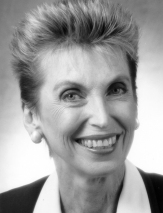 Introduction: For a long time I was a subscriber to Chris's newsletter and learned much from it. I enjoyed reading her stuff and believe it or not, it was only recently I thought of asking her if she'd agree to an interview. I was deeply pleased she agreed. So, without further ado, it gives me great pleasure to introduce to you, Chris King.
Aneeta: Chris, thank you very much for agreeing to this interview. I must confess, Chris, I’ve been a long-time follower of the work that you share on your site. However, I’ve always been curious about the person, Chris. This is my chance to find out. So please, do tell me a little about who you are, where you came from, your family, etc.
Chris: Originally from the East Coast (New York), I have lived in Ohio for 47 years and love it here. I have what I call a “Portfolio Career” – many careers at the same time, plus many different careers in the past. They include: human development specialist, artist, web site developer and designer, storyteller, trainer, consultant, TV announcer, model, mathematician, marketing manager, newspaper editor, salesperson, waitress, writer, speaker, group fitness instructor and mother of five. I always wanted to be a writer, artist and storyteller, but was urged by my parents to major in mathematics. This led me to an early career as a computer programmer – years and years ago. Re-introduced to computers in 1991 when I became a newspaper editor, I fell in love with Information Technology and have become what we call a geekette.
Aneeta: I know that you manage quite a number of websites. To make it easier, what I’ll do is to divide my questions in 5 categories and perhaps, you can explain each one, with appropriate links to that topic. Let’s start with newsletters. When I first stepped into the world of internet business, I subscribed to your newsletter, Portfolio Potpourri, and it fascinated me that in each edition, you had a theme running throughout. I tried to do this and failed miserably. I so envied your ability to do this. My question is how do you decide what theme to use each time?
Chris: Great question! Because I cover so many topics, I love having a theme that makes me think and keeps me “on track.” Usually the theme for the current edition is suggested by something I have read or heard recently. I am a life-long learner – always reading and/or listening to motivational and business audios. When planning a storytelling program, I find that establishing a theme helps with the flow of the performance and stories chosen for the program, so this suggested using a theme for Portfolio Potpourri issues. To find out more about this eclectic e-newsletter and for a link to the current issue, visit http://www.creativekeys.net/newsletter.htm
Aneeta: On to the issue of writing. Please explain your philosophy towards this activity and perhaps, you could give some advice to my readers, who are mainly from Asia and Africa.
Chris: As I mentioned before, I always wanted to be a writer. I think that this is why I am so enamoured with the Internet. The very best advice I have received and will give about writing is to do lots of it. I love sharing information, so the writing seldom seems like a chore. Other advice to aspiring writers is: be conversational, rather than proper (you don’t want a lot of errors, but you do want to be easy to read); be brief; write about topics that you are passionate about; enjoy the writing and your readers will enjoy reading what you have written.
Aneeta: What great advice. Thank you. Onto the subject we have a mutual interest in – storytelling. Please describe your interest in this area and any advice you may have.
Chris: I have always loved stories and telling stories, so in 1989 as an active speaker who used stories, I made the decision to add professional storytelling to my “Portfolio Career.” I feel strongly that everyone is a storyteller, whether or not professionally, and can benefit from using the power of storytelling. Again, only tell stories you feel passionate about; collect your family stories (I have a storytelling friend who tells us, “When an older person dies, a library dies with them.”); share stories with everyone; read stories; listen to stories; and practice, practice, practice.
Aneeta: Why do you feel that today, powerful presentations have become a necessity?
Chris: Everything today is so fast-paced, we need to have “top notch” communication skills to be heard. I am also receiving many questions and feedback from those who have been called upon to do training and/or presentations for the companies they work for. This doesn’t come easily or naturally to most people, so we all must work on it. At my http://www.powerfulpresentations.netwebsite I offer 85 free articles, plus many resources. Again, the way to become a powerful presenter is to do lots of speaking. I highly recommend finding a Toastmasters International club to join and attend regularly. The training and in person experience you will receive is invaluable.
Aneeta: I am all for storytellers having an online presence. However, I’ve come to realise that this is not always the case with others and for the benefit of those who might feel ‘shy’, can you please explain the benefit to a storyteller if he/she should have a website.
Chris: The biggest benefit to having an online presence is credibility. It has become expected of us. Even if a storyteller feels they don’t want a full site of their own, they should be listed in as many storytelling directories as possible. They should, at least, consider setting up a blog (can be done, free of charge, at http://www.blogger.com). Having an online presence also keeps you informed as to what is happening in the storytelling community and makes the storyteller easy to contact by others who are searching.
Aneeta: I understand that you’ve written several reports. Can you please list them out and give a brief description of each one?
Chris:
The next five Special Reports include what I have learned and experienced through real life, been-there, done-that presentations, along with attending more workshops, seminars, teleseminars and speeches than I can count.
The next two special reports include what I have learned from being a Certified Group Fitness Instructor for the past 15 years. If you want enough energy to be able to achieve all of your goals, regular exercise is the answer.
For a more detailed description of the reports, do visit http://www.creativekeys.net/specialreports.htm
Aneeta: Well, I think I’ve asked you all that I can think of. Is there anything else you’d like to add?
Chris: I am really impressed with the work you have done on your storytelling website. Storytelling is so important in all areas of our lives. Keep up the great work and encouragement.
Aneeta: Thank you.
Chris: And thank you, Aneeta, this has been fun!
This piece may NOT be freely reprinted. Please contact editor @ howtotellagreatstory.com for reprint rights.
Click here to return to the index of interviews on 'Blow Your Own Trumpet!'
 Introduction: When doing the research for my interview with Chris King, I came across Sally's site. I found it fascinating and decided to ask her if she would consent to an interview. I received a very prompt reply agreeing to the interview and without further ado, I have great pleasure in introducing to you, Sally Crandall...
Aneeta: Sally, as usual, before I get into the kind of work you do, please tell me a little about what you do.
Sally: I live in Columbus, Ohio….right near downtown in a section called German Village. Our house was built in 1913 and only had two owners, besides us, in all that time. My husband and I have two daughters, and we moved here after living eighteen years in the country on forty acres. I grew up near New York City and like this urban neighborhood, but my husband still thinks he might like the country. Both our daughters are grown. One lives very close. That means I can bike over and have lunch with her. The other daughter lives about twenty minutes by car. That means I can drive over and have lunch with her and one of our two grandsons. I was a school librarian for more years than I can count, but when I started telling stories to the children as part of my job, I found that I wanted to do it all the time. I quit my job to be a full time storyteller.
Aneeta: How did you become interested in storytelling?
Sally: Just when I was a new librarian, I persuaded my principal to let me go to the National Storytelling Festival in Jonesboro, Tennessee. She let me count it as a professional day, and off I went. I sat in the enormous tent on a cold, hard, metal chair and listened to Syd Lieberman. I forgot the chair, the people around me. I only watched Syd and heard the story. That’s the way it was for two days for storyteller after storyteller. When I left the festival, I knew I wanted to incorporate storytelling into my job at school. I saw all the children once a week, so I set myself the task of learning and telling a new story once a week. Being the librarian was the best job for telling stories because I could tell the same story over and over and watch it get better each time.
Aneeta: Please, describe the kind of people you work with.
Sally: The jobs I get are mostly with elementary schools. I love to go to middle schools, but most often I tell stories to kids from five years old to nine. I always try to arrive an hour early so that I can listen to the school and hang out in the library and talk to a few teachers. Doing that, gives me a feel for how the day is going and how the kids, parents and teachers get along. I always send a teacher’s guide to the school before I arrive so that teachers know what storytelling is and that I do welcome participation from the audience. I try to structure each program to include some real listening, some active participation opportunities and some laughing. The first story I tell is one that lets the kids get to know me. The second is usually a longer listening piece. Often I follow that with a string story because it changes the pace. After that I’ll tell a story that lets children get up and move around. Following that might be another listening story. The last story is one for laughing and joining in.
Aneeta: I understand you run several programs. Can you please describe these for me?
Sally: I offer several programs on my website www.sallycrandall.com. Shoestring Stories is a general program that lets me match stories to a variety of needs and ages. It includes folktales, personal stories and historical stories. Over the Back Yard Fence is a group of stories about Ohio. In this program are several historical stories, some Wyandot Native American stories and a couple of stories about me living in German Village. Tales For Little Ones is a program directed at preschool and kindergarten. This program includes stories designed for little people’s ears. Singing, joining in, laughing and some good listening are all part of the performance.
During most of my performances, I will include a string story and a little talk about making string figures. I love string figures because they cross so many cultures and because the making of them is so beautiful. I offer a workshop in which kids from fourth grade up can focus on hearing several stories they didn’t get in my school performance plus they can learn two new string figures to take home and share.
Last winter I attended a two-day workshop sponsored by the Kennedy Center on creating residencies. The residency plan I created is called Storytelling and Writing in the Kindergarten Classroom. It’s a five-day residency aimed at learning a core story to tell to another class. We do writing as we explore the story.
Aneeta: As you may know, this website caters for storytellers from Asia and Africa. What advice would you give storytellers?
Sally: I would love to travel and tell stories in the countries where your readers live. If anyone has a question, I would be happy to answer it via e-mail.
Aneeta: Thank you very much. For the sake of completeness, can you please state your contact details?
Sally: My website is http://www.SallyCrandall.com. My e-mail is
Aneeta: Thank you, Sally, once again.
This piece may NOT be freely reprinted. Please contact editor @ howtotellagreatstory.com for reprint rights.
Click here to return to the index of interviews on 'Blow Your Own Trumpet!'
 Introduction: Again, when doing the research for my interview with Chris King, I came across Celise's site. What I found interesting was the fact that Celise concentrated her writing efforts on the younger generation. I can't remember another I've interviewed concentrating of this part of the community and so I decided to ask her if she would consent to an interview. She agreed, and without further ado, I have great pleasure in introducing to you, Celise Downs ...
Aneeta: Celise, thank you for agreeing to this interview
Celise: Thanks for having me.
Aneeta: As always, I would like to start with you telling us a little bit about your background, your family, your life and where you live.
Celise: I was born, raised, and currently make my home in Phoenix, AZ. I have an older sister (two years and two days apart), a 12 yr old nephew and a 16 yr old niece. I share my home with my fiancé, Steven (we’re getting married Sept 9th of this year) and our “child”: a really talkative Tabby cat named SweetPea.
Aneeta: Congratulations! And I know exactly what you mean when you say the tabby cat’s your “child” for I have a pet dachshund and she’s spoilt to bits … by everyone! I wish you and Steven a very happy married life together. On your website, Gemini Mojo Press, you state that your mission statement is to support, engage and inspire the imagination of young adults. Do explain a little more about what this means and how you intend to carry out this mission.
Celise: Five to ten years down the line, I’d like to be a publisher for the specific age group that I write for: 13-18. There’s only one publisher out there I know of that does this, but the age groups starts a bit lower. I think this is a relatively knew area of publishing that I would like to explore. If there are aspiring young writers out there that have a dream of seeing their work published—whether it be a book of poems or a collection of short stories—I want to be a resource for them.
When I was young, I used to talk to myself. I used to have long, drawn-out one-sided conversations. No one ever answered back (grin), but I think having a vivid imagination helped me be the writer I am today. By the time I hit seventh grade, I knew I wanted to be a writer of novels. Not a journalist. Not a poet. A writer. All throughout high school, I had teachers that saw my talent, nurtured my talent, encouraged my talent. I want to do the same for others. I’m a mentor in an online program called the Little Owl Mentoring Program. (http://mentoring.absynthemuse.com). I’m paired with an aspiring young writer and mentor them for a period of time dictated by the mentee. It’s great. I’m doing what I love and sharing what I love to do with others.
The aspects of supporting, engaging and inspiring are feelings that I experience on a daily basis. This is a mission statement I believe in because I’m living it right now.

Aneeta: I also note that you have your own personal website: http://www.celisedowns.com . I’m sure that my readers will eventually hop over to your website. Nevertheless, please, do give me a brief description of this website and what’s on offer.
Celise: The site is a way to keep readers updated on what I’m doing, writing-wise. They can read excerpts from my current releases, shop at my online store, enter contests, sign up for my monthly newsletter, check out my blog, browse through my photo gallery and find out where I’m going to be next.
Aneeta: As you may know, this website targets storytellers from Asia and Africa. Now, what advice, in terms of getting work published in your part of the world, would you give to these Asian and African storytellers?
Celise: Do your homework because the research never stops. Traditional publishing isn’t your only choice.
Aneeta: Well, I think I’ve covered all I can. Is there anything else you’d like to add?
Celise: Get your work professionally edited—one set of eyes never does the trick, surround yourself with a positive support base, perservere…and pop open a can of imagination. It’s never too late to be who you want to be.
Aneeta: Thank you.
Celise: It’s been fun!
This piece may NOT be freely reprinted. Please contact editor @ howtotellagreatstory.com for reprint rights.
Click here to return to the index of interviews on 'Blow Your Own Trumpet!'
Page 5 of 22